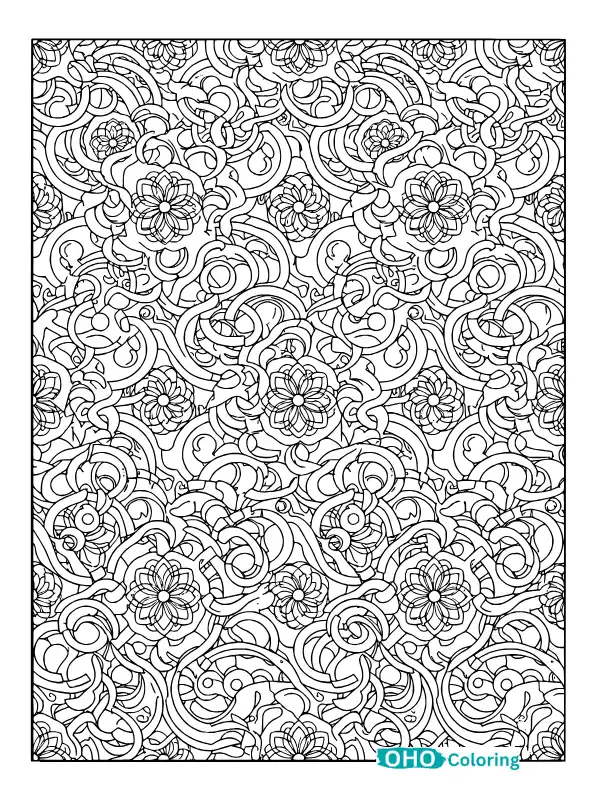
One Sunday, I handed my six-year-old son a dense, mandala-style page, and he dropped his crayon and walked away in two minutes. My ten-year-old daughter picked up the same page and spent a full hour on it. That’s when I understood the thing that sets Pattern Coloring Pages apart: there’s no character on the page, just one shape that keeps coming back. A shape like that doesn’t appeal to every age the same way, because the page was identical and only the age was different.
After that day, I started choosing different patterns for each of my kids, and those picks are what you’ll find in this post. From the honeycomb to the ice crystal, each page comes with the age it suits best and the rule of nature hiding behind its design.
Printable Pattern Coloring Pages to Download
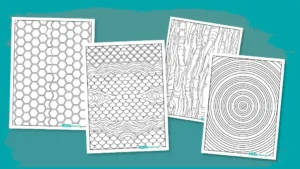
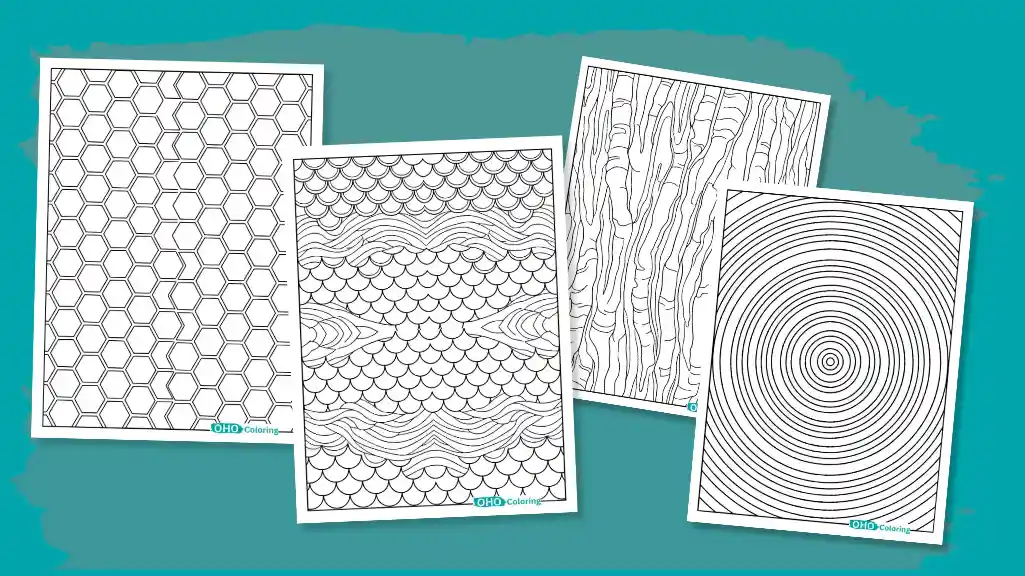
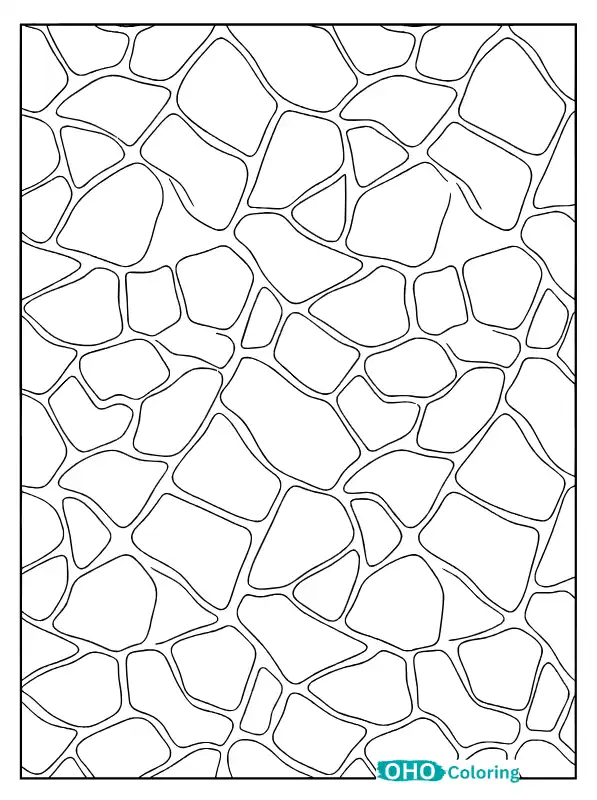
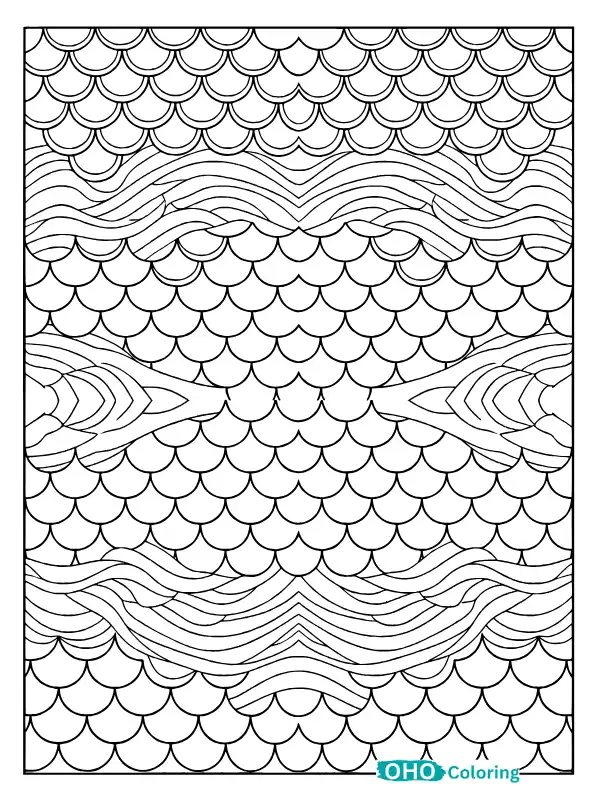
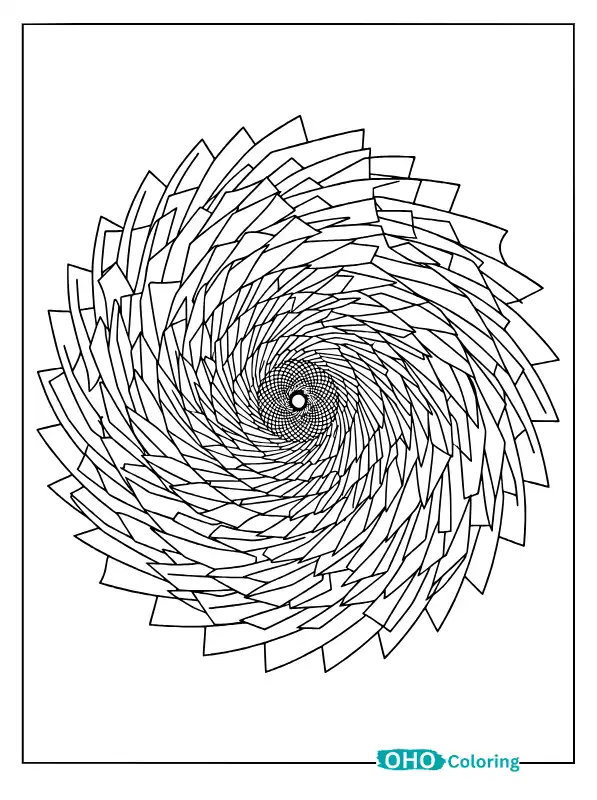
Here are the pattern pages my kids colored that Sunday, from simple stripes to detailed snowflakes. Tap any picture to open it, then download the high-resolution PDF and print it at home.










How to Choose the Right Pattern Page by Age
How hard a pattern page is depends entirely on the child’s age. Stripes that can keep a two-year-old busy will feel far too simple to a ten-year-old, and a dense web of tiny shapes will wear out a little one fast. So below, I’ve laid out five age groups in the order that Sunday went, from the youngest to the oldest. I’ve also added US grade levels next to each age, so it’s easy to match a page to your child’s classroom. Every group gets one page and one true fact from nature.
Toddlers (Ages 1 to 3): Thick Stripes and Big Spaces
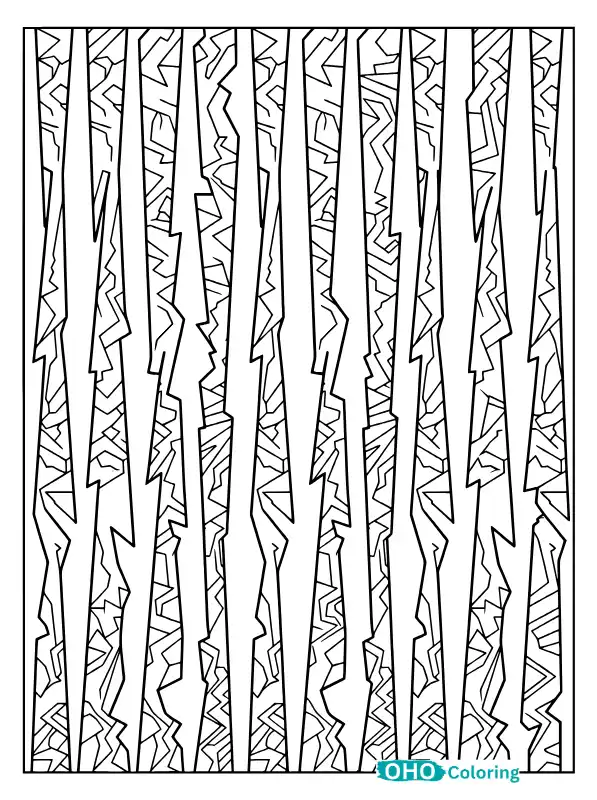
That same Sunday, my two-year-old niece was visiting, and she wanted to color something too. I pulled out the stripe page, because the bands are wide and the page isn’t ruined if the color slips outside them. The moment she had a chunky crayon in her hand, she scribbled lines from top to bottom and stayed with it for five minutes, which is plenty at this age.
While she worked, I told her about zebras. Every zebra’s stripes are different, just like fingerprints, and a zebra’s skin is actually black, with the white stripes growing only in its fur. She didn’t understand all of it, but she picked up the word “stripe” that very day.
Preschoolers (Ages 3 to 5): Round Ripples and Two Colors
After my niece left, the four-year-old boy from next door came over, and he loved anything round. So I set the ripple page in front of him, where rings spread outward from the center and keep getting bigger. I told him to use just two colors, blue and green, and to take turns between them. A little while later he said, all on his own, “Look, it looks like water.”
He was right. When a pebble drops into a pond, the disturbance spreads evenly in every direction, and that’s exactly why the rings come out round. When he got up in the middle of the page, I let it stay unfinished, since that’s just right for this age.
Kindergarten and 1st Grade (Ages 5 to 7): Honeycomb Cells
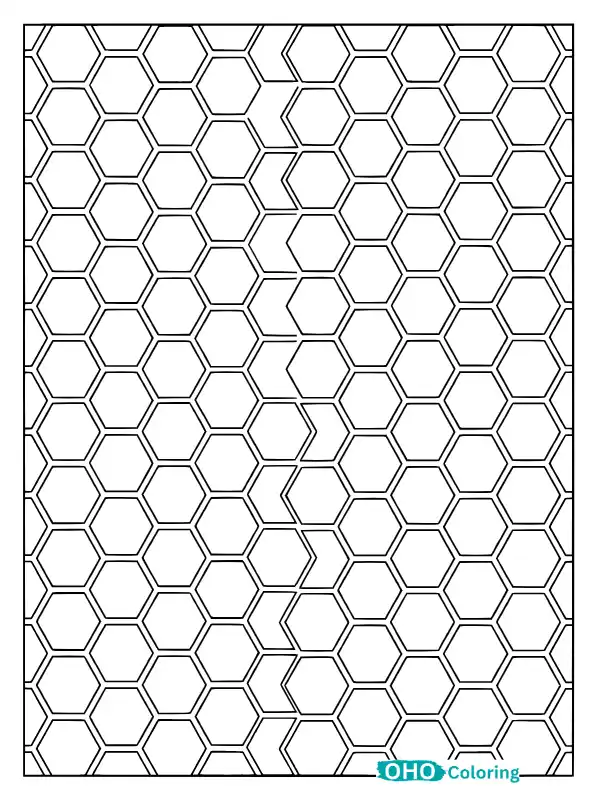
Now it was my six-year-old’s turn, the one who’d lost to the mandala that morning. He’d watched the neighbor boy alternate two colors, so I gave him the honeycomb page with big cells. To keep the full page from scaring him off again, I asked him to color just one row first.
Partway through that row, he asked why all the cells were the same. I explained that bees build hexagons, shapes with six sides, because hexagons fit together with no gaps left over. That lets them store more honey using less wax, and the wax comes from the bee’s own body. He started counting the corners himself and filled in the next two rows as well.
2nd to 3rd Grade (Ages 7 to 9): The Nautilus Spiral
Right about then, my eight-year-old nephew showed up. He’d moved past simple, straight-sided cells and wanted a page where the line itself curves around. The nautilus shell turned out to be a good fit. It’s shown cut in half, and its chambers grow bigger one after another. My nephew colored the whole shell in a single blue, shading it from light to dark.
While he colored, he asked what the animal inside does with so many rooms. A nautilus lives in the outermost chamber of its shell, and when it grows, it builds a new wall behind itself and adds a new room. The gas-filled older chambers help it float in the water. From then on, that page wasn’t just a drawing to him. It was somebody’s home.
4th Grade and Up (Ages 9 and Older): Sunflowers and Snowflakes
By evening, my ten-year-old daughter had finished her mandala and was asking for something new. I gave her the sunflower and the six-armed snowflake, which are both detailed pages. Kids this age can sit with pages like these patiently, and adults often find them relaxing too. If your child starts to love dense designs, butterfly mandala coloring pages and animal mandala coloring pages make a good next step.
Count the spiraling rows of seeds in a real sunflower and you’ll often find 34 and 55, or 55 and 89. Those are Fibonacci numbers, where each number is the sum of the two before it. A snowflake has six arms because water molecules lock together in a six-sided structure as they freeze. Even so, no two flakes turn out exactly alike, since each one grows differently depending on the cold and moisture along its path.
Pattern Coloring Tips for Every Age
The first lesson from that Sunday was that a page sticks best when it’s one step easier than the child’s age. So when a child gets stuck, change the page, not the child.
Once the page is right, think about printing. Print on US Letter size, and use heavier paper (around 28 lb) instead of standard copy paper, because markers tend to bleed through thin sheets.
Next comes the number of colors. For a two-year-old, chunky crayons are enough, and taping the page to the table keeps it from sliding around. Give a preschooler two colors, since more than that makes them stall out.
If a page still feels too big, cover one corner of the paper with your hand and say, “Just this part today.” The rest can be colored tomorrow, and a half-finished page won’t sour the mood.
Older kids do best with a sharpened colored pencil or a fine-tip marker, because a thick marker spreads color past the lines on a detailed page. Once color bleeds over, kids lose interest, and they’re less likely to come back to that page.
Finally, hang the finished page on the refrigerator or a wall, and ask what pattern they repeated. An answer like “I did blue, yellow, blue, yellow” shows they understand the pattern, and seeing their work on display gives them a reason to sit down again next time.