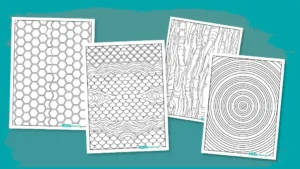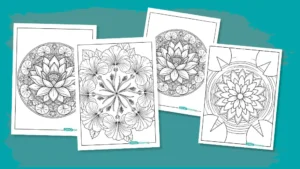
Mandala art is known for its intricate structures and wonderful geometric balance. Originally inspired by the Sanskrit word for ‘circle’, a mandala starts from a central point and expands outward symmetrically. Mandala Coloring Pages are not just a way to pass the time; they are a powerful form of art therapy that helps calm the mind and relieve stress.
Although traditional mandalas are considered more suitable for adults due to their extreme intricacy, their shapes can be simplified to match the developmental levels of different age groups in the United States (US). Let us look at how this art serves as a medium for deep mindfulness for adults and how it can be correctly chosen according to a child’s age.
Featured Mandala Coloring Pages
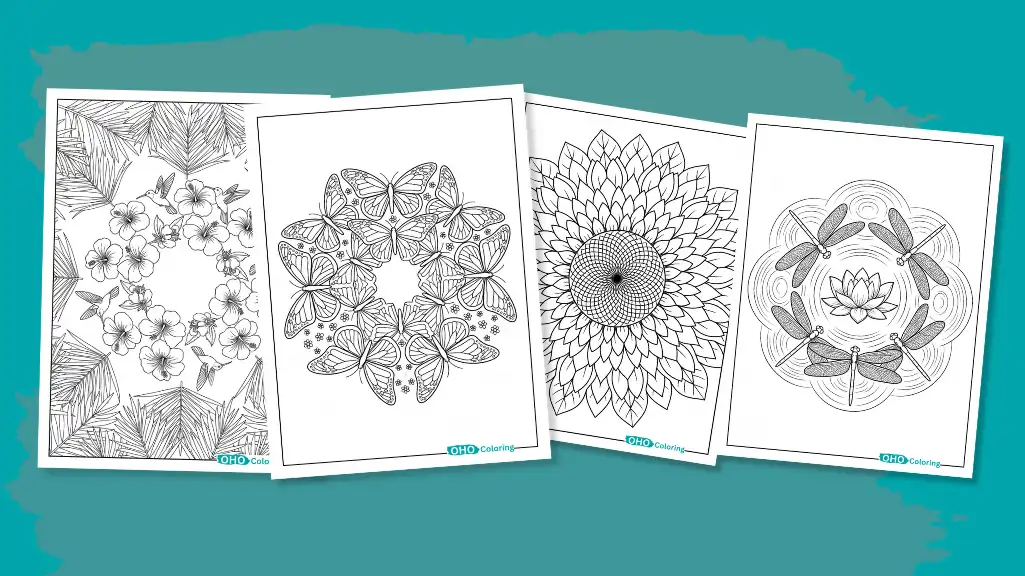
Discover our handpicked collection of printable sheets below. Simply click on any design that catches your eye to open and download its high-resolution, print-ready PDF completely free!


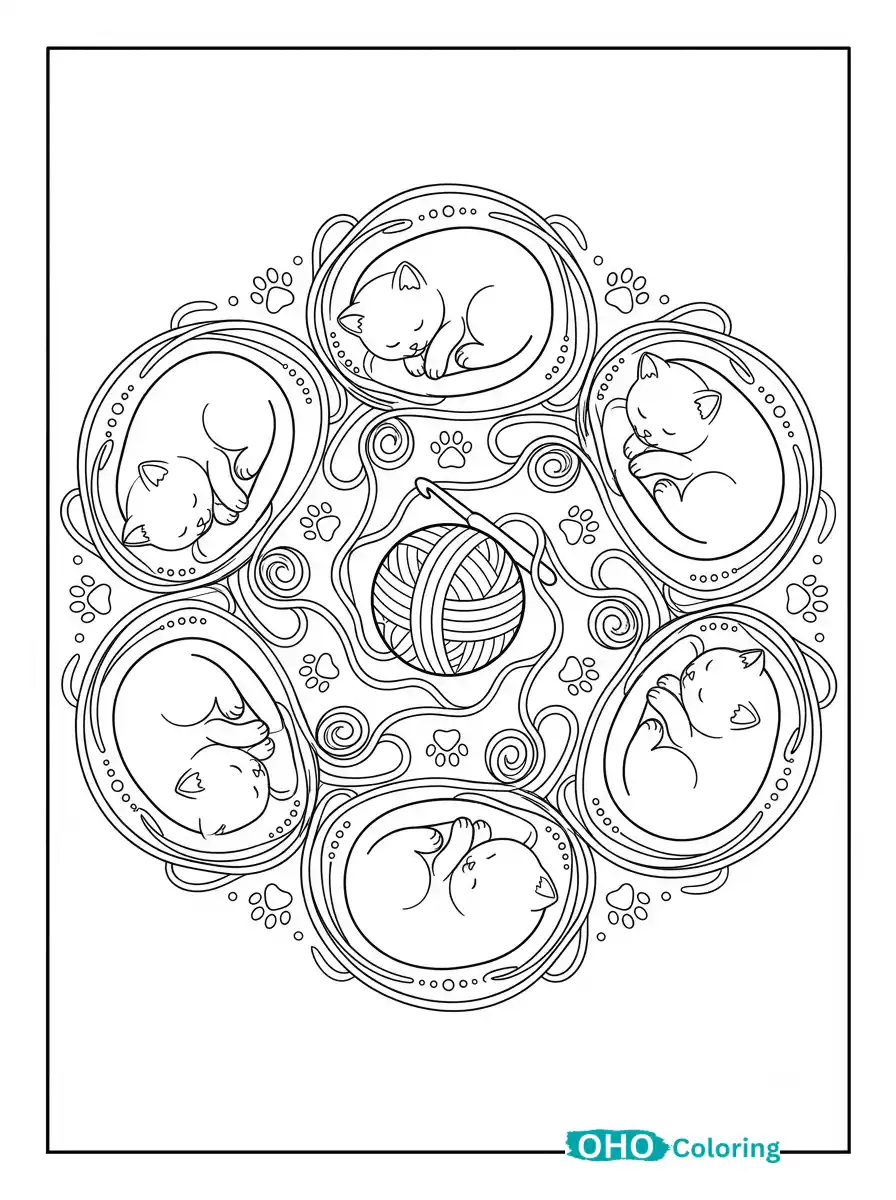


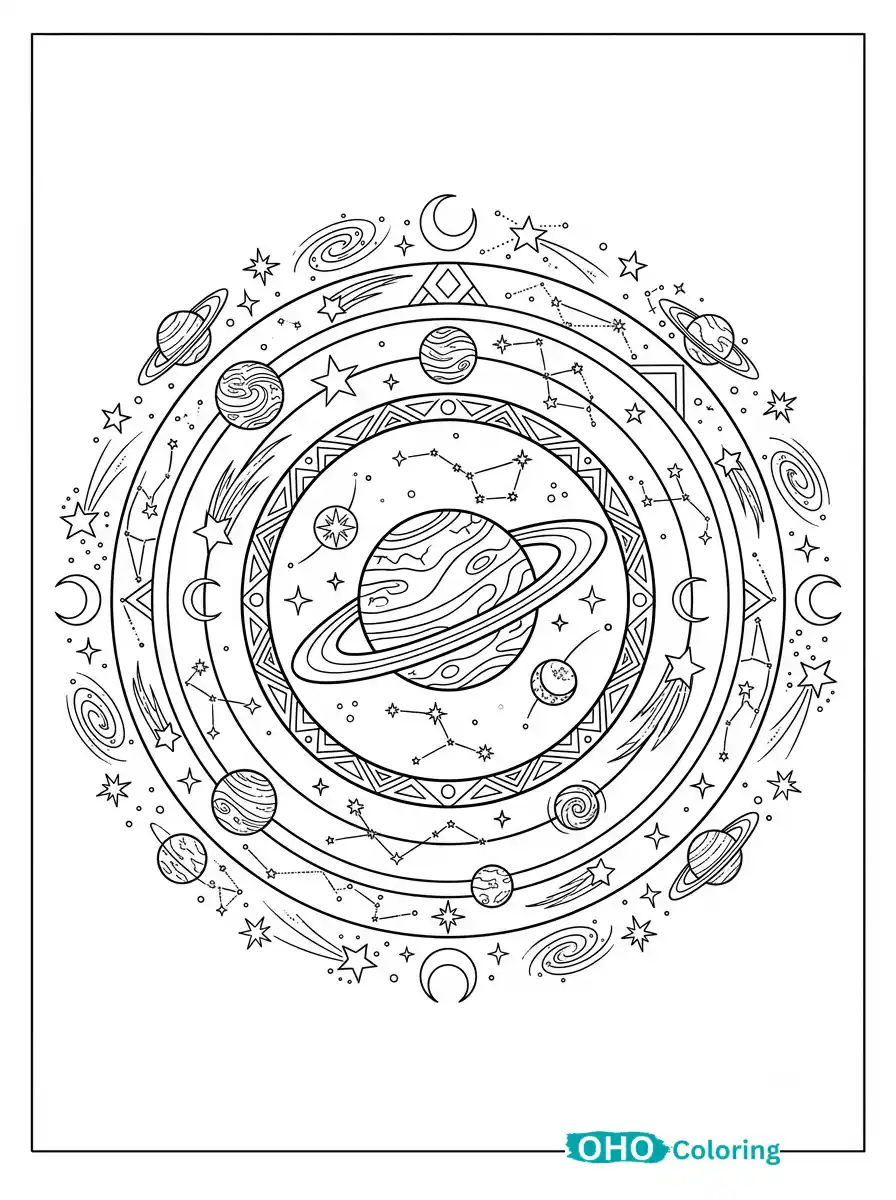


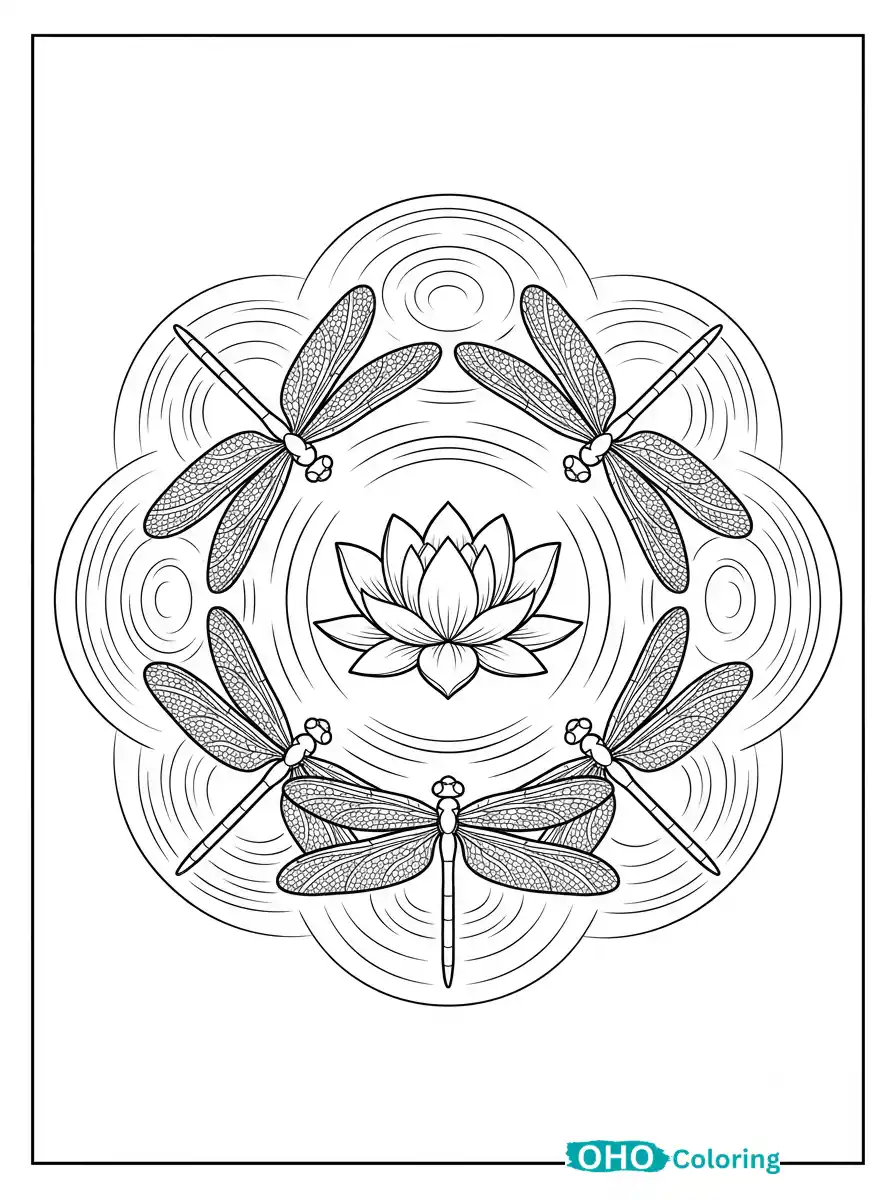

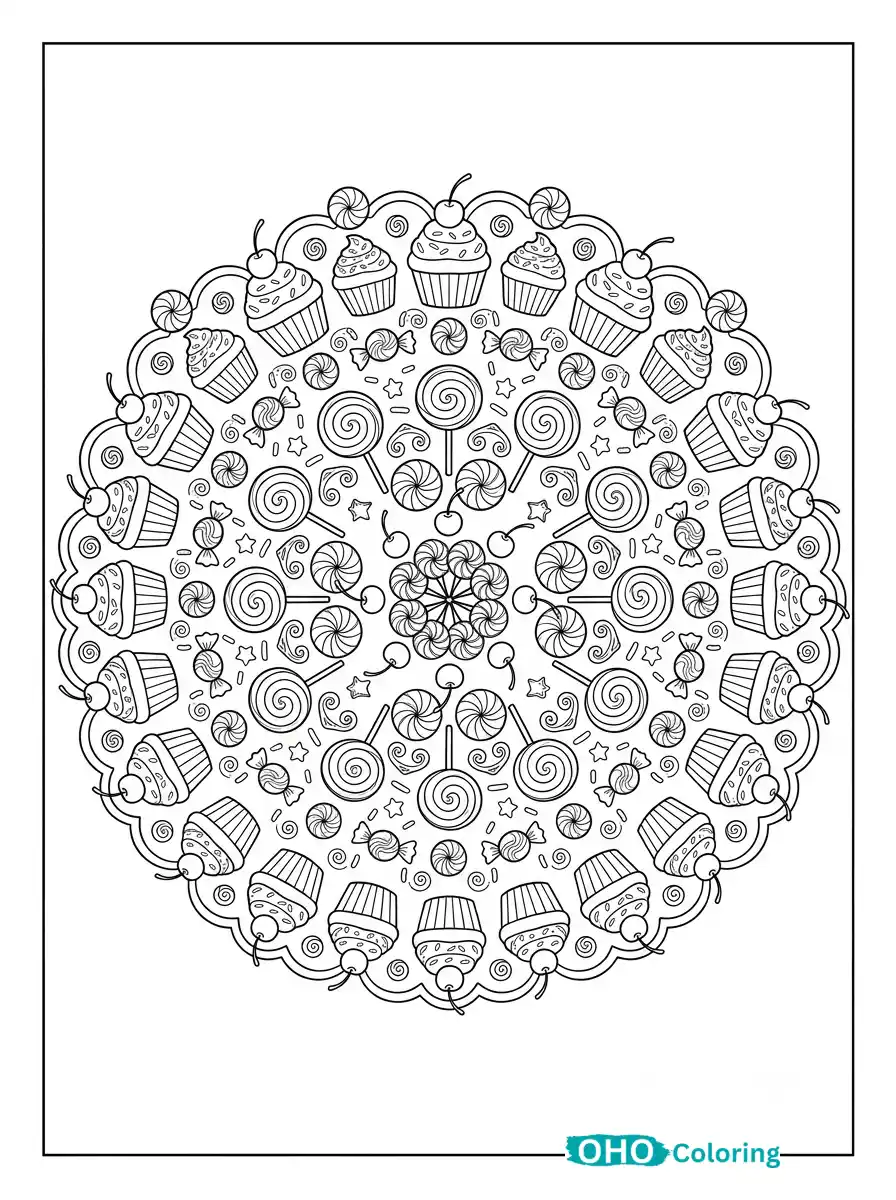


Mandala Coloring Pages highlights
Art Therapy and Deep Focus for Adults
For adults and working professionals, coloring mandalas functions like a form of mindfulness. Amid daily mental fatigue and stress, when a person focuses on these extremely fine sections and maze-like patterns, the amygdala part of the brain calms down, which controls our fear and stress.
These types of complex illustrations feature the delicate petals of lotus flowers, architecture resembling Gothic cathedral rose windows, and subtle geometric lines. Scientific research shows that coloring symmetrical shapes increases mental balance and improves insomnia. Adults can use fine gel pens, fine-tip markers, or premium colored pencils for this, allowing them to decorate every single small section with depth.
Tweens and Teens (Ages 9 to 12+ Years)
According to the US schooling system, children in middle school and pre-teens develop good fine motor skills and patience. Children of this age are fully capable of understanding the mathematical and natural balance hidden behind mandalas.
The symmetry found in nature, such as the spread of monarch butterfly wings or a snowflake crystal, highly attracts this age group. Focusing on repetitive circular patterns or designs featuring eight butterflies helps increase their focus, which also aids them in their studies and other activities. They can enhance their artistic understanding by selecting bright and contrasting colors.
Early Elementary and Kindergarten (Ages 6 to 8 Years)
Children of this age (Grades K-2) are gradually learning to sit and focus for longer periods. Traditional and complex adult mandalas are completely unsuitable for them because they can quickly get bored or frustrated. Therefore, mandalas for them should be very simple and look like story characters.
At this level, a marine mandala with four simple sea turtles or circular repetitive patterns of cute owls and pinecones with large outlines are the best options. Small, true educational facts, such as how sea turtles have lived on Earth for millions of years, make their learning experience fun while coloring. These illustrations do not have very fine lines, allowing children to color easily and happily with crayons or slightly thick colored markers.
Toddlers and Preschoolers (Ages 2 to 5 Years)
According to US child development milestones, the grip and control of young children’s hands are in the early stages of development. Intricate mandalas serve no purpose for them. If they are to be introduced to the balance of this art, they should only be given the simplest circles with basic shapes.
For them, only a large central flower, some thick sun rays, or very large geometric blocks with one or two layers are appropriate. There should not be any kind of complexity or detail. With the help of thick jumbo crayons, they can color freely in these large sections, giving them an early and very basic understanding of shapes and boundaries.
Practical Coloring Tips for Every Age Group
Adults should always start coloring from the center of the mandala and move outward to the outer layers, which prevents the risk of smudging the colors with the friction of their hands.
Younger children (ages 6-8) should be given colored pencils to fill in larger sections, and adults should use 0.4mm fineliner pens for intricate designs.
The beauty of a mandala lies in its symmetry, so using the same color in identical shapes opposite each other makes the entire circle look highly attractive and organized.