Last summer, a small white flower bloomed in a pot on my kitchen windowsill. That flower is where these strawberries coloring pages began, because my daughter Emma looked at it and asked, “Mom, strawberries are red, so why is this one white?” I didn’t have a solid answer, so we decided to check on the flower every morning. Within a week, a tiny green bump appeared, then it turned white, then pink, and finally it was completely red. Emma drew each stage on paper as it changed, and that’s when I realized every step of this plant has something worth coloring.
Featured Strawberries Coloring Pages
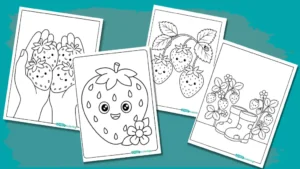
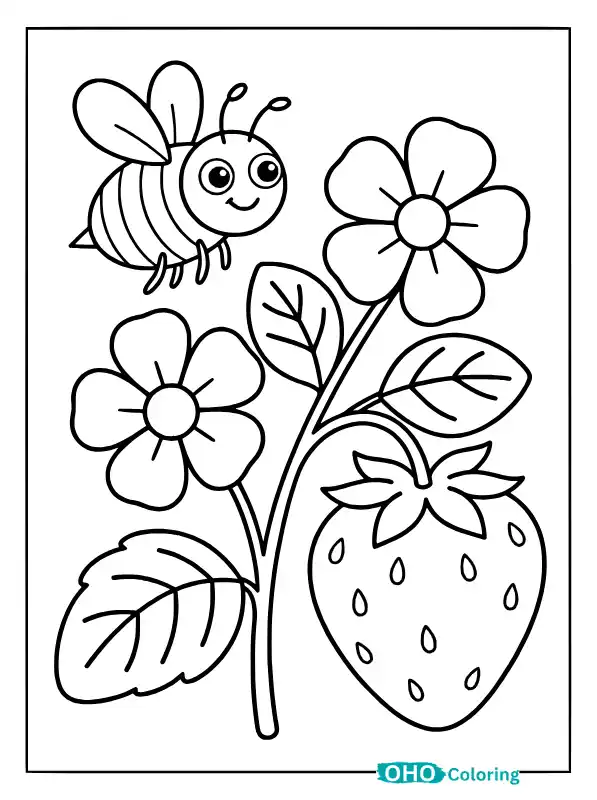
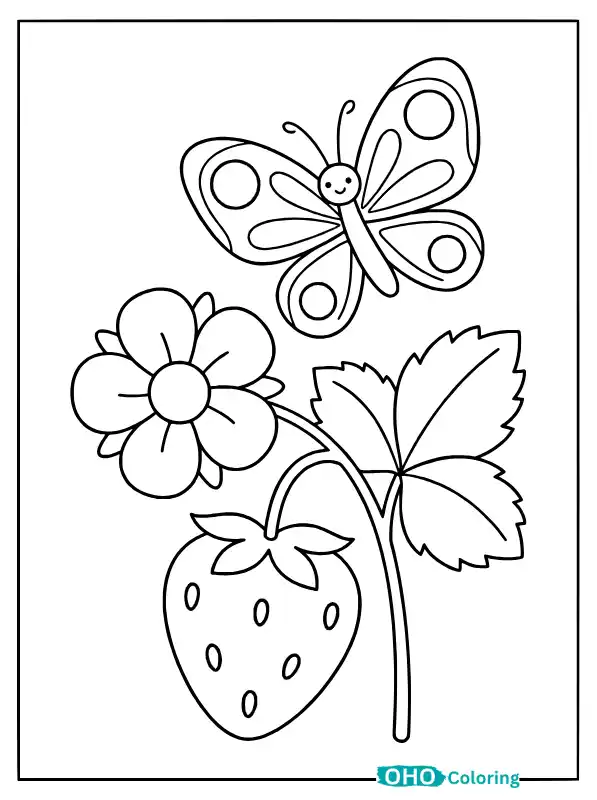
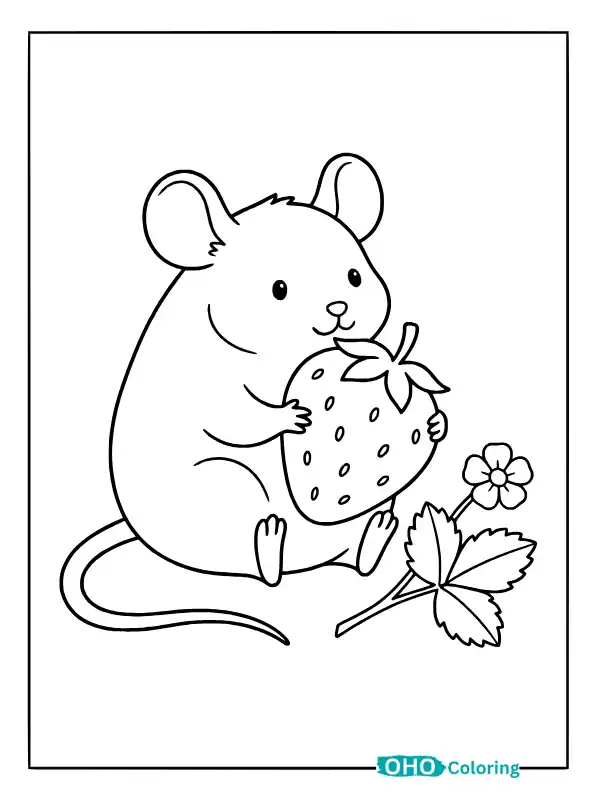
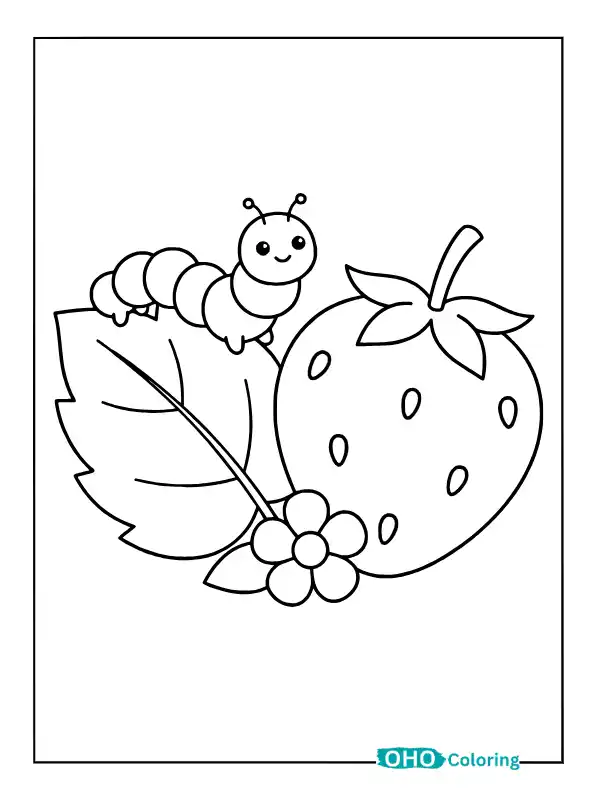
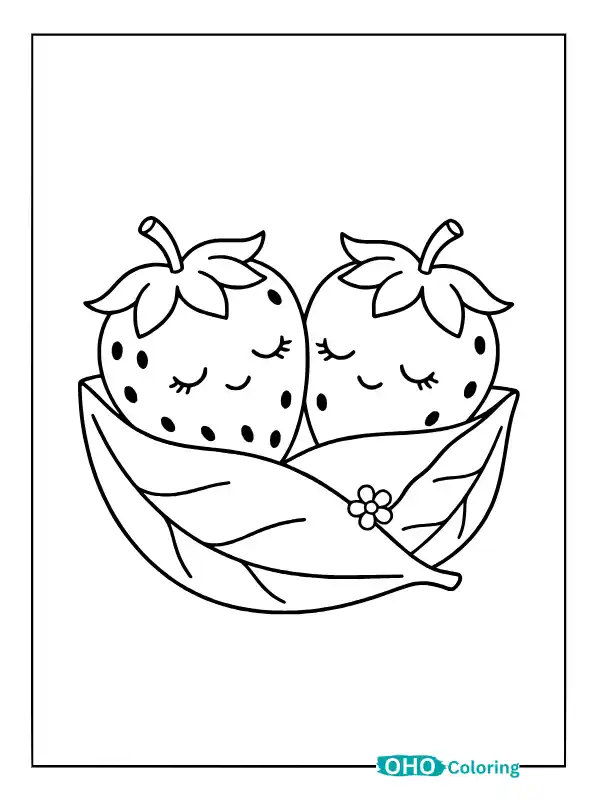
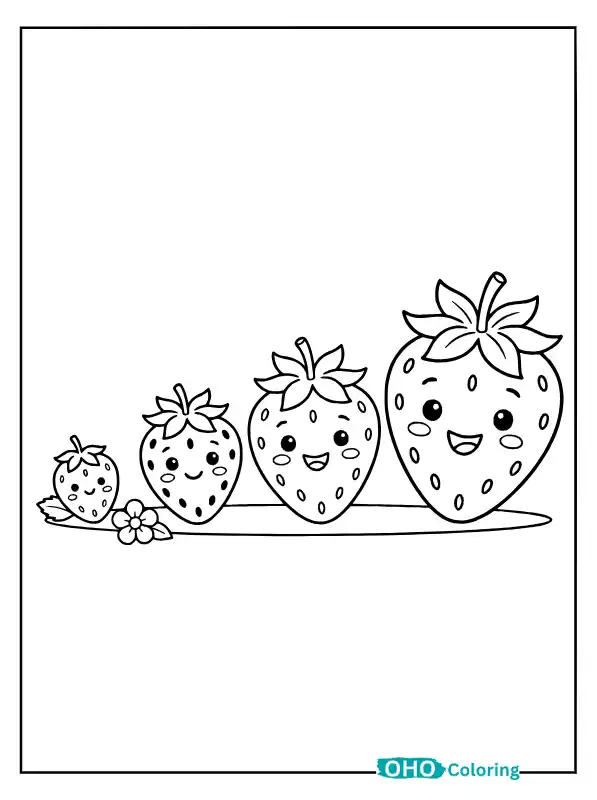
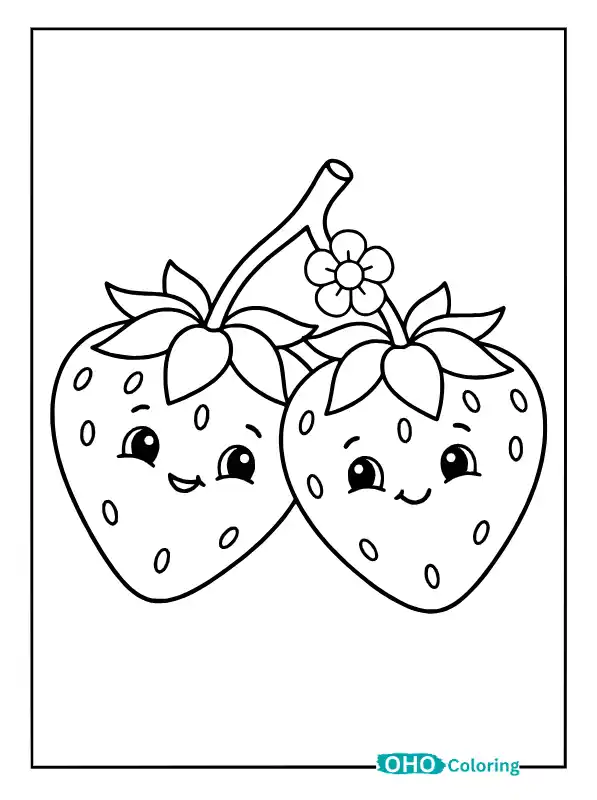
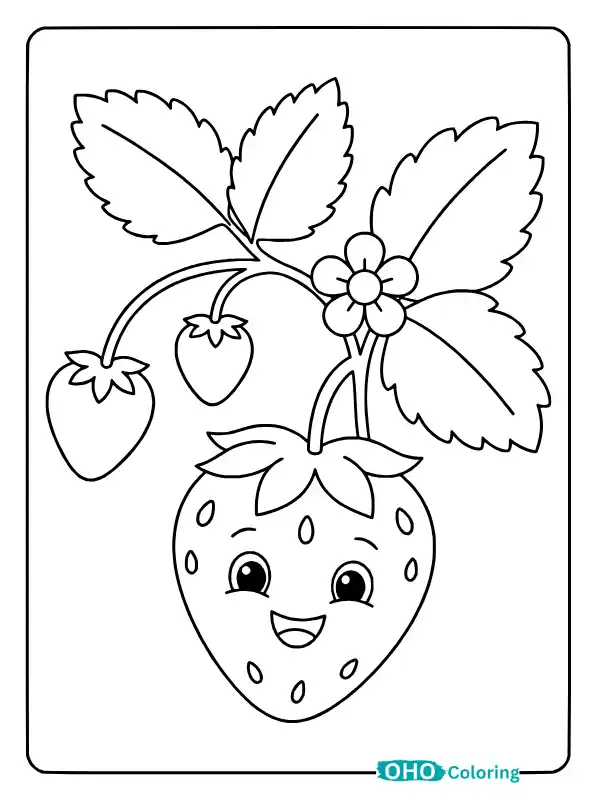
These nine printable pages follow a strawberry plant from its first white flower to a ripe red berry. Click any image to open it, then download the high-resolution PDF and print as many copies as you like.
















The Whole Story of a Strawberry Plant
These nine scenes follow the same order in which the strawberries grew in our pot: first the flower, then the unripe fruit, then the ripe berry, and after that the roots, runners and different ways to grow the plant. Each scene comes with a true strawberry fact that kids tend to remember on their own while they color.
White Petals and a Yellow Center
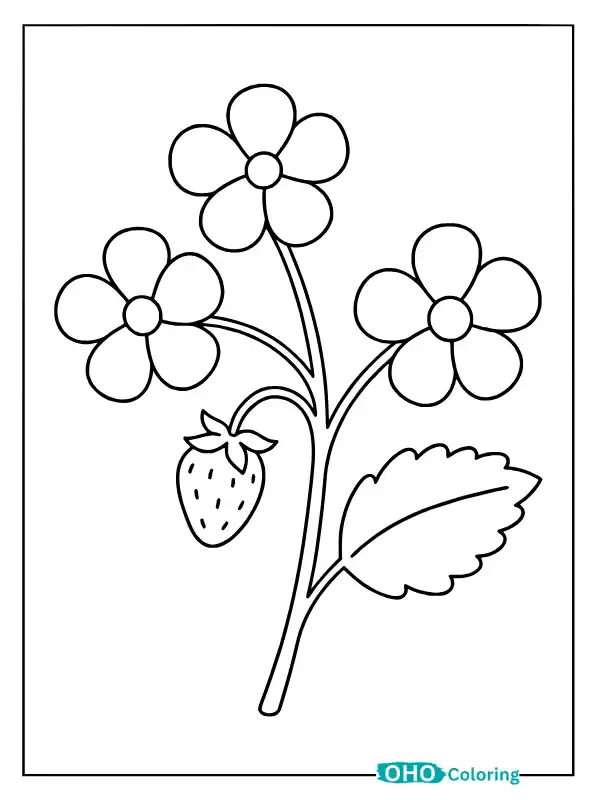
The whole story started with this flower. On the blossom page, three big flowers bloom on one stem, with a tiny green fruit beside them. Each flower has five white petals and a yellow circle in the middle. Bees and butterflies visit these blossoms and carry pollen from one flower to the next, and that is how fruit begins to form. Fill the center with a deep yellow, since it’s the part that catches an insect’s eye first.
Green Berries Hiding Under the Leaves
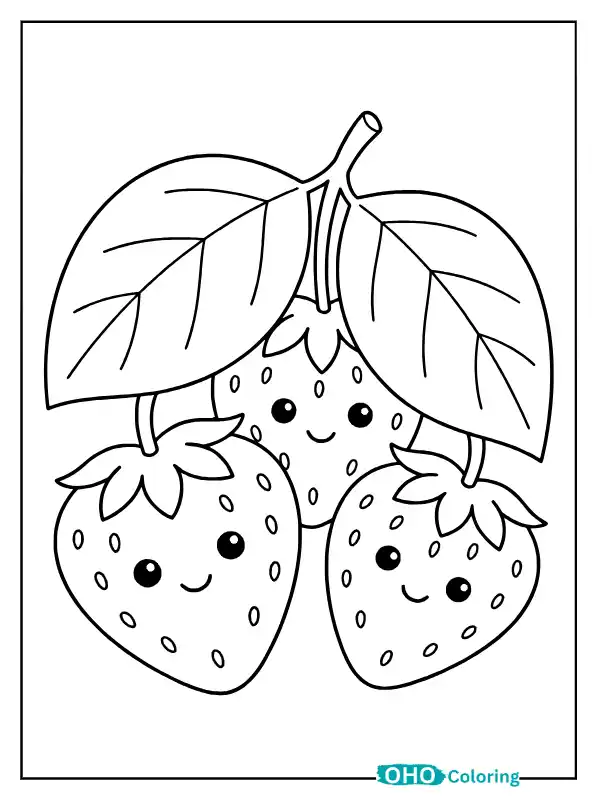
After the petals dropped, the green berries that formed stayed tucked in the shade of big leaves. On this page, three unripe berries hide under two wide leaves. Unripe strawberries are hard and sour, and the leaves help shield them from the sun and from hungry birds. Color the leaves dark green and the berries light green, and the fruit will really look like it’s hiding.
From White to Pink to Red
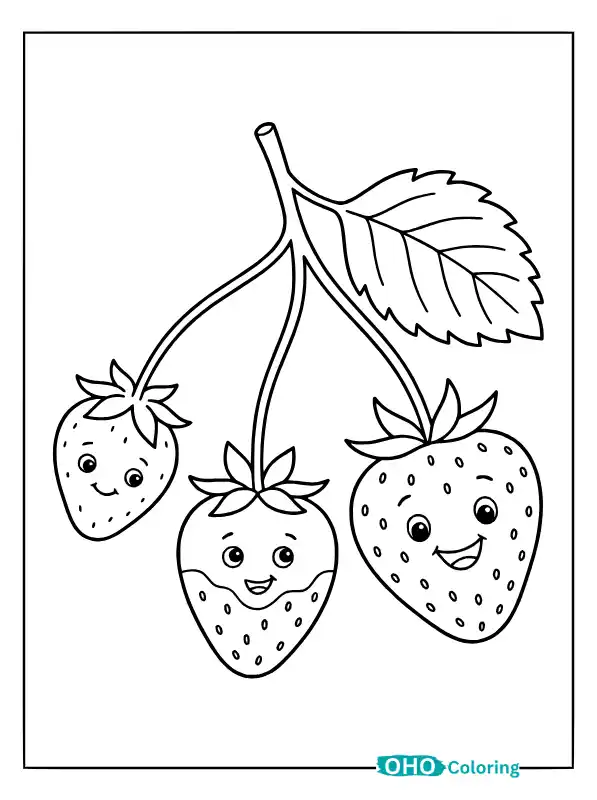
A few days later, the green berries started turning white, and that change is the one on the ripening page. One stem holds three strawberries: a white one, a half-red one and a fully ripe one. Strawberries get sweeter as they ripen, which is why the white one still looks pale and the red one looks juicy. On the middle berry, fade the red crayon lighter toward the top, and the two colors will blend together.
The Big Strawberry With Seeds on the Outside
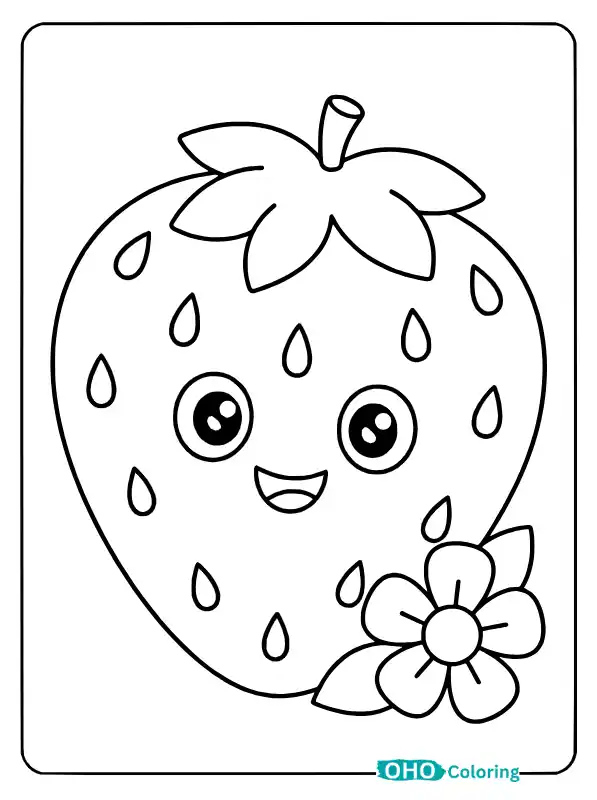
While eating our first ripe strawberry, Emma pointed at the dots on its skin and asked what they were. The answer is on the seed page, where one big strawberry has about ten large seeds. A strawberry is an unusual fruit because its seeds grow on the outside, and an average berry can have around two hundred of them. The part we eat is actually the swollen base of the flower, and each “seed” is a tiny dry fruit with the real seed inside. Color the seeds yellow or light brown, and they’ll pop out against the red.
A Sliced Strawberry and Its Hollow Middle
After the seed talk, Emma wanted to see the inside, so we cut one open. The sliced strawberry page shows a halved berry next to a whole one, with the green cap lying to the side, which is called the calyx. Inside, the edges are deep red and the center is paler and a little hollow. Strawberries also pack plenty of vitamin C. Shading the dark and light reds on the cut side is great practice.
Runners and Baby Plants Across the Soil
A few weeks later, something new showed up in the pot. Thin vines had grown out of the main plant and spread across the soil, and each one had a tiny new plant rooting at its tip. The runners page shows exactly that. These vines are called runners, and strawberry plants use them to grow new plants on their own. Emma colored the big plant dark green and the babies light green, then colored the runners brown and said the plants were holding hands as they walked.
The Crown and Roots Under the Soil
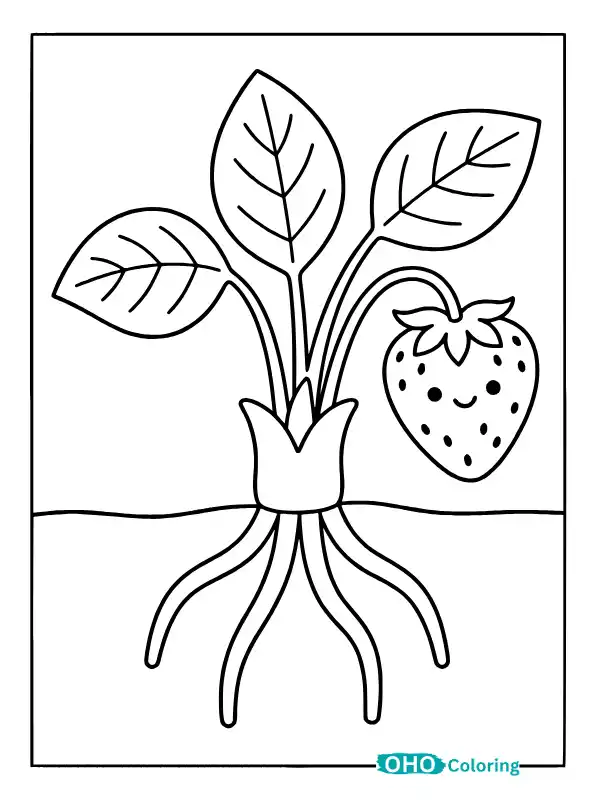
Seeing the runners, Emma asked what all of it was standing on, so we carefully lifted an old plant to look. The roots page shows a soil cutaway with a thick crown in the middle and four thick roots below it. The leaves and flowers all grow out of that crown. Strawberries are perennials, which means the same plant can fruit again next year as long as the crown and roots stay healthy. Use brown for the roots and a light greenish brown for the crown.
Strawberries in a Raised Wooden Bed
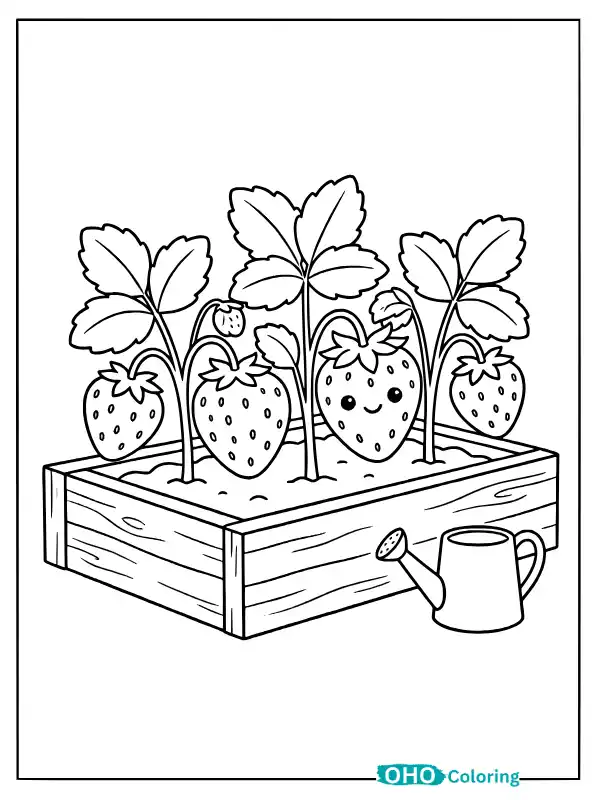
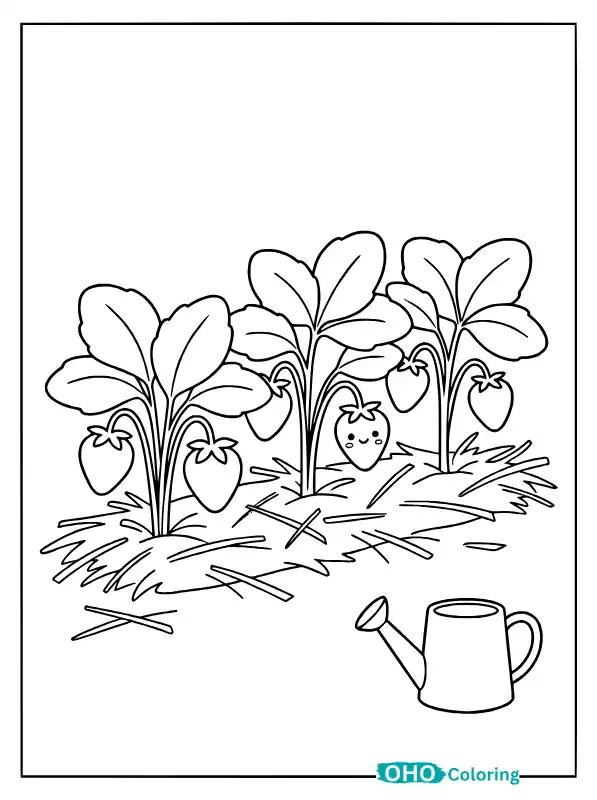
As the plants grew, our pot got too small, and the raised garden bed page shows one answer. It has three plants and a few big berries growing inside a wooden bed. Growers often spread straw around the plants, which keeps the berries off wet soil and holds in moisture. Color the boards in two or three shades of brown and make the soil the darkest, and the bed will look tall and solid.
Strawberries Spilling Out of a Hanging Basket
People without a yard often grow strawberries in a hanging basket just like this one. On the basket page, three big berries and two leaves drape over the edge. Even a small balcony can grow strawberries, as long as the plant gets daily sun and water. Use light and dark brown lines on the basket to show the weave, and remember that every strawberry leaf is split into three parts.
Tips for Coloring Strawberries
After coloring this many pages, a few things became clear on their own. The first is not to fill a whole strawberry with one red. Start with a light red, then add a darker red along the edges, and the fruit will look round and juicy.
The order of the seeds matters too. Color the seeds first and fill in the red around them afterward, or the seeds get skipped or buried under the red. The same idea works for green. Keep one light green and one dark green for the caps and leaves, and use both on the same leaf so it doesn’t look flat.
On the ripening page, changing how hard you press helps a lot. Press lightly for the white-pink part and harder for the deep red, and one crayon gives you three shades. Before coloring, ask your child how ripe their strawberry is. The answer usually decides which color goes where.
Which Pages Fit Which Age
It helps to pick pages by age. For ages three to five, the big seed strawberry, the ripening page and the blossom page are the easiest, since they have large open spaces and little risk of going outside the lines. Chunky crayons work well at this age.
Kids ages six to nine usually enjoy the runners, roots, sliced strawberry and raised bed pages more. These have many small parts that each need their own color, so colored pencils work better here. Older kids and parents can also color these together, and the whole family ends up working on the same page.
How to Print
A good printout matters, or the excitement can fade before the coloring starts. Click the image to open the PDF, then choose US Letter (8.5 x 11 inches) in your print settings. If your printer scales the page, choose “Fit to page” so the border doesn’t get cut off. Regular printer paper is fine for crayons and colored pencils, but use slightly thicker paper for markers or watercolors so the color doesn’t bleed through. The lines are already clean and black, so printing in draft mode still keeps the picture readable and saves ink.
Activities After You Finish Coloring
Coloring doesn’t have to be the end. After coloring the ripening page, lay out the growth-stage pages on the table and ask your child to put them in order from flower to ripe strawberry. On the seed page, have your child count the ten big seeds, then tell them a real strawberry has around two hundred. That gives kids a feel for big numbers, too.
If you have real strawberries at home, set one next to the page and let your child match the colors, then cut one open and compare it with the sliced strawberry page. That’s exactly what we did, and afterward Emma insisted on planting one herself. Putting a small plant in soil and checking on it every day is the best follow-up to these pages.
In Closing
The first flower in our pot is long gone, but Emma’s daily drawings are still on our refrigerator. Like those drawings, these pages let you see a strawberry at every stage. Print a few, sit down with your kids and start with whichever page catches their eye first. While they color, kids often start asking why strawberry seeds grow on the outside, and finding the answers is part of the fun.