Our house has a firm rule for Saturday mornings. A fresh castle comes out of the printer, and an argument starts right away about what color the bridge should be and which flag belongs on the tower. Every castle in these Castle Coloring Pages has a personality of its own. One sits on a mountaintop, one is surrounded by water, and one is buried in snow.
Each castle also comes with a small true story about why it was built where it was. Once kids know the reason, they choose their colors with some thought instead of guessing. Plenty of kids in the US build a medieval history project at school, and these pages come in handy for that, too. So print a few pages and ask the kids which castle they plan to storm today.
Free Printable Castle Coloring Pages
Pick a castle, tap the image, and download the high-resolution PDF. Each sheet prints cleanly on standard letter-size paper.


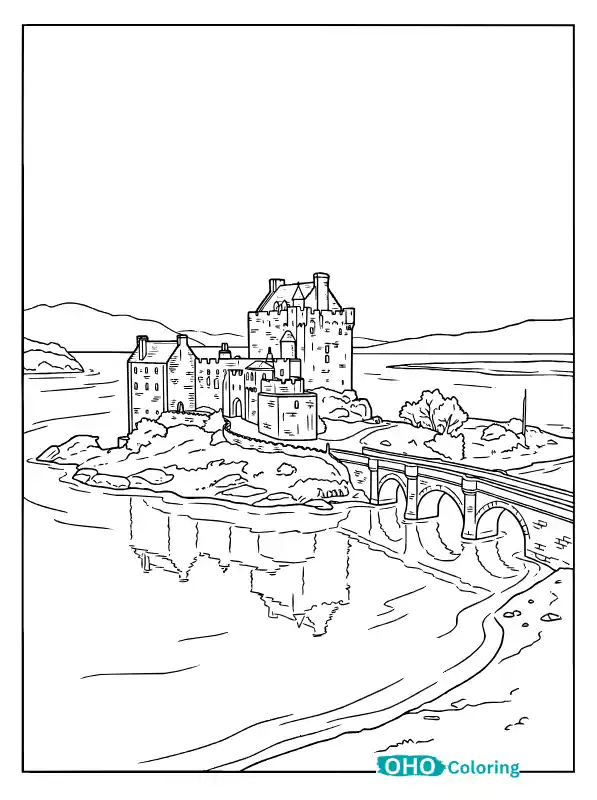


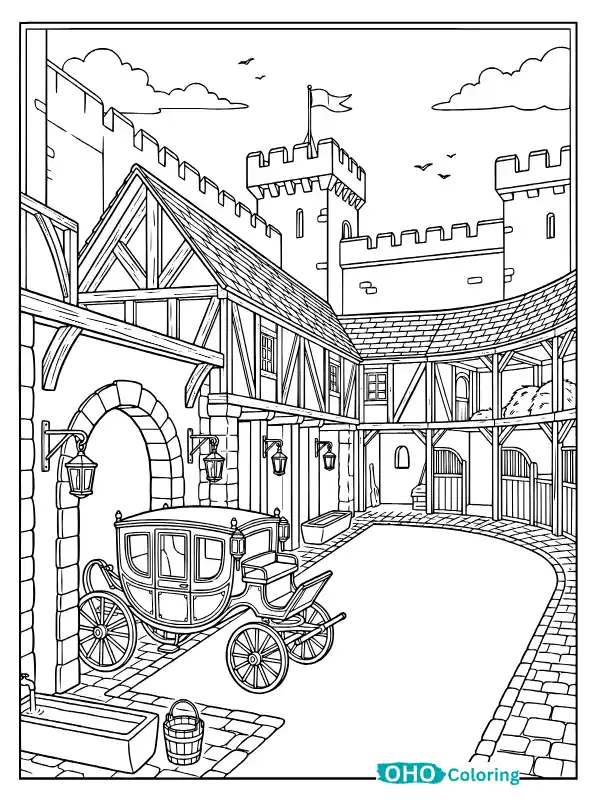


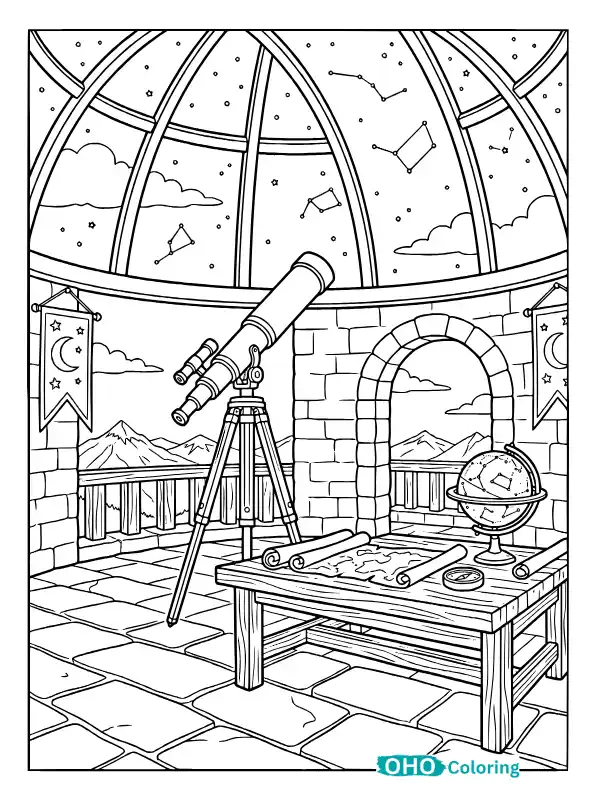

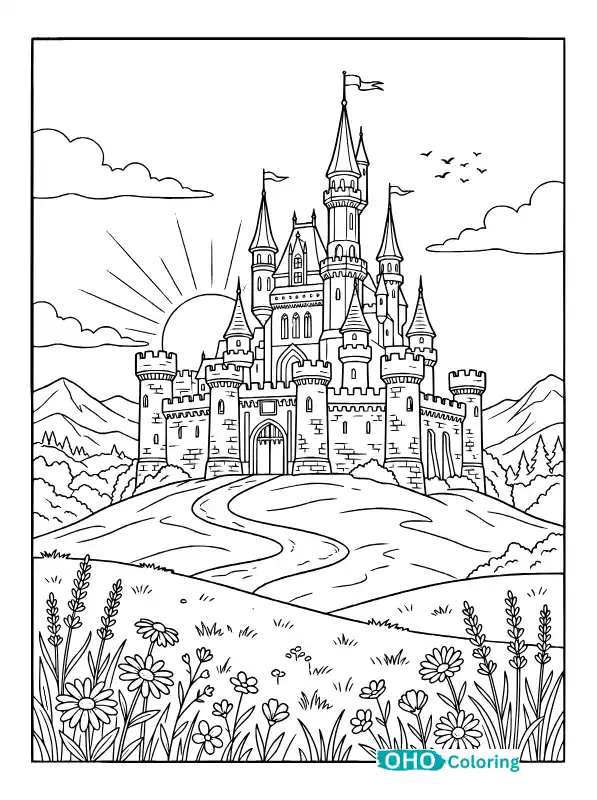


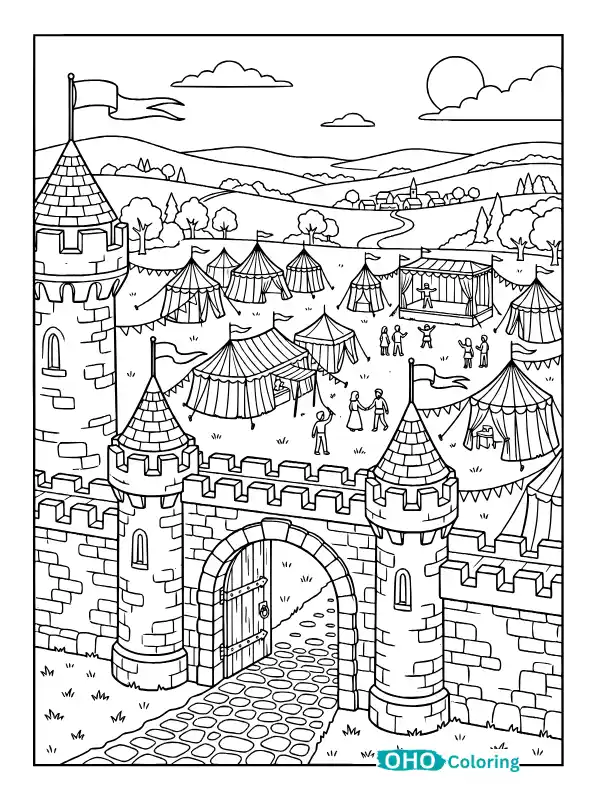
Castle Coloring Pages Highlights
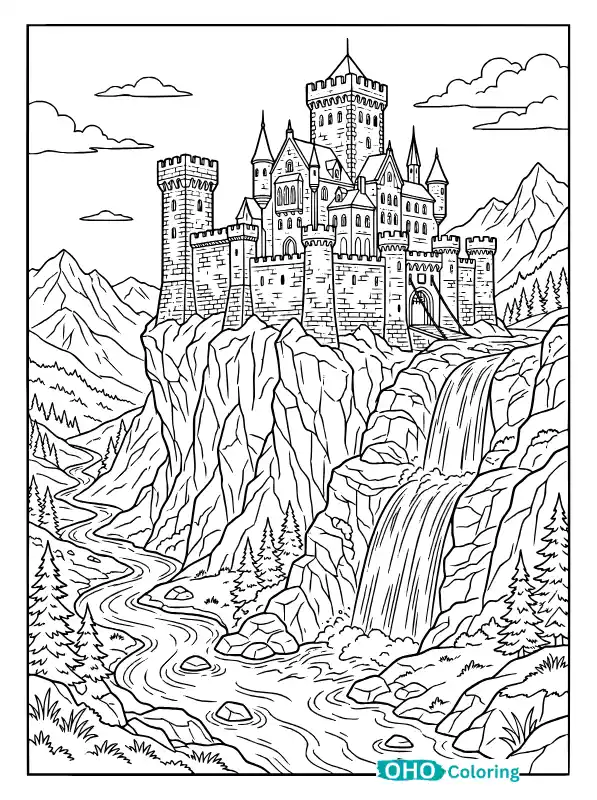
The Cliffside Castle Above the Waterfall
One castle sits on top of a rugged cliff, with a waterfall tumbling past it into the river below. The moment my daughter saw it, she said the enemy army would be worn out before it ever got to the top. Without knowing it, she had landed on the exact reason old castles were built high up. The harder the climb, the harder it was to set a ladder against the wall.
California’s Hearst Castle also sits on a hilltop, though it was built for living, not for fighting. When sunlight hits the spray of a waterfall, a rainbow often appears, so leave a thin strip of white along the edge of the water. Mix a little brown in with the gray on the rocks, and the stones won’t look flat.
The Swan Moat and the Chain Bridge
Where there was no mountain, castles used water as a shield. In this picture, a moat, which is a wide channel of water, circles the castle, with water lily pads floating on it and two swans gliding by. The wide water kept attackers away from the walls and stopped anyone from digging a tunnel underneath. That is also why the bridge was hauled up with heavy iron chains. Here the bridge is down, which means a visitor is on the way. A baby swan is called a cygnet, and many swan pairs stay together for years. Fill the water with light blue-green and leave the swans white, and they will stand out against it.
The Snowy Mountain Castle
When winter arrives, the castle looks completely different. Evergreen trees like pine and spruce stand on the snowy hill, and long icicles hang from the edges of the walls. The slanted branches of these trees let snow slide off, so even heavy snowfall doesn’t snap them. Icicles form when water melted by the afternoon sun freezes again in the cold of night. The paper is already white, so there’s no need to color the snow. Add a little light blue and lavender in the shadowy spots, and the castle will look like it’s shivering.
The Courtyard with the Fountain
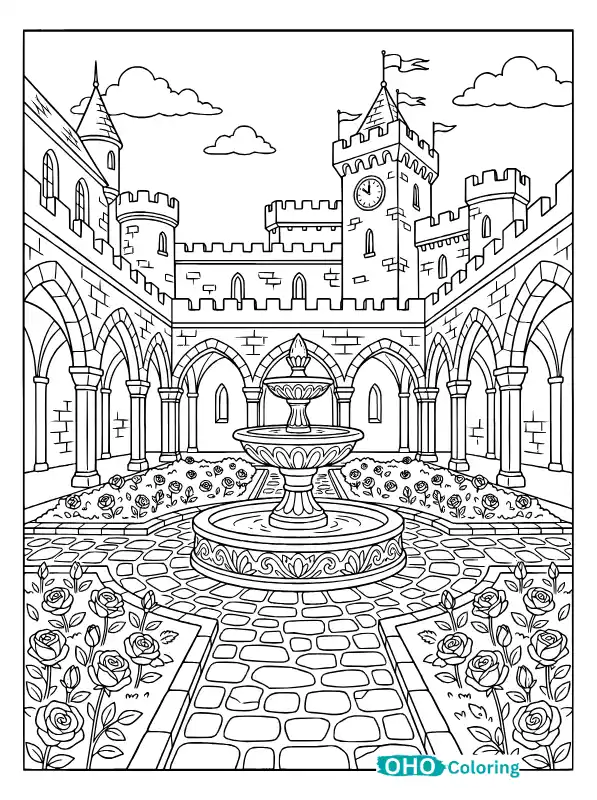
Inside the walls, the courtyard has a very different feel. A three-tiered stone fountain stands in the center, rose beds surround it, and arched walkways run along the sides. When a castle was under siege, nothing could come in from outside, so courtyards like this one were also used to grow herbs and vegetables.
The garden was decoration and a kitchen helper at the same time. Don’t use the same pink on every rose. Make some deep red and some yellow, and the flower beds will look full. Try teal for the fountain water, since it pops against all that green.
The Gatehouse with the Hanging Banners
To reach that courtyard, you first had to pass through the gatehouse. The picture shows two round guard towers, an iron-tipped portcullis raised overhead, and long cloth banners hanging down the walls. A portcullis was a heavy grate that guards could drop the moment danger appeared, which shut the entrance. The symbols on the banners are called heraldry.
A soldier in a helmet had no visible face, so colors and symbols showed which family he belonged to. Banners like these are a common sight at Renaissance fairs across the US. After coloring, have your child design a family flag with one color and one shape.
Easy Tips for Coloring a Castle
Start with the big areas: the sky, the water, and the grass. If you fill them in lightly, the page already looks lively, and the small details get easier to handle.
Not every brick needs its own color. Take gray, light brown, and light yellow and rotate them across just a few bricks, leaving the rest blank. The wall will start to look like old stone.
After the walls, shading on the towers does the most work. Pick the side facing away from the light and run a slightly darker color down it. If every tower has its shadow on the same side, the castle looks solid instead of flat.
The right tool depends on your child’s age. For kids ages three to five, chunky crayons work well, and they can fill big areas like the sky and grass with ease. Kids over six can use colored pencils to work inside the thin lines, and small details like banners and windows can be left to them.
Save your brightest colors for the small things. The rest of the castle will be in muted stone colors, so the banners and doors will catch the eye first.
Watercolors also look great on the water pages. Just print those pages on thick cardstock in letter size (8.5 x 11 inches), or the paper will warp from the wet paint.
At the very end, ask your child who lives in this castle. The answer is often funnier than the page itself.