It’s five in the morning. A light mist hangs over the pond, and a pink bud is slowly rising out of the muddy water. The lotus grows in water that looks dirty, yet not a single smudge of mud sticks to its petals. That’s the first thing that surprises kids, and they soon ask why such big leaves don’t sink. Their questions are how these 23 Lotus Flower Coloring Pages came to be, with opening petals, floating leaves, pond visitors, seed pods, and the roots under the water. The lines are clean and the open spaces are generous, so crayons, markers, and colored pencils all work well.
Lotus Flower Coloring Pages to Print and Color
Pick the pond scene you like best, tap the image to open it, and save the full-size PDF for printing.








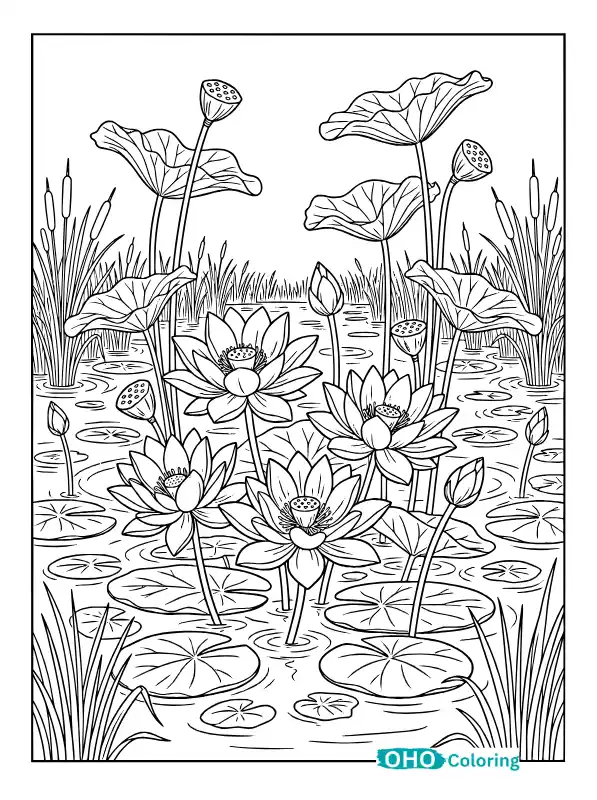
7 Picks from 23 Pages, Each with a True Fact Behind It
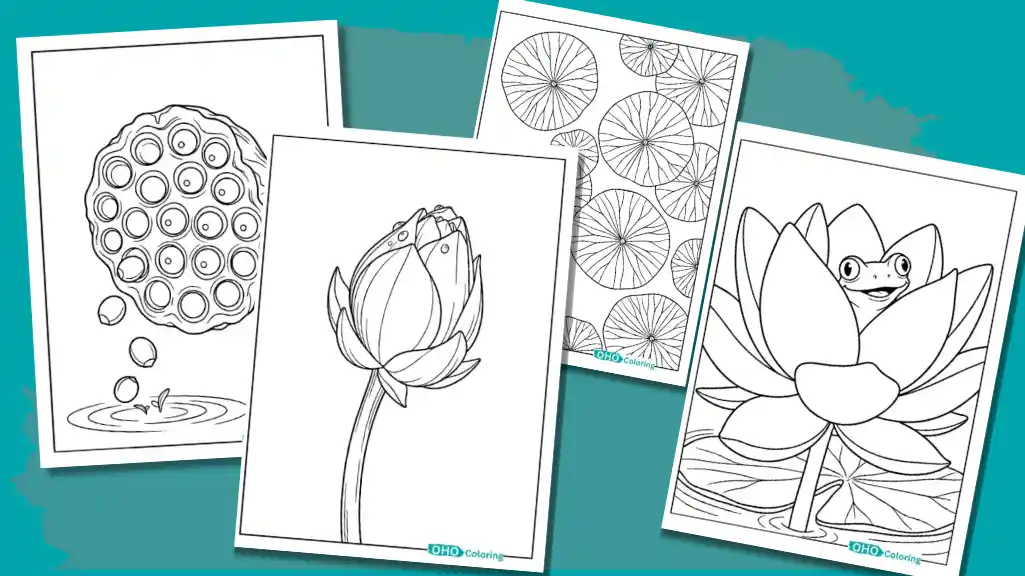
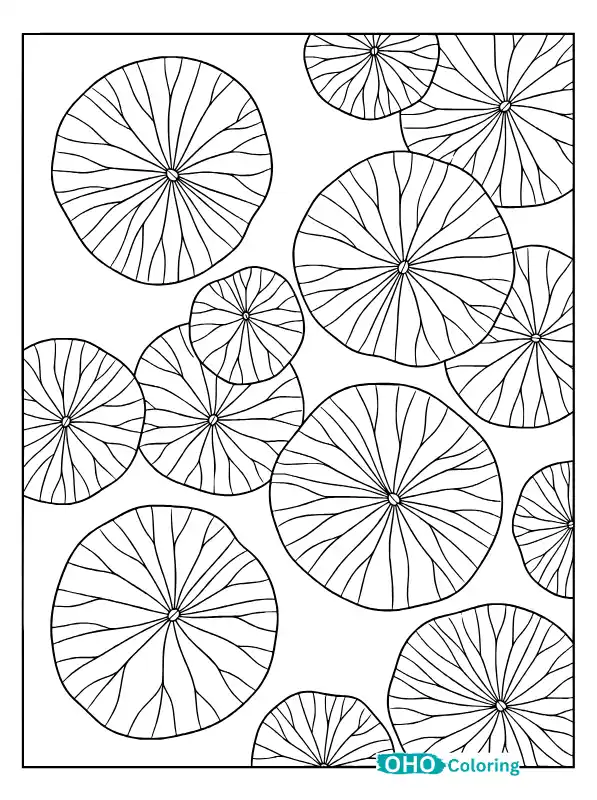
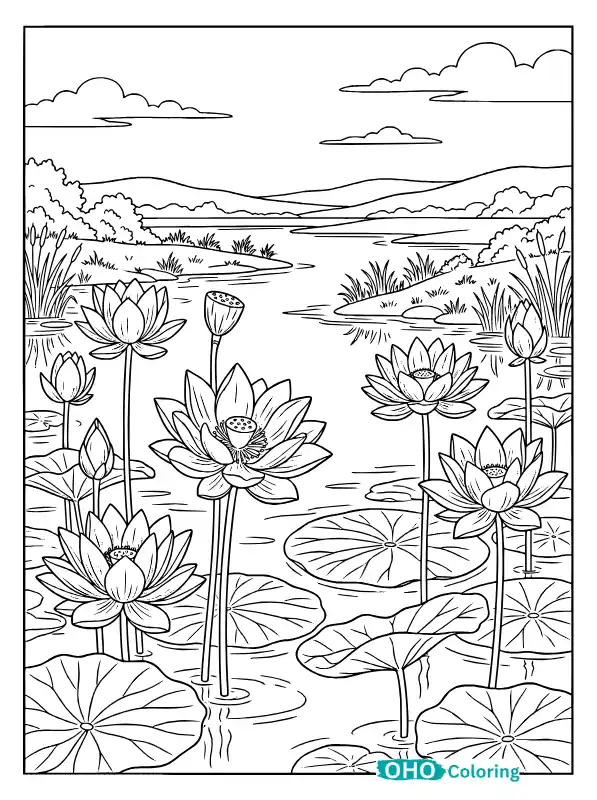
The gallery above has all 23 lotus pages, but this article talks about just 7 of them. Writing about every page would make this post so long that kids would lose interest before they ever picked up a crayon. So I chose the seven scenes that tell the whole story of the lotus: an opening bud, droplets on a leaf, a frog, a dragonfly, a bumblebee, a seed pod, and the roots under the mud. The other 16 pages, like the perfectly symmetrical bloom, the clusters of leaves, the web of roots, and the full pond scenes, are waiting for you in the gallery.
From Bud to Bloom: Petals Opening in the Morning
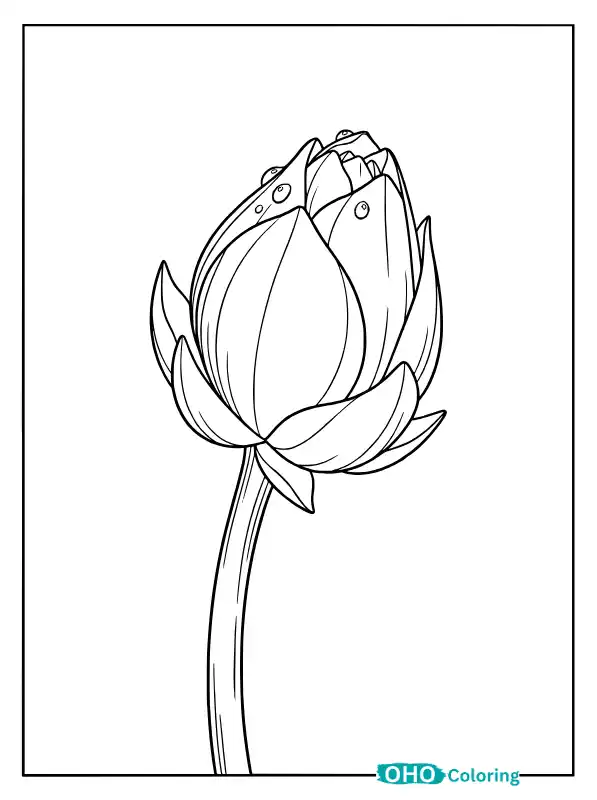
The lotus story starts with that same bud on the pond. On this page, round dew drops sit on the tip of the bud, and the petals are unfolding layer by layer as the sun hits them. A real lotus opens in the morning and closes again by evening. This routine goes on for three or four days, and then the petals drop. The lotus is also the national flower of India. Color the outer petals a deep pink and fade the shade lighter toward the middle, and the yellow stamens in the center will pop.
Droplets Rolling Across the Leaf
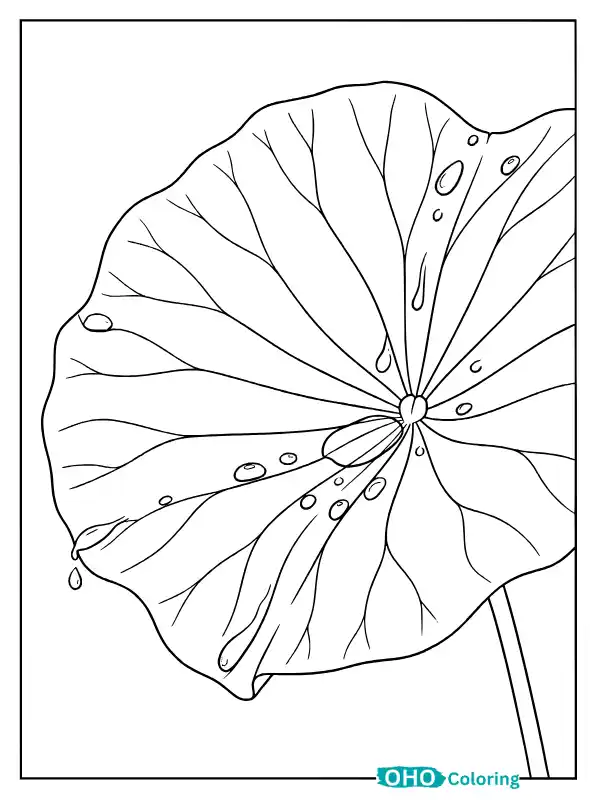
The wide leaves floating beneath the flower have those same dew drops rolling across them like little silver marbles. The reason is in the surface of the leaf, which has tiny bumps and a waxy coating. Water can’t cling to those bumps, so it forms a ball and slides off, carrying dust away with it. Scientists call this the “lotus effect,” and it has inspired self-cleaning paints and fabrics. Fill the droplets with light blue, but leave one small white spot in the middle of each. That spot becomes the shine.
The Green Tree Frog on the Leaf
With a leaf this sturdy, a visitor was bound to show up, and on the next page one has. A small green frog sits at the edge of the leaf, looking upward. Tree frogs have sticky pads on the tips of their toes, which is why they can hold on to slippery leaves. They also breathe partly through their skin, so they like damp places. Use a darker green on the back and a lighter green or cream on the belly, and the frog will look ready to hop.
A Dragonfly on the Tip of a Stem
Right where the frog is looking, a dragonfly has landed on the tip of a thin, curved stem. Each of its four clear wings can move on its own, so it can hover in place and even fly backward. That quickness makes it an expert at catching mosquitoes. Its ancestors were flying around before the dinosaurs, so this pond visitor belongs to a very old family. Fill the wing panels with light blue or purple, and keep the color soft so the wings look like glass.
A Bumblebee on the Golden Center
As soon as the dragonfly takes off, a fuzzy bumblebee arrives at a nearby open flower and hovers over the golden stamens in the center. The hairs on its body catch pollen, and it packs the pollen into little baskets on its back legs to carry it away. The inside of an open lotus stays a bit warmer than the air around it, and that warmth draws insects in. Alternate yellow and black stripes on the bee’s body, and make the center of the flower the brightest yellow on the page.
The Showerhead Seed Pod
The pollen that bees like this one carry from flower to flower is what eventually becomes seeds. After the petals fall, the middle of the flower turns into a flat green pod that looks like the head of a showerhead, with a seed tucked into each hole. When the pod dries, the seeds rattle inside, then drop into the water and sprout somewhere new. A lotus seed found in China, about thirteen hundred years old, once sprouted after all that time. Color the holes light brown and the pod green.
The Roots Beneath the Mud
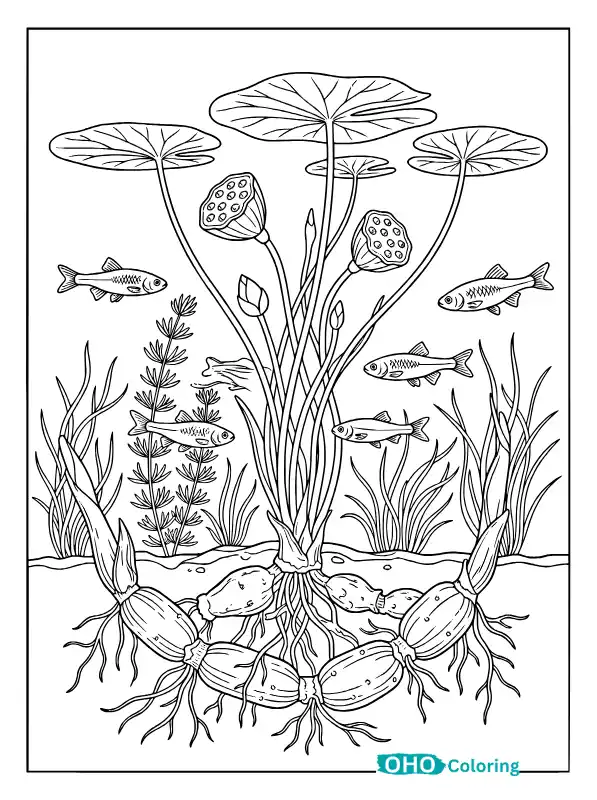
Now for the big question: what holds up everything above the water? The answer is a thick underground stem called a rhizome, buried in the mud, which anchors the lotus to the bottom of the pond. Lotus root, the part you may have seen in Asian stir-fries and soups, comes from this rhizome. Slice it and you’ll find round holes inside, which are air channels that carry air from the leaves down to the roots. Color the mud brown and gray and the roots cream, and they’ll stand out clearly against the green and pink above.
Which Age Should Color Which Page
For kids ages three to five, the big bud, the wide leaf, and the droplet pages are the easiest, because the open spaces are large and it’s hard to color outside the lines. Chunky crayons work best at this age. Kids ages six to eight can handle the frog, dragonfly, and bumblebee pages comfortably, since the details are small but the lines are clear. Kids nine and older will enjoy the honeycomb seed pod, the root web, and the full pond scenes, where they can build up layers of color and fill in tiny holes. If you have kids of different ages at home, give each one a page at their own level, then hang all the finished pages side by side on the wall. The pond will come together right there.
Tips for Coloring Lotus Pages
Start with light colors. Fill a petal with light pink first, then press a little harder along the edges to darken the same color, which gives the petal a rounded look. On leaves, use a darker green near the lines and a lighter green in the middle, and color around the veins and leave them empty so they stand out. Flat blue doesn’t work well for water. Use a very light blue at the top and a blue with a little green mixed in near the leaves. For a white lotus, let the white of the paper be the petal and keep the background color dark, and the flower will stand out on its own.
Use a sharp pencil or a fine-tip pen for small parts like the frog, dragonfly, and bumblebee, and save the crayons for the big areas. Before coloring, look at a photo of a real lotus together, and kids will decide for themselves which color goes where.
Heading Back from the Pond
Once you’ve colored all seven scenes, you’ll have a whole day of the lotus laid out from bud to roots. Then head back to the gallery, because 16 more pages are waiting, including clusters of leaves, the symmetrical bloom, and full pond scenes. When you print, slip an extra sheet of paper under any page you’ll color with markers so the ink doesn’t bleed onto the table. And when the finished pages go up on the wall, kids will feel like they built the pond themselves.