The moment you open this new set of shark coloring pages, your child’s first question will probably be, “Will it bite?” The answer is easy. These sharks live on paper, so the biggest danger is that your blue crayons might run out too fast. Sharks were swimming in the ocean even before the dinosaurs, and in all that time, every species has found its own way of getting by.
Some sleep all day, some use their heads like hammers, and some crack their tails like whips. We have put those habits onto the pages and left plenty of open space around each shark for coloring. All the pages print easily on standard 8.5 x 11 inch letter-size paper. So print a few, and see which shark your little artist picks first.
Download Your Favorite Shark Coloring Pages
Click on any image below to open it, then download the high-resolution PDF and print it at home.



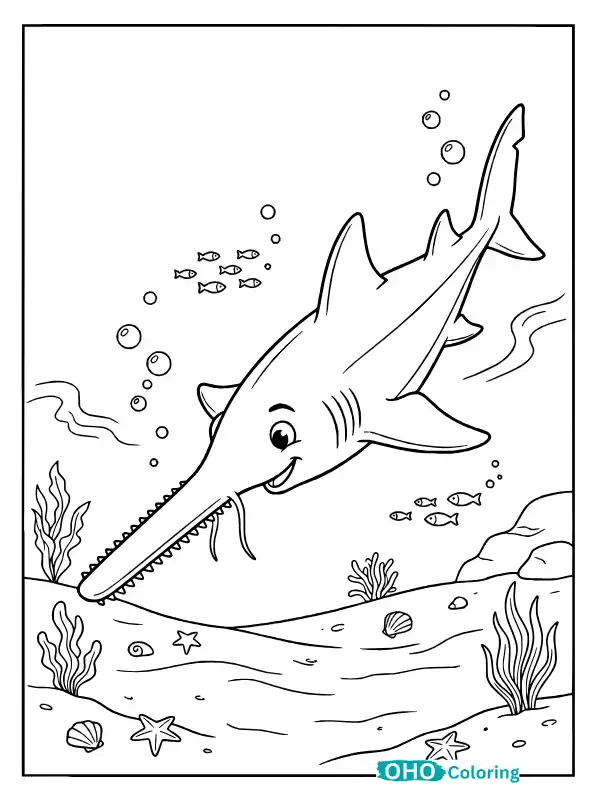





Meet the Sharks You Can Color: Fun Facts and Stories
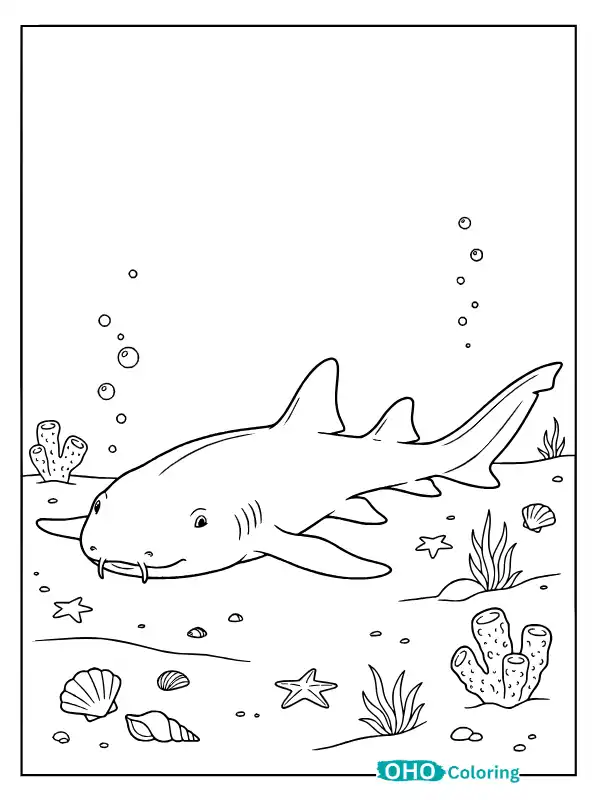
Nurse Shark: Every Day Is a Lazy Sunday
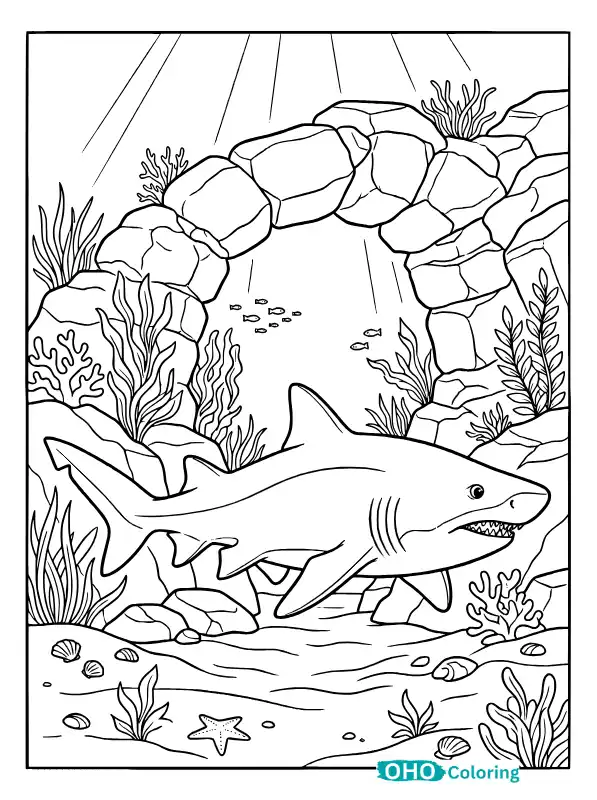
The best way to chase away fear is to start with a shark that wants nothing more than to rest. The nurse shark is sprawled on the sandy seafloor, with seashells and sponges scattered around her, and her face looks as peaceful as a weekend afternoon. In real life, too, she sleeps under rocks during the day and heads out to find food after dark.
Breathing while asleep is no trouble for her, because she pulls water in through her mouth and pushes it straight over her gills. Light yellow for the sand will set her sleepy mood, and if you leave the seashells pink, the whole page will feel relaxed.
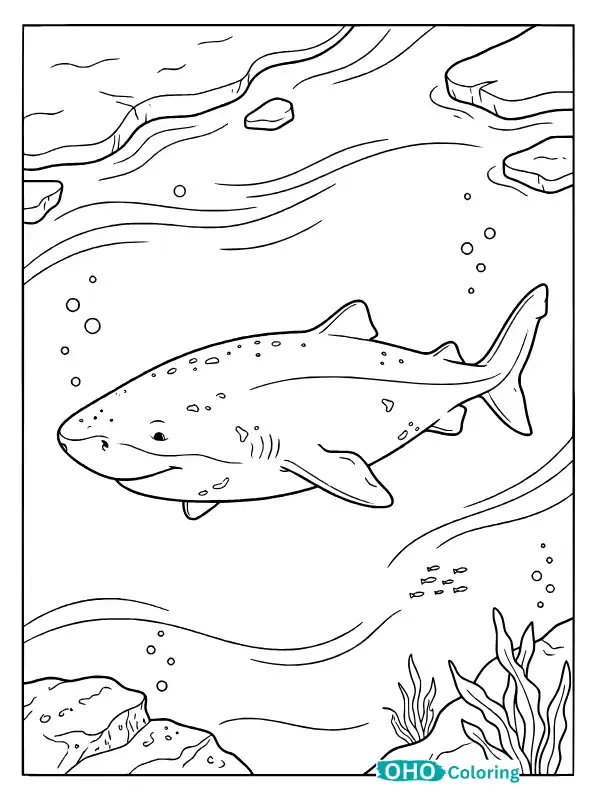
Whale Shark: The Biggest Fish with the Smallest Meal
After such a lazy shark, take a look at her complete opposite. The whale shark is the largest fish in the sea, yet her meal is tiny plankton. She swims along with her wide mouth open and strains her food out of the water, so she never has to chase anything. The white spots on her back are special too.
Every shark’s spots are different, like our fingerprints, so whatever pattern your child draws will be the right one. Pick yellow spots on a deep navy blue body, and it will look like stars have come out in the night sky.
Hammerhead Shark: Eyes at the Very Edges of the Head
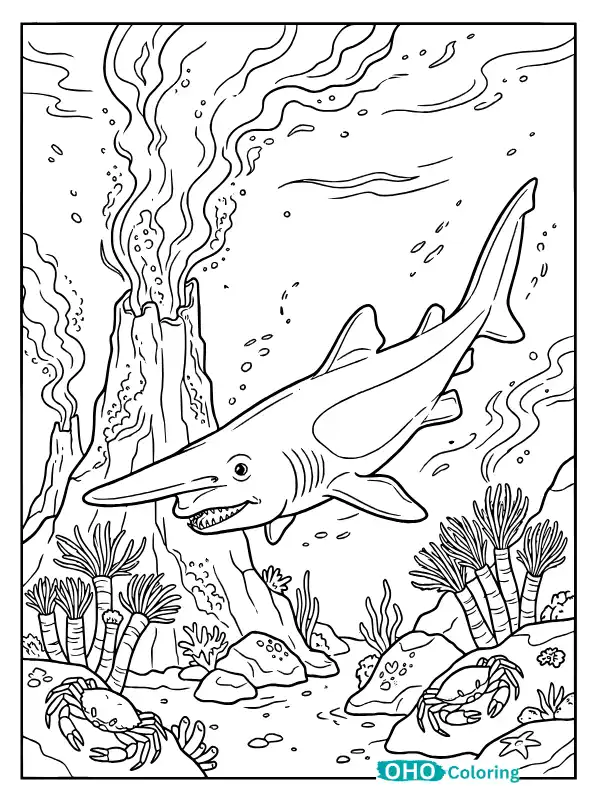
While the whale shark strains her food from the water, the hammerhead has to hunt for hers, and her unusual head helps with that job. Her head is wide like a hammer, with an eye on each end, so a single glance shows her a huge area around her.
Even fish hiding in the sand can’t escape her. On the page with the rocky pinnacle, fill the rock with gray and blue so the wide head stands out clearly against it. Your child will enjoy realizing that the very shape being colored is what makes this shark such a good searcher.
Thresher Shark: The Tail That Works Like a Whip
The hammerhead finds her prey, while the thresher shark gets hers under control with her tail. That tail is as long as her whole body, and she snaps it like a whip to stun a school of fish. Once the fish are dazed, dinner gets easy. On the page, the curve of that swishing tail is the most interesting part. Use purple on top and blue underneath, and it will look like the tail is truly slicing through the water.
Wobbegong Shark: The Hide-and-Seek Champion
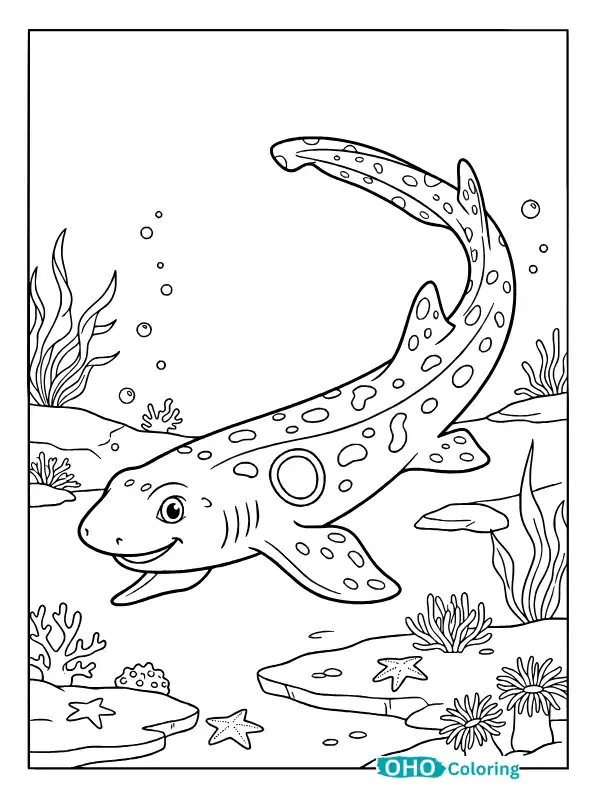
The thresher hunts with a loud splash, but the wobbegong does the exact opposite. She lies perfectly still on the coral reef and turns herself into a rock. Her flat body is covered in a blotchy map of patterns, and fringes like seaweed dangle near her mouth.
Small fish mistake her for a rock and swim close, and then she snaps them up in a flash. Fill her in with green, brown, and muddy yellow, because the more she blends in, the more real she will look. After you finish, ask your friends, “Can you find the shark?”
Reef Shark and Remora: A Free Ride and a Cleaning Service
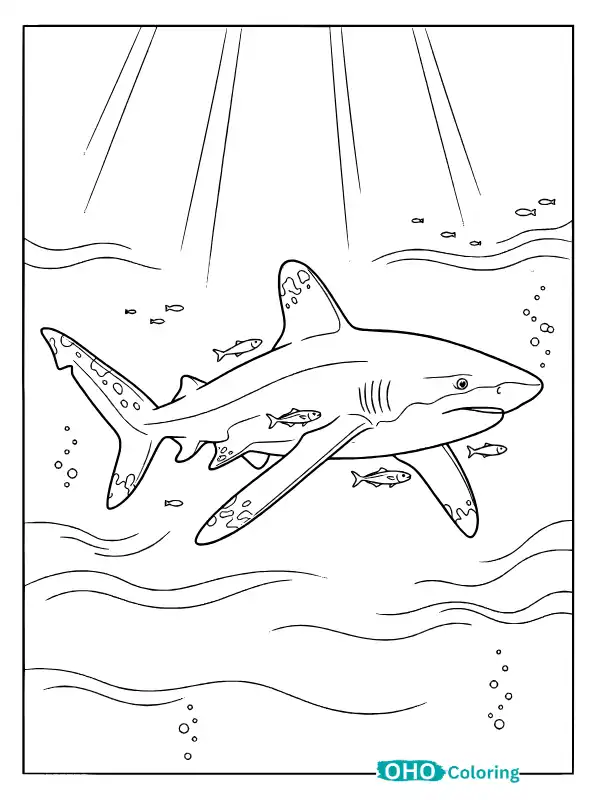
The wobbegong hides among the rocks and lives alone, but a reef shark always has a tiny buddy swimming along. The remora is a small fish that sticks to the shark’s body for a free ride, and in return she cleans off parasites and leftover food scraps from the shark’s skin. That means both of them come out ahead. Color the remora a bright orange so she is the first thing you spot on the shark’s back.
There is one last fact to share with your child. A shark has no hard bones in her body. She has soft cartilage, just like the kind in our ears and noses. Your child will bend an ear to check, and that is how the fact will stick for good.
Coloring Tips to Make Your Sharks Look Real
One color rule works for all of these sharks, and it comes straight from the sharks themselves. A real shark has a dark back and a light belly. Seen from above, the dark back disappears into the dark depths of the ocean, and seen from below, the light belly vanishes against the bright sky. If you color the back dark and the belly light, the whole picture will start to look true to life.
Once the shark is done, the next job is the water around her. First brush light blue over the whole area, then press harder in a few spots to turn the same blue darker, which gives the water some depth. Leave the bubbles white, because they look better without any color.
After the water, it’s time for the coral and seaweed. Give them a different color than the shark, or she will blend in with everything behind her. Crayons work well for big areas, and colored pencils work well for small ones. Kids often like to leave the teeth white, so let them do it that way.
Finally, use a white gel pen to add one small shiny dot to the shark’s eye. That tiny touch is enough to make her look like she is blinking right back at you.