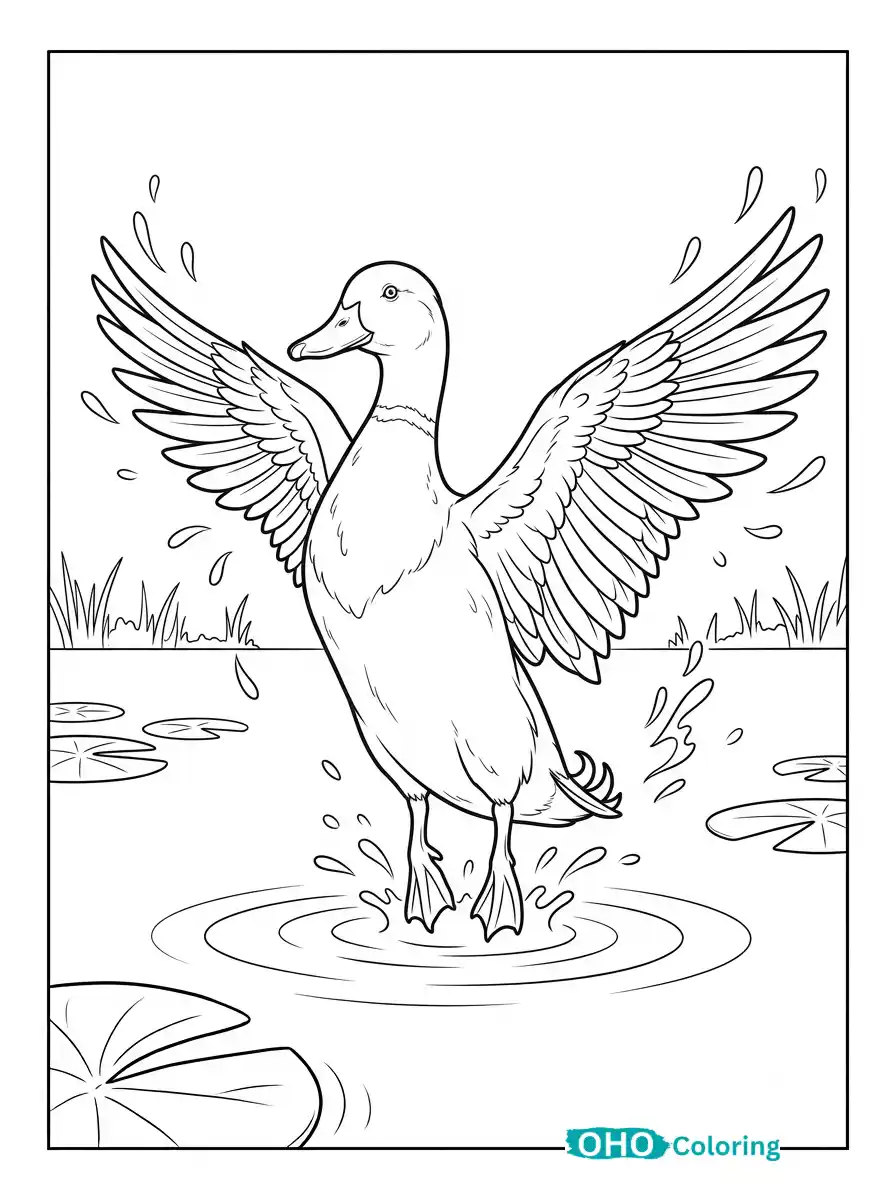
Early morning on the pond brings a quiet, silver mist that rests gently over still water. A hush wraps around the shoreline reeds, until a sharp, unmistakable quack breaks the calm! A sudden splash sends sparkling spray in every direction. Out in the shallows, a duck tips completely upside down to forage for water weeds, while another stands tall on the surface, flapping broad wings until water droplets scatter like tiny jewels.
Down along the grassy bank, newly hatched ducklings wobble in an earnest single-file line behind their mother, while a lively drake chases floating autumn leaves caught in the gentle current. Life around the water never stays still for long; every bend in the creek holds funny waddles, curious head tilts, and cheerful splashing. Putting these lively moments onto paper lets every clean outline hold the crisp freshness of the pond and the sweet charm of our webbed-foot friends.
Duck Coloring Pages
Browse our printable sheets below. Click on any illustration to open it and download the high-resolution PDF for printing:



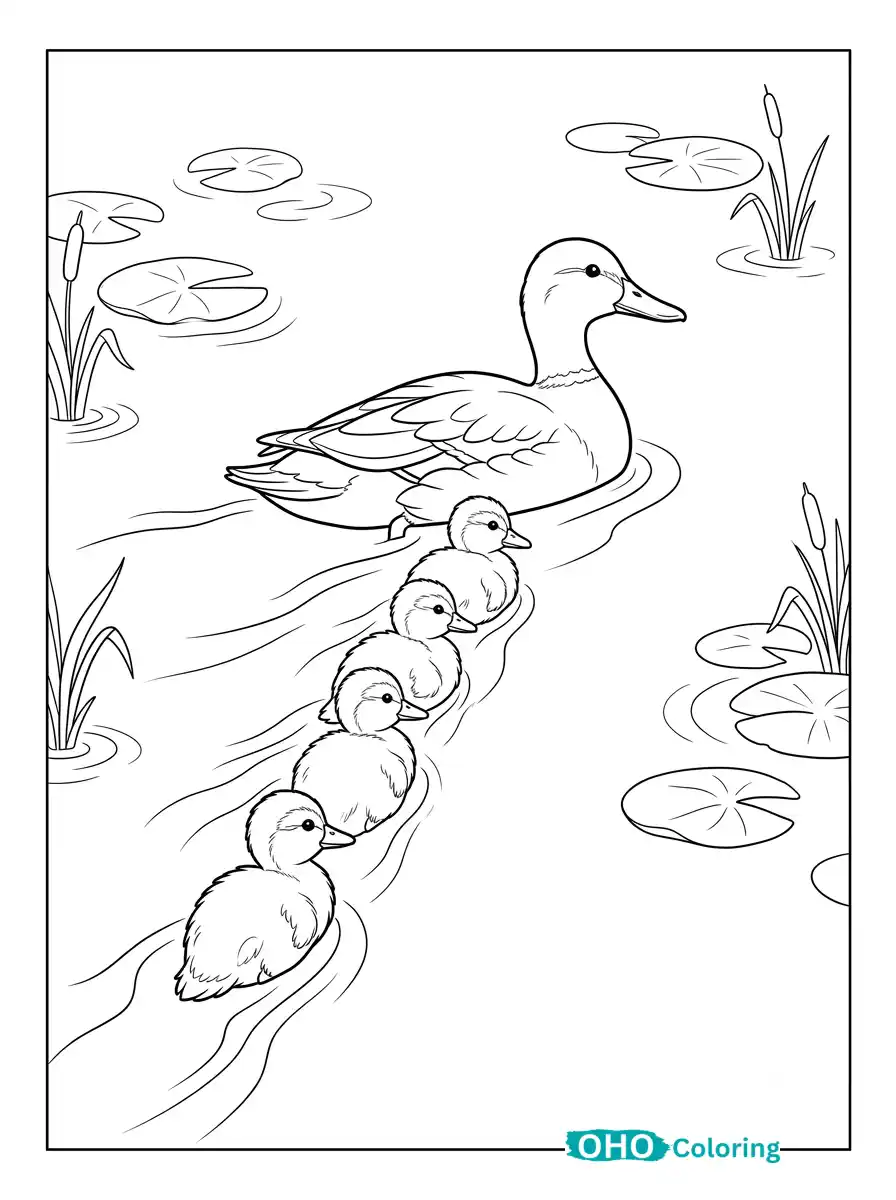


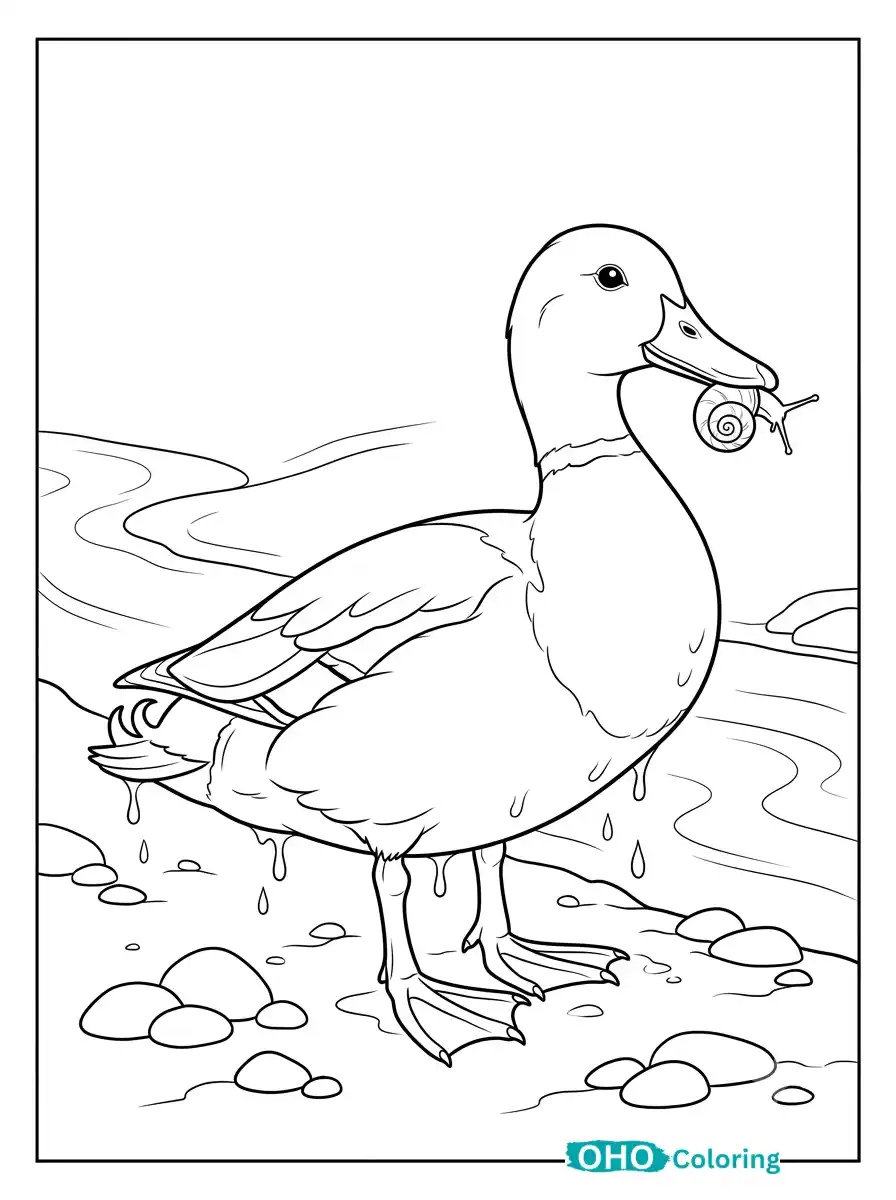
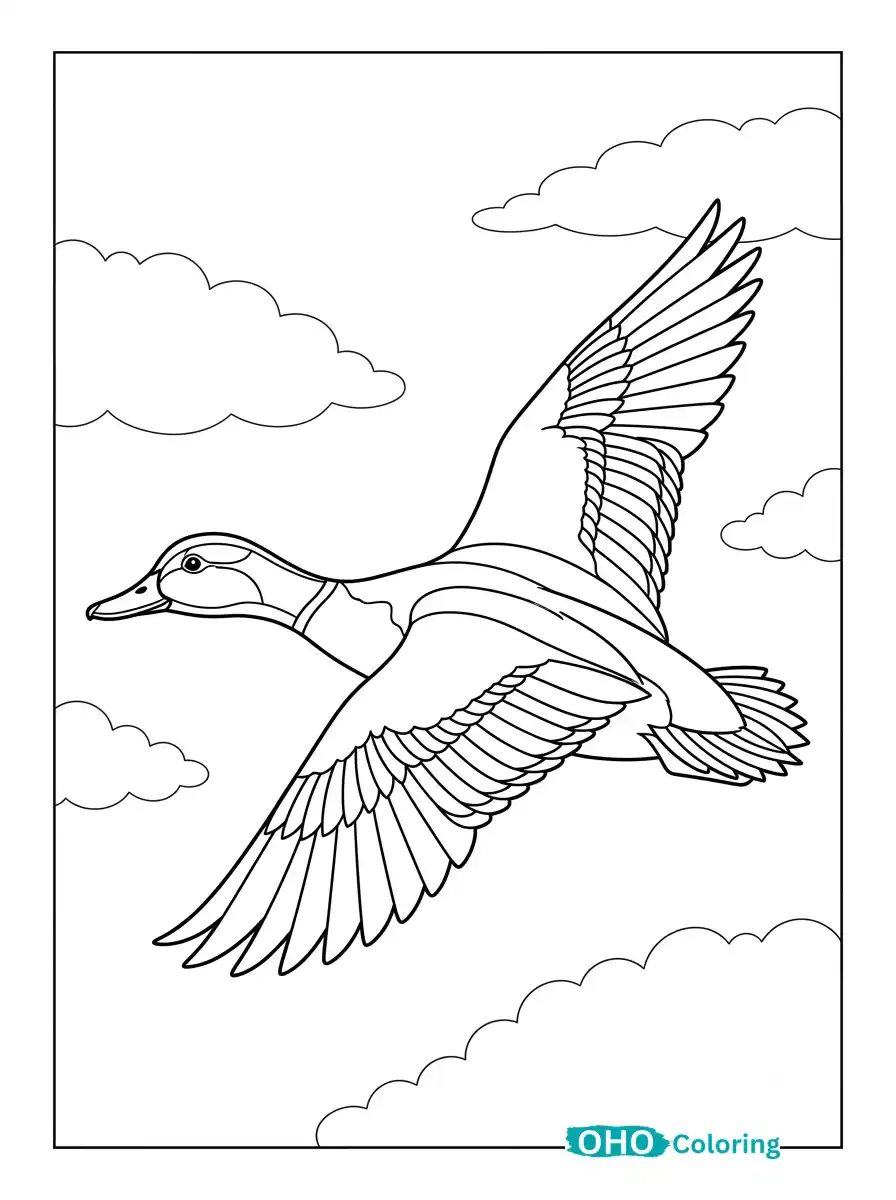
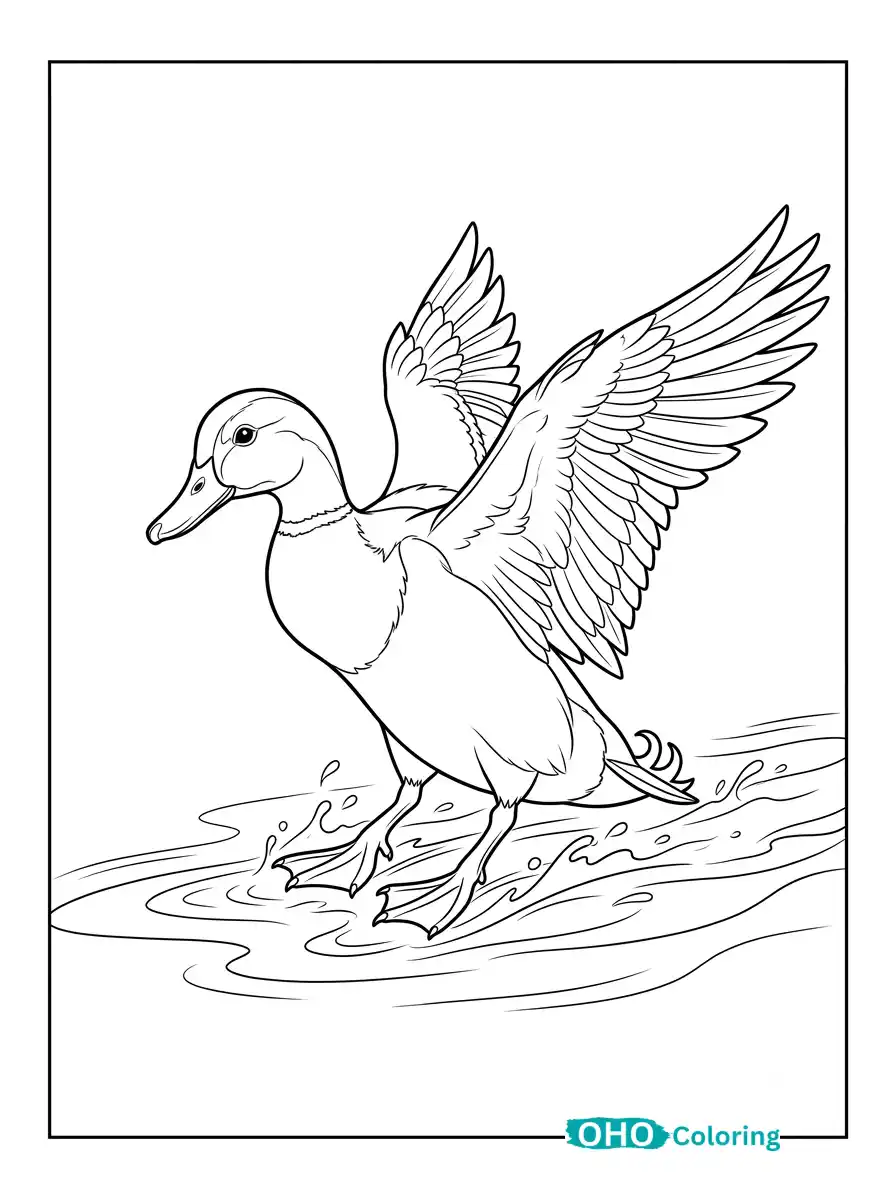





Duck Coloring Pages Highlights
Bottoms-Up Dabbles and Wing-Shaking Splashes
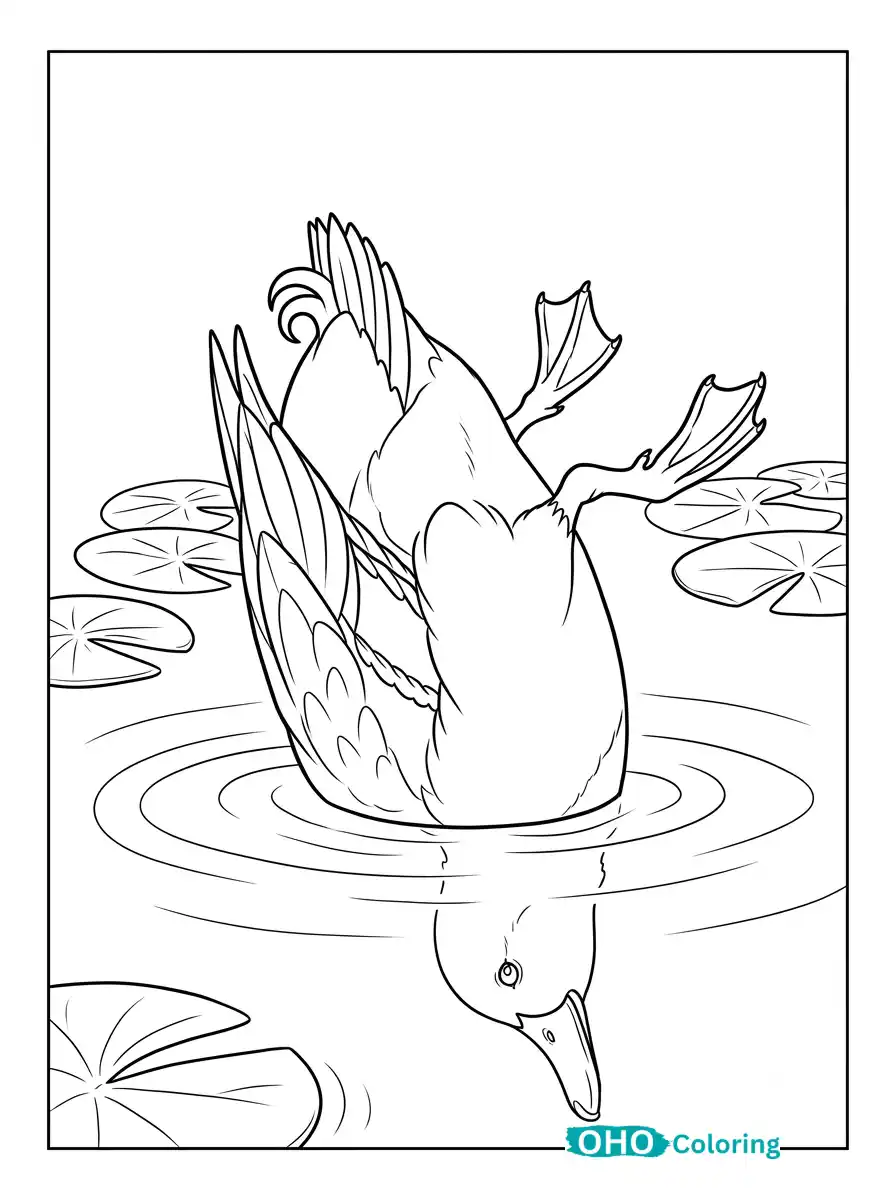
A mallard drake rarely worries about looking dignified, especially when tender water plants wait just beneath the surface. Without a second thought, he tips vertically upside down, tail feathers bobbing near floating lily pads while bright orange webbed feet paddle comically in the open air. It looks as if he is signaling to the whole pond that the feast down below is well worth the goofy posture. When coloring this playful pose, give those paddling feet a vibrant pumpkin orange and leave clean white space around the ripple rings to show the water has just been stirred.
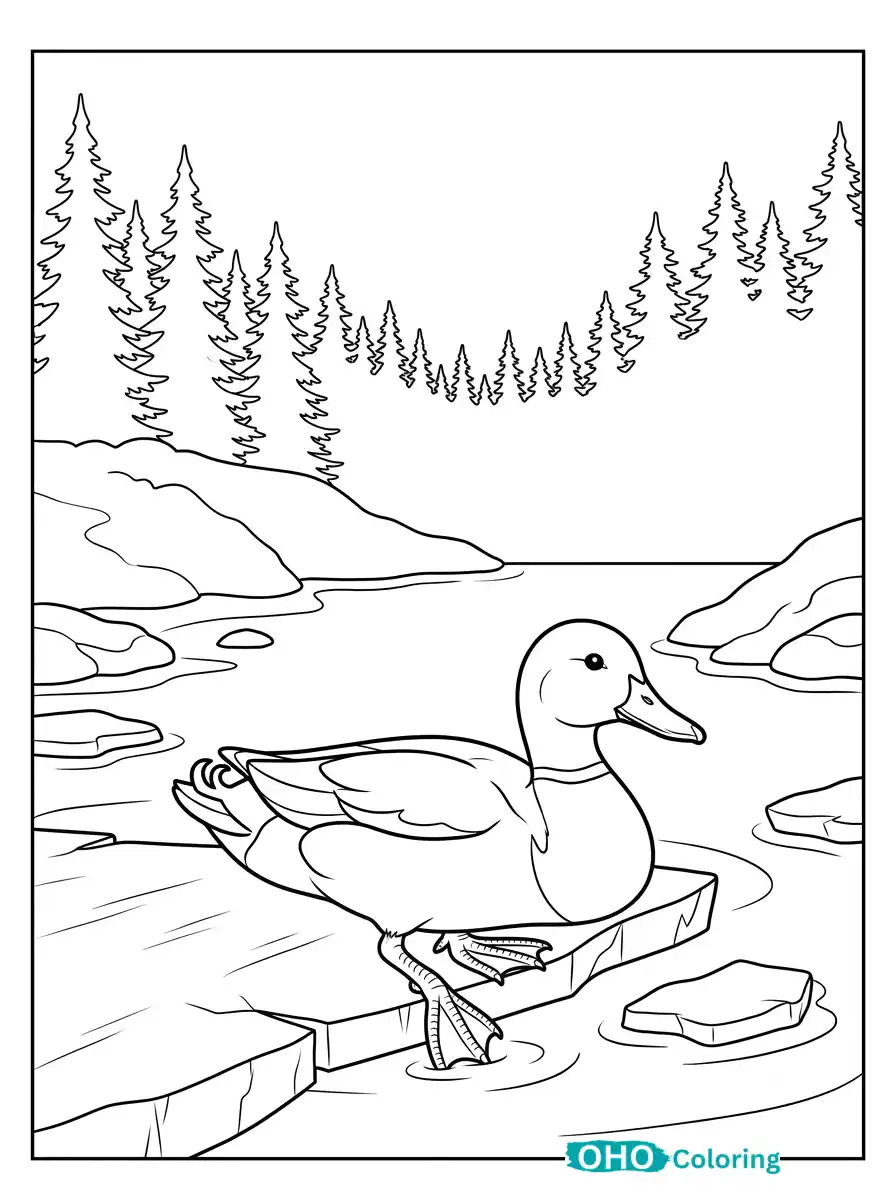
After a good swim, a duck often hops onto a mossy fallen log by the bank to tidy up. With steady concentration, it pulls each wing feather through its broad bill to preen and waterproof its coat. When a light morning drizzle begins, raindrops refuse to soak in; they simply roll off the oily feathers like shiny glass beads. A soft touch of slate gray or sky blue along the feather edges gives that sleek, water-resistant look.
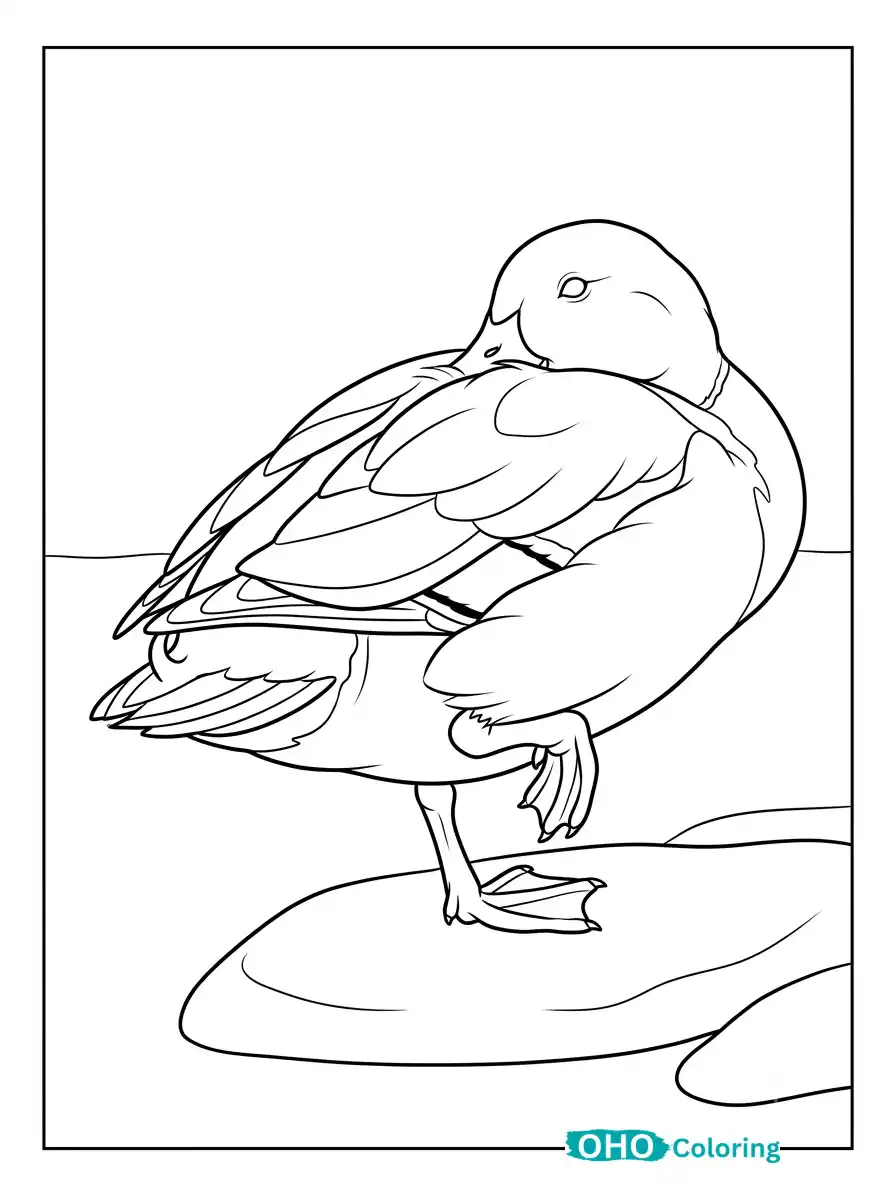
As dusk settles over the shoreline, that same duck finds a smooth river stone and balances for the night on a single foot. Tucking its bill deep beneath its warm shoulder feathers, it drifts off to sleep without tipping an inch. Little observers often stare in disbelief, wondering how any creature manages to balance so soundly without taking a tumble.
Brave Little Leaps and Downy Shoreline Nests
Deep inside the tall cattails, hidden from the wind, sits a cozy bowl woven from dried marsh grass and plucked down feathers. When the first hairline crack spiders across an eggshell, a tiny yellow bill pushes through into the open air. Damp down tufts fluff up within hours, and dark, curious eyes blink at the wide world for the very first time. For this tender moment, tint the duckling in a soft pastel yellow while leaving the cracked shell pure crisp white.
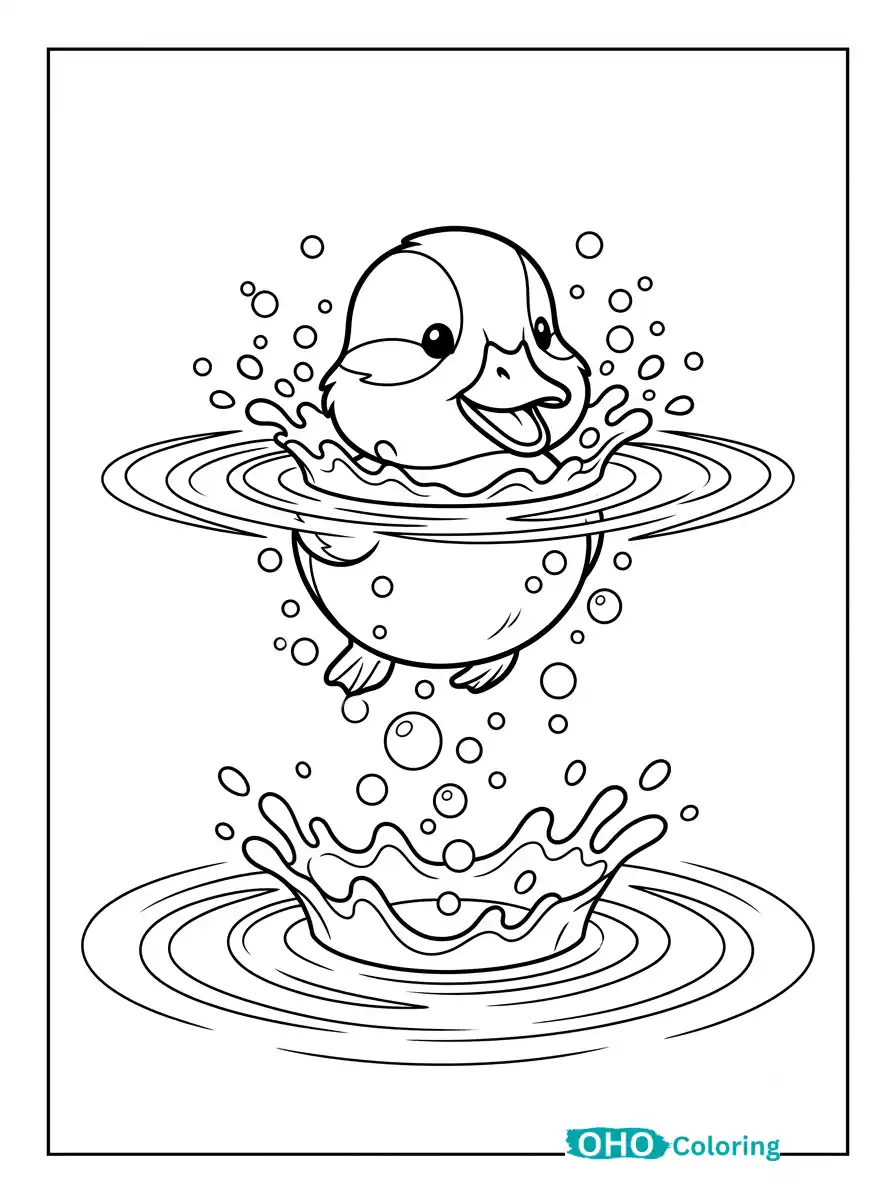
It only takes a few days before an adventurous baby duck stands at the edge of a wooden dock. Down in the calm water, mother duck floats patiently, softly calling up with steady reassurance. The tiny duckling wiggles its tail, spreads its miniature wings, and takes a courageous leap into mid-air. That flutter of hesitation and brave splash always brings a warm smile to anyone watching.
Once afloat, the little ducklings fall into a tidy single-file parade behind their mother, following her wake like miniature train cars. None of them stray from the line. When the evening breeze turns crisp, they snuggle beneath the warm shelter of her outstretched wing, leaving only tiny dark paddle feet peeking out along the grassy bank.
Sifting Shoreline Mud and Woodland Treasures
To a hungry duck, wet shoreline mud is better than a treasure chest. Pacing along the sandy bank, it dips its spatulate bill into the soft silt, rapidly sifting for tiny insects and water snails. The fine comb-like edges along its bill let water and mud drain away while keeping every delicious bite safely inside. A warm golden yellow brings the bill to life, especially set against soft earthy browns along the riverbank pebbles.
On warm afternoons, pond water often turns into an emerald carpet of floating duckweed. A duck glides through, skimming up mouthfuls of tiny green leaves as if savoring a fresh bowl of garden greens, while clean water droplets trickle from its bill tip. Layering distinct shades of moss green and light olive across the floating plants gives the pond surface an inviting, natural depth.
Come autumn, wild ducks often wander onto dry ground under spreading oak trees. Rustling through crisp fallen leaves, they hunt for plump, smooth acorns. Finding a prized acorn cap feels like striking gold, and a duck will march proudly back to the creek holding its prize high in its bill.
Crested Forest Drifters and Ocean Divers
Among wetland birds, few turn heads quite like a male Wood Duck. His slicked-back head crest looks like a royal crown, set off by striking white harness stripes across his cheeks. It looks as though an artist carefully hand-painted each feather with deliberate care. Bringing out that royal flair calls for rich jewel tones by blending emerald greens and deep purples across his crest, letting the white facial stripes stay untouched and bright.
The Mandarin duck brings an even more exotic silhouette to quiet waters. Raised fan-shaped feathers arch over its back like copper sails on a miniature ship. Swimming across still water, its crisp reflection resembles an ornate wooden carving gliding through silk. Warm russet, vivid orange, and cream tones help those back sails pop against gentle pond ripples.
Out in deeper channels, diving species have their own playbook. A Canvasback duck does not merely dabble at the surface; it angles its wedge-shaped head down and drives straight toward the lake bottom, leaving a trail of shimmering bubbles behind. Nearby, a round little Bufflehead pops back up to the surface with sudden energy, bursting into the sunshine like a bobbing cork and sending clean splash rings dancing across the pond.
Easy and Practical Coloring Tips
A duck’s plumage is built in subtle, overlapping layers. Rather than coloring the head and body in a flat, solid coat, use short, light pencil strokes that follow the natural flow of the feathers. When shading a wild mallard drake, lay down a soft lime green first, then layer a hint of navy blue over the top. This simple blend creates the iridescent sheen seen when feathers catch morning sunlight.
Resist the urge to color the surrounding water in one uniform blue. Leaving clean white paper around splash droplets, wake ripples, and the duck’s waterline makes the scene look bright and sunlit. A gentle wash of sky blue right beneath the bird’s body grounds the floating duck and gives the water a clear, reflective feel.
For bills and webbed feet, starting with a base of warm sunshine yellow before layering pumpkin orange along the edges gives the skin a soft, lifelike roundness. When filling in surrounding river stones and shoreline moss, stick to quiet grays and muted olive tones. Keeping the background gentle allows the duck’s cheerful personality to remain the true star of the page.