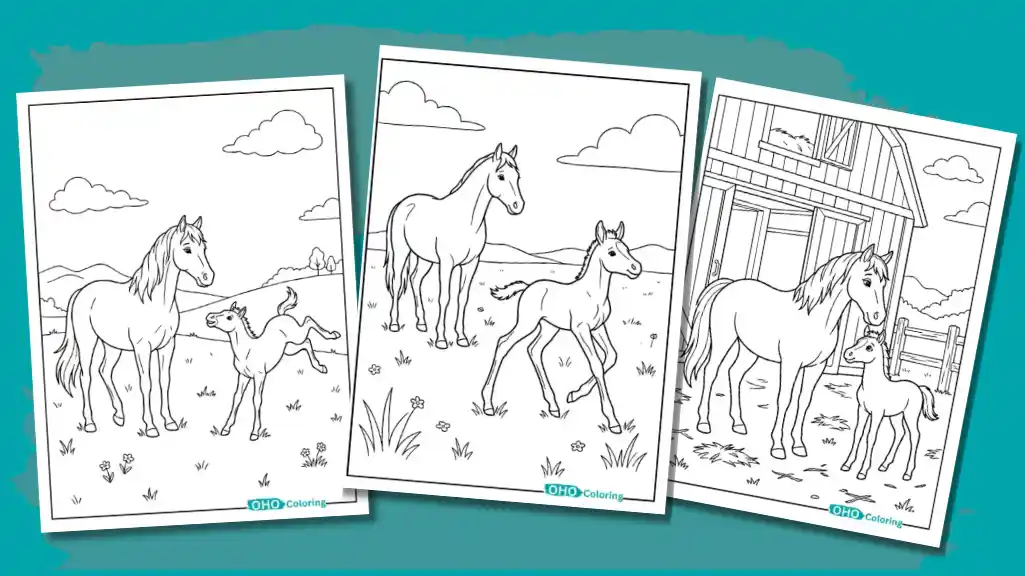
When I was a kid, I spent a summer break at a ranch. A tiny foal (a baby horse) followed its mother around like her shadow. That memory is where our Horse and Foal Coloring Pages come from. A calm mare (a mother horse) and her long-legged baby wander through pastures, past wooden ranch fences and across meadows full of wildflowers. The foal at that ranch would stumble, tangle himself up in his own legs, and then take off running a moment later.
These pages have big open spaces, so little ones can use chunky crayons without worrying, and older kids can try out their favorite shades. Each page also comes with a few fun facts about horses, and kids tend to remember them while they color.
Our Horse and Foal Coloring Pages
Scroll through the mare and foal scenes below. Click any image to open it, then download the PDF and print your favourite.








Five Little Stories of a Mare and Her Foal
Each of these five pages has its own little story: a mother and baby grazing, a bit of mischief, a nap. Every story comes with a true fact about how horses behave, and kids pick these up easily while they color. Choose the page you like best and start coloring as you read.
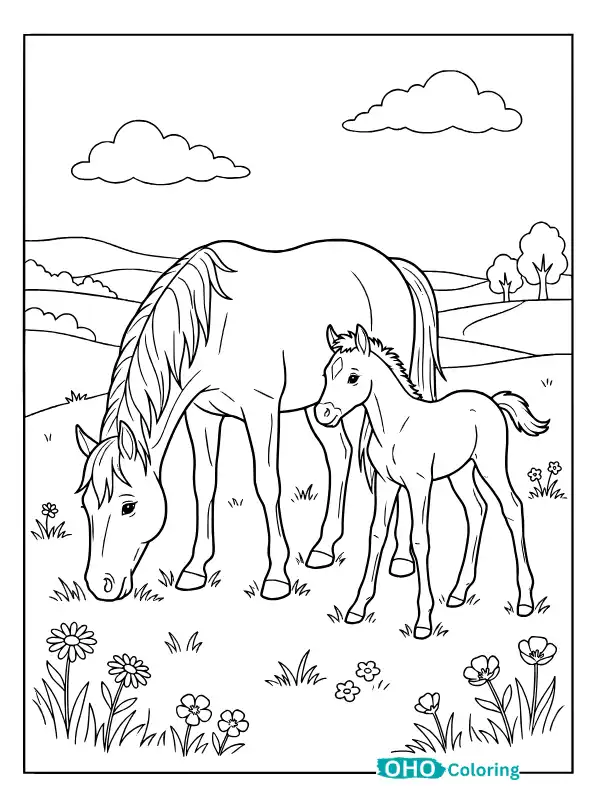
A Mare and Her Foal Grazing in the Green Pasture
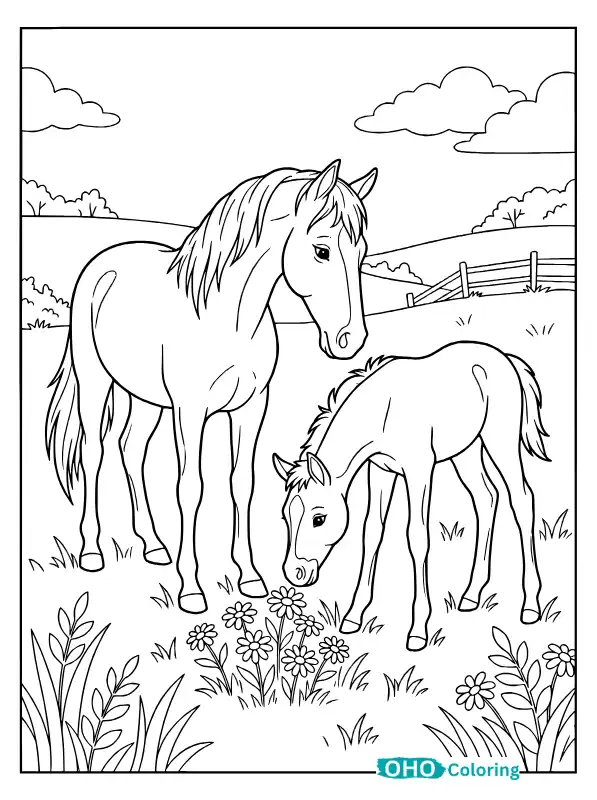
On this page, the mare and her foal graze side by side with their heads lowered. Gentle rolling hills sit in the background, and small wildflowers dot the foreground. Kids often color the mare bay (a dark brown body with a black mane) or chestnut (a reddish brown) and keep the foal a little lighter.That actually matches real horses, since many foals are born a different color than their mothers. Gray horses are born dark and slowly turn whiter as they grow up.
Here’s another fact that surprises kids: a horse’s eyes sit on the sides of its head, so it can see almost everything around it at once. That’s why a horse notices every little sound, even while it grazes.
The Mischievous Foal Kicking Up Its Heels
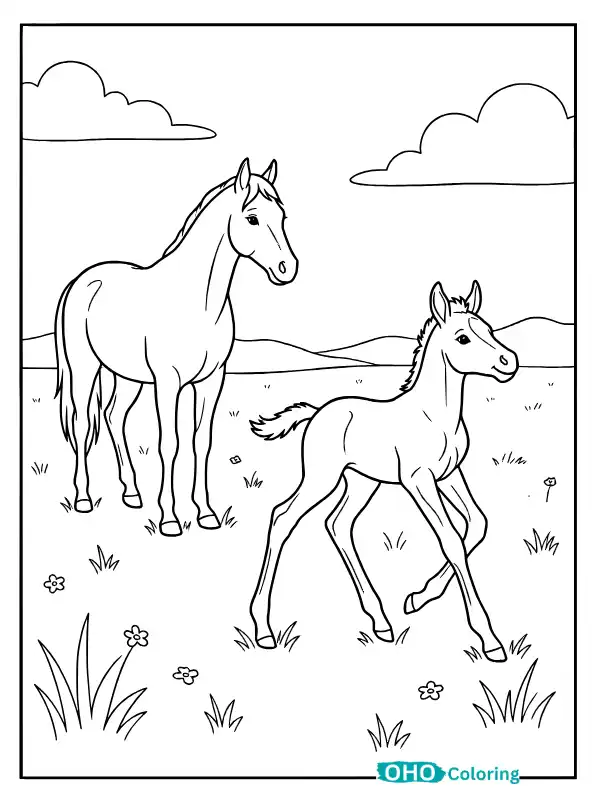
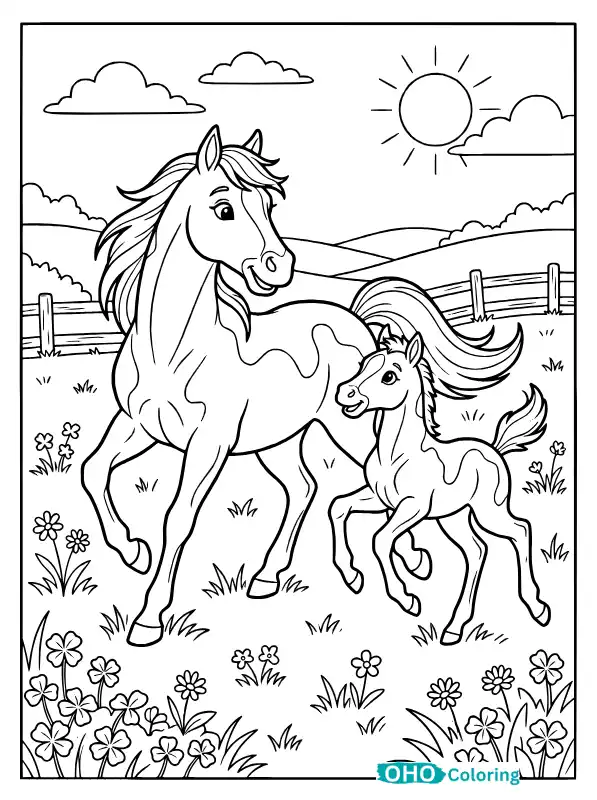
On this page, the foal is kicking its back legs into the air out of pure joy while its mother watches lovingly from behind. All that running around has a purpose. Within about an hour of birth, a foal stands up on its own, and within a few hours it’s running alongside its mother, because in open country a baby that can’t run fast isn’t safe.
Here’s fun fact: a foal’s legs are almost as long as a grown horse’s at birth, which is why it looks so lanky and wobbly. While you color, kids can add light green and yellow streaks under the grass to show speed.
The Little Foal Curled Up Asleep in the Grass
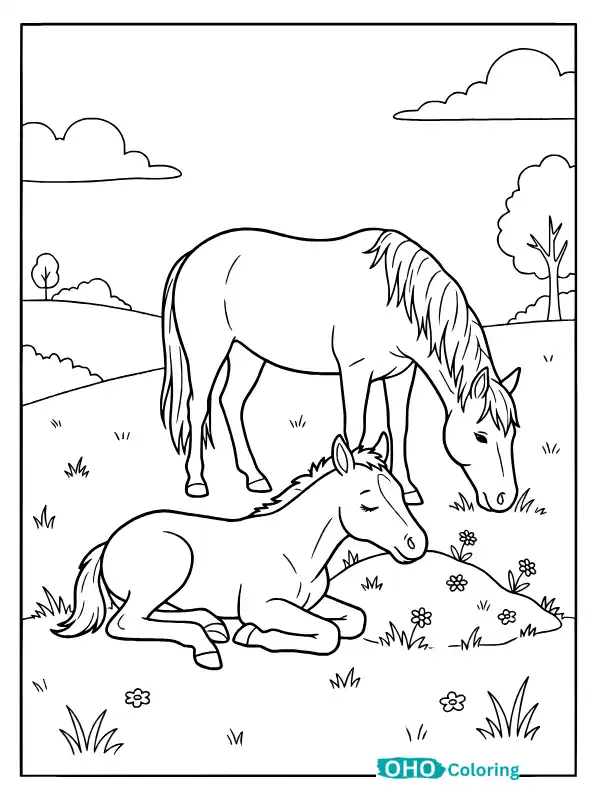
On this page, a tired foal is curled up asleep on the soft meadow grass while the mare stands alert beside it. Grown horses usually doze while standing, because the structure of their legs keeps them from falling over. But for deep sleep they have to lie down too, and foals spend much more time lying down than adults do. That’s why the mother stands nearby like a guard. Soft colors work well for this page, like pale sky blue and yellow-green grass. Kids often point out on their own that a sleeping foal shouldn’t be colored bright red.
The Foal Sniffing a Butterfly on a Dandelion
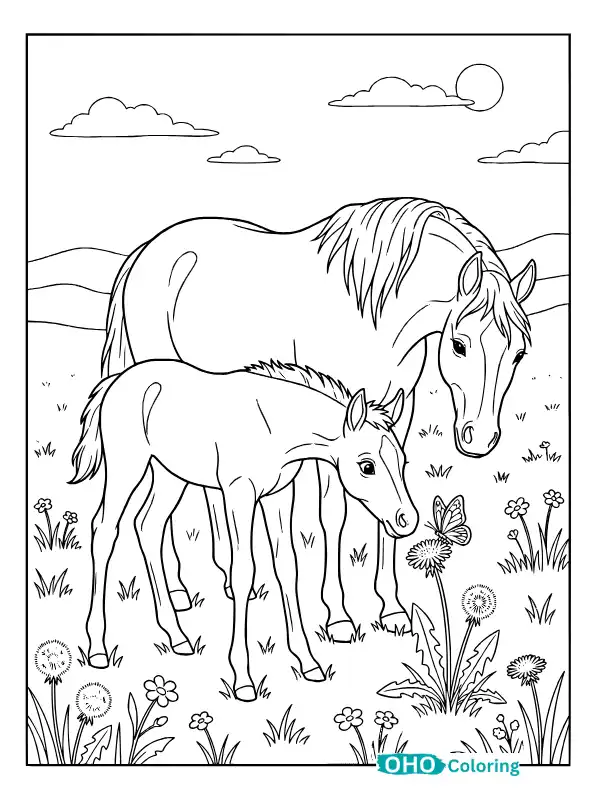
On this page, the foal stares wide-eyed at a butterfly sitting on a dandelion. Horses have a very strong sense of smell, and foals check out anything new with their noses first. Their ears keep swiveling too, and the direction of the ears shows where the horse is paying attention. Use two or three different colors on the butterfly’s wings and keep the foal simple. That way the butterfly naturally becomes the center of attention.
The Mare Grooming Her Foal’s Soft Mane
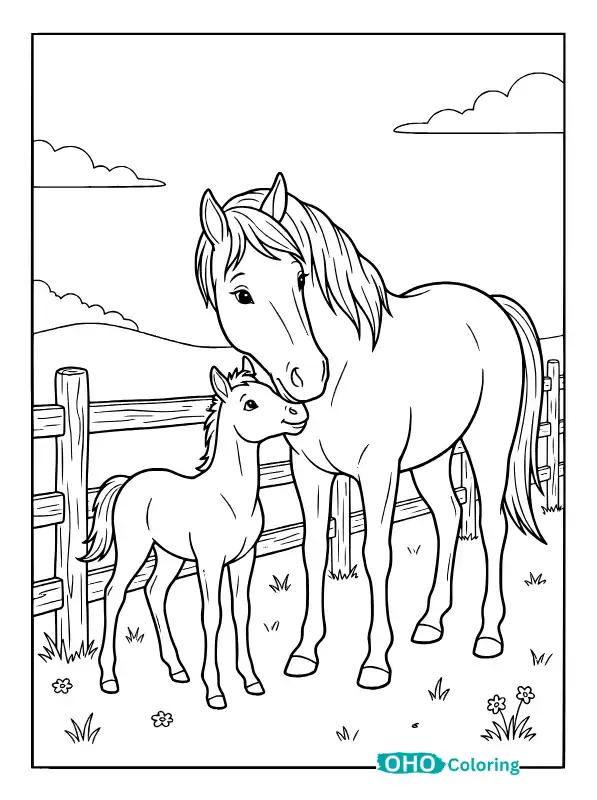
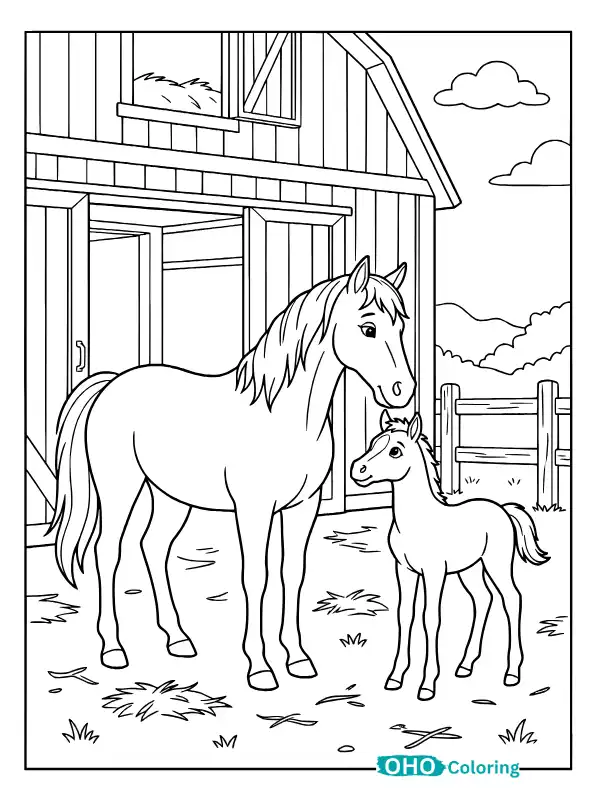
On this page, the mare is gently grooming her foal’s soft mane in a sunny paddock. Real horses do this too. Grooming builds trust inside a herd, and horses usually scratch the spots they can’t reach themselves, like the area just above the shoulder. A foal’s mane starts out short, curly, and fuzzy, and kids can color it a different shade than the mare’s straight mane. One more fun fact: a mare carries her baby for about eleven months, which is about two months longer than a human mother does.
Tips for Coloring Horses and Foals
Start by choosing one main color for the horse’s body, like bay, chestnut, black, or palomino (a golden cream). Then color the whole body in one direction, going the same way the hair grows, using a light hand. This makes the coat look real.
Pick a different color for the mane and tail than the body, and the picture really stands out. A deep brown mane looks great on a chestnut horse, and a white mane looks great on a palomino.
Add a light, darker layer under the belly and legs. This makes the legs look like they’re in front of and behind each other, and it adds depth to the picture, even if you’re only working with colored pencils.
For the hooves, choose a dark brown or gray, and leave one tiny white dot in each eye for a sparkle. Just that little touch makes the horse look alive.
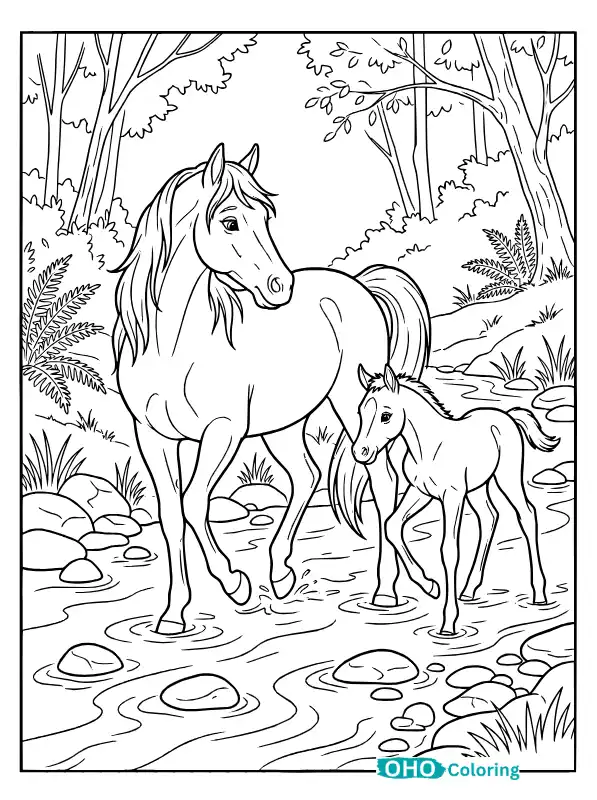
Instead of using a single green for the meadow grass, mix three or four shades of green and add a few dots of yellow and orange here and there. The same trick works for the leaves on the fall page, where red, orange, and golden shades look great together.
Fill in the big areas first with crayons, and save the colored pencils for the small details. This order keeps the color from wandering outside the lines.
When you’re done, hold the page a little way from your face. If any spot looks faded, add another layer on top. And if you make a mistake, don’t worry. Even real foals stumble once or twice on every run, and they still get right back up and keep going.
Before You Print
These pages work well for kids around 3 to 10 years old. Younger kids color in big sections with crayons, and older kids spend time on the small details like flowers, leaves, and manes. To print, choose US Letter (8.5 x 11 inches), keep the page in portrait orientation, and turn on “Fit to page.” Crayons and colored pencils work well on plain printer paper. If you’re using markers, slip an extra sheet underneath so the color doesn’t bleed onto the next page. When the coloring is done, hang the pages on the refrigerator or on the wall of your child’s room. Kids light up every time they see the foal they colored themselves.