Snow fell all night, and by morning a white blanket covered the backyard. On a day like this, the first thing kids want to do is build a snowman, and these Snowman Coloring Pages bring that whole day onto paper. One snowman holds a straw broom, another wears a long striped scarf, and a few even have a little bird and a bunny stopping by.
When an icy wind is blowing outside and there’s a mug of hot cocoa in your hand, printing these pages and coloring them is the best excuse to stay cozy indoors.
Snowman Coloring Pages to Download and Print
Browse the printable sheets below and tap any image to open it. From there, you can download the high-resolution PDF and print it at home:



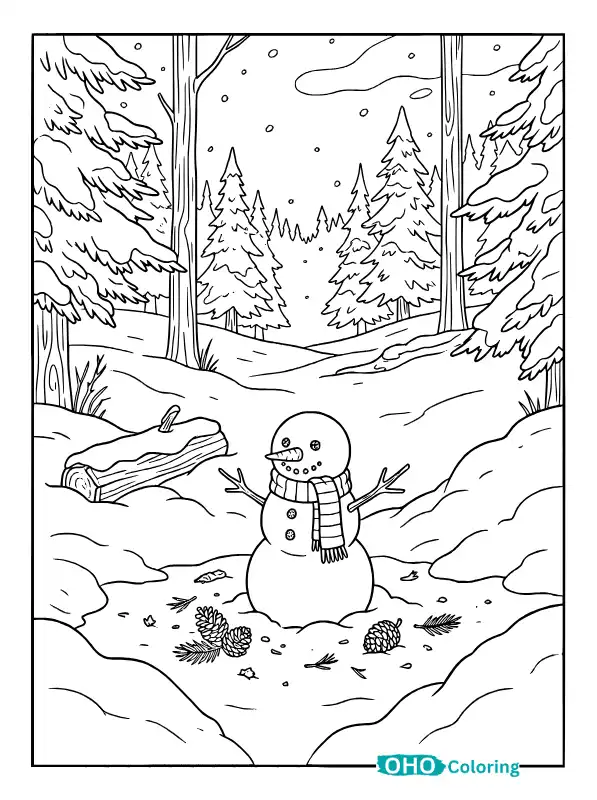




A Day with the Snowman: A Winter Story to Color
The First Snowman, with a Broom and a Top Hat
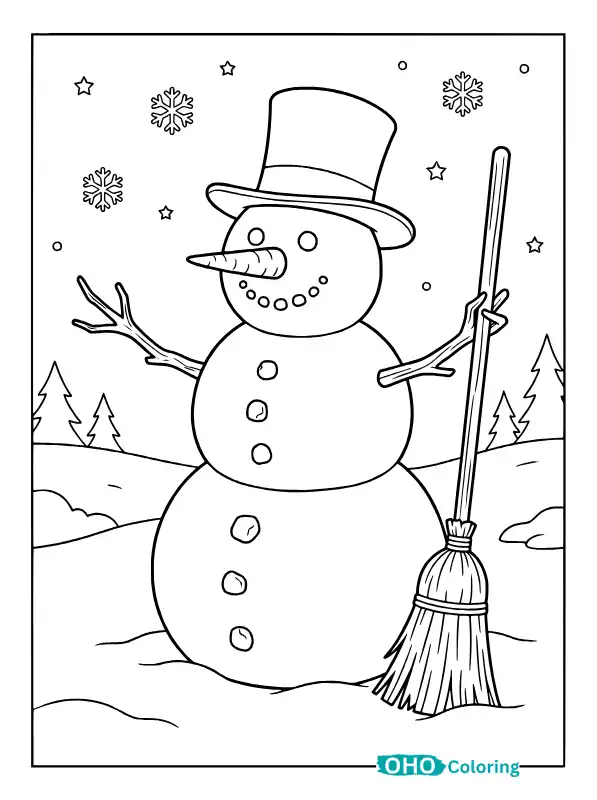
The story starts where every snowman starts. Three snowballs stand in the middle of the backyard, topped with a tall felt top hat. The nose is a long carrot, and a straw broom stands upright in one twig arm. He looks like he has been sweeping the front porch since morning, even though the snow is still falling.
There’s a simple reason for those three snowballs. The biggest one goes on the bottom so the whole body stays steady, and the smallest goes on top. That’s why a snowman doesn’t tip over easily.
When you color him, make the hat dark blue or black and the carrot a bright orange. Leave the snowy parts empty, because the white paper does the work of the snow all by itself.
A Snowman Dressed for the Cold
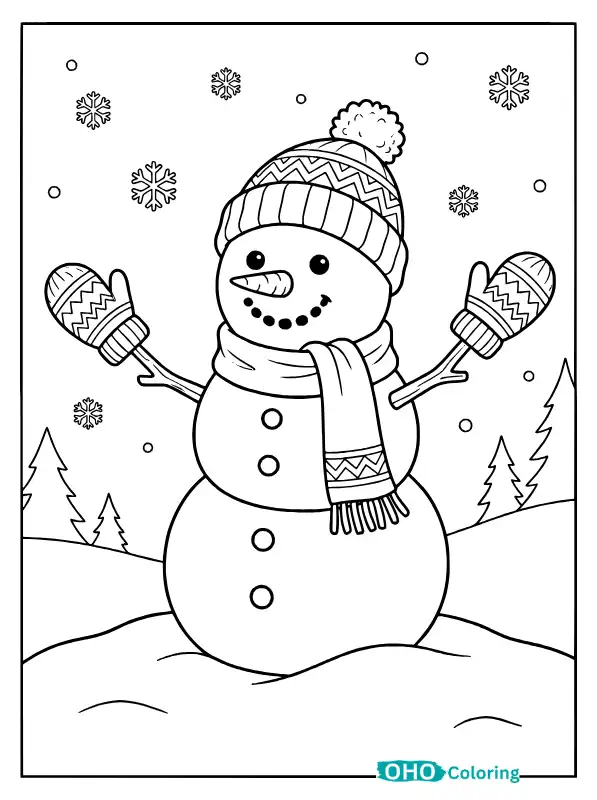
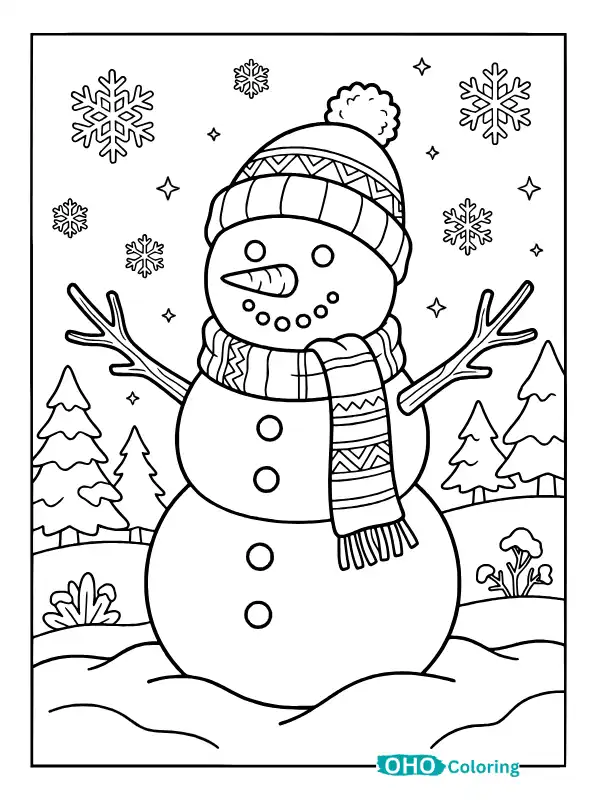
Not far from the broom snowman, on the slope of a hill, stands his friend, and he came fully prepared for the cold. He wears a pom-pom beanie and a knitted scarf so long that its end touches the ground.
He doesn’t really need all those warm clothes, though, because snow keeps heat in all on its own. Fresh snow can be up to 90 percent air, and that trapped air slows the cold from passing through. That’s why plants and small animals tucked under the snow in the colder parts of America can make it through the freezing winter.
Pick three or four colors for the stripes of the scarf, like red, yellow, green, and white. If you switch colors after every stripe, the scarf will look truly knitted.
A Little Bird on a Twig Arm
Just then, through the light snowfall, a small bird flew in and landed on the snowman’s twig arm. The snowman turned his head with his pebble smile and looked at her, and the bird stayed right where she was, not scared at all.
The bird’s puffed-up look isn’t for nothing, either. In winter, birds fluff up their feathers so a layer of air gets trapped between them, working like a comforter. A tiny bird like the black-capped chickadee, which you can spot in the colder parts of the country, even lowers its body temperature a little on freezing nights so it can use less energy to get through until morning.
Color the bird in light brown and orange. If you make the twig a darker brown than the bird, she’ll stand out clearly.
The Curious Bunny and the Carrot Nose
Hearing the bird chirp, a fluffy wild cottontail bunny hopped out from behind the bushes. He sat down on a snow mound, tipped his head back, and stared up at the snowman’s long carrot. He was probably wondering just one thing: is that carrot real?
His habit of nibbling on something all the time makes sense, too, because a rabbit’s front teeth never stop growing. Cottontails are most active at dawn and dusk, and their long ears can pick up even the faintest sounds.
Color the bunny in light brown and gray, and leave the tail white. If you add a soft pink inside the ears, they’ll look alive.
The Round Snowman in Earmuffs
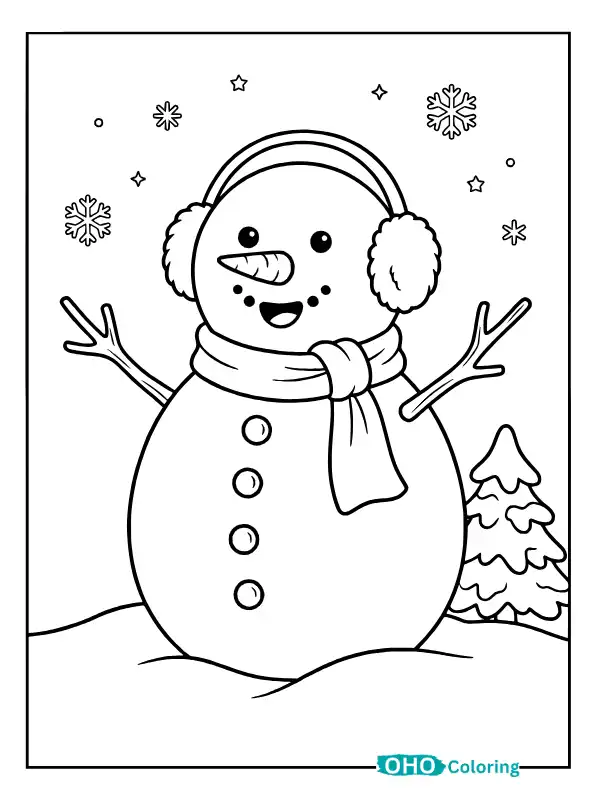
After the bunny, my eyes went to a plump, round snowman standing near the pine trees. Big earmuffs covered his ears, a knotted scarf hung around his neck, and four buttons ran down his coat. A small evergreen bush beside him was piled with snow, so it looked like his buddy, too.
Here’s where the snow facts come in handy again. Every snowflake has six points, because water molecules form a six-armed pattern as they freeze. Next time it snows, catch a flake on a mitten or a piece of dark cloth and take a close look.
If you want the earmuffs to look fuzzy, move your pencil with a light hand in short little flicks. The edges will take on a soft, fluffy look.
An Evening Lantern and a Farmhouse Snowman with Pinecones
Little by little, the day faded and darkness settled over the backyard. That’s when the farmhouse-style snowman by the split-rail fence picked up his old lantern. His buttons are pinecones and his arms are wooden sticks. Now he stands there lighting the way so nobody gets lost.
There’s an interesting fact hiding in those pinecone buttons, too. Pinecones change with the weather: when it’s dry, their scales open up, and when it’s damp, they close.
Use two shades of brown for the cones, one light and one dark. Start the lantern flame in yellow and work toward orange at the edges, and its glow will look real.
How to Color a Snowman: Easy Tips for Kids
One thing showed up again and again in this story: the white of the snow does a lot of work on its own. So the first tip is to leave the snow blank. The bright colors around it will pop all by themselves.
If you’re filling in the sky behind them, choose a light blue or purple. Use a very light hand and color in one direction, so the page feels cold and frosty.
To make a snowman look puffy, add a little light blue or gray along the bottom edge of each snowball. Then smudge it softly with a finger or a cotton ball, and the snowballs will start to look round.
For woolly things like scarves, beanies, and mittens, draw tiny crosswise lines. That gives them a knitted texture.
If you use markers, run them only over the outer outlines and use crayons or pencils for the inside areas, because marker ink can sometimes bleed through the paper.
Finally, take a look at the whole page. If any spot looks faded, add a second layer of color there. And if your child wants to make a snowman with a purple carrot, let them, because there’s no wrong color in coloring.