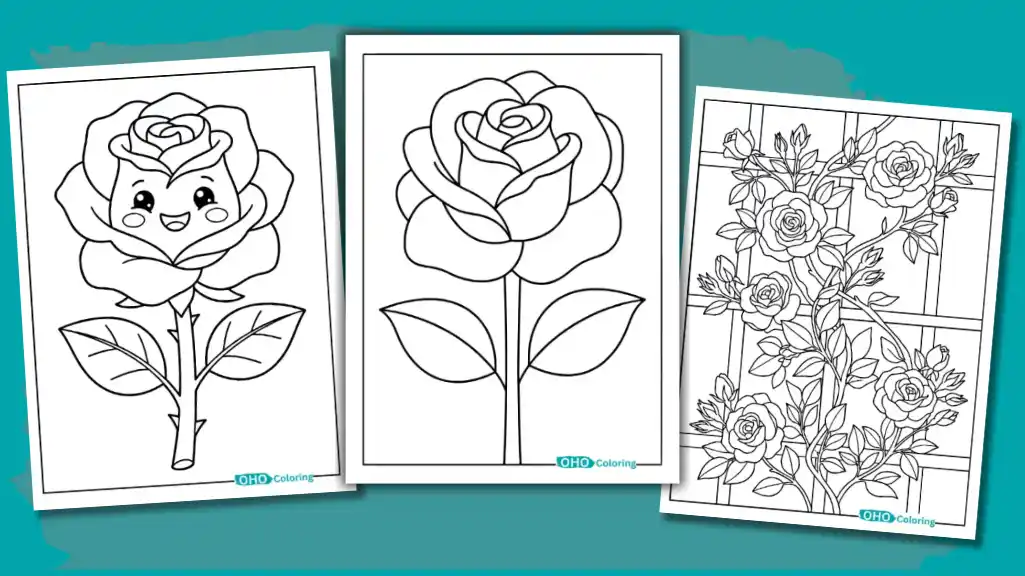
Grandma’s backyard had an old rose bush, and little Emma would go to it every morning and count how many buds had opened that day. One day Grandma laughed and said that since Emma looked so closely, she should try putting them on paper too. That is how the idea for these Rose Coloring Pages came about. When Emma started coloring, she realized a rose is not as easy as it looks.
Its petals open in layers, and every layer is a slightly different shade. That is why this post includes 19 different rose styles, from a smiling little rose to a vine climbing a lattice. Every page comes with a true fact about roses, so a child can learn something new while coloring.
Rose Coloring Pages to Print and Color
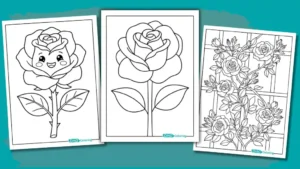
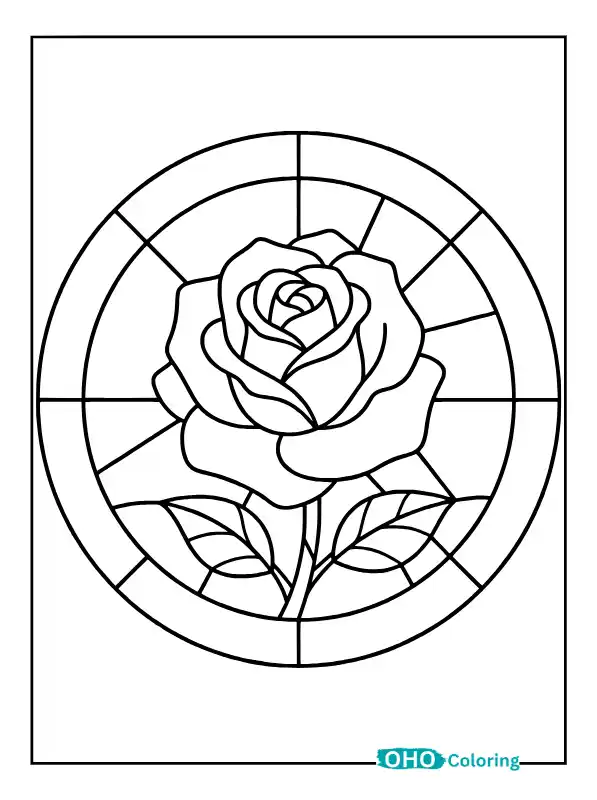
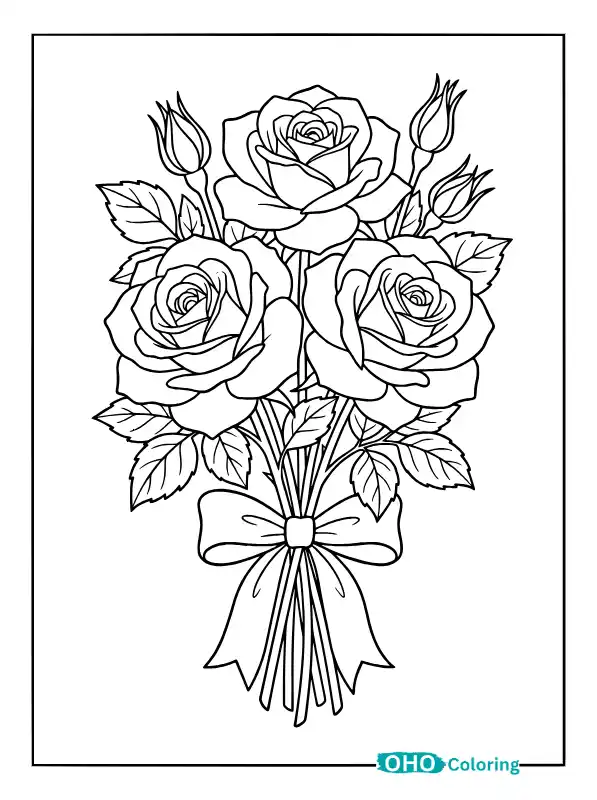
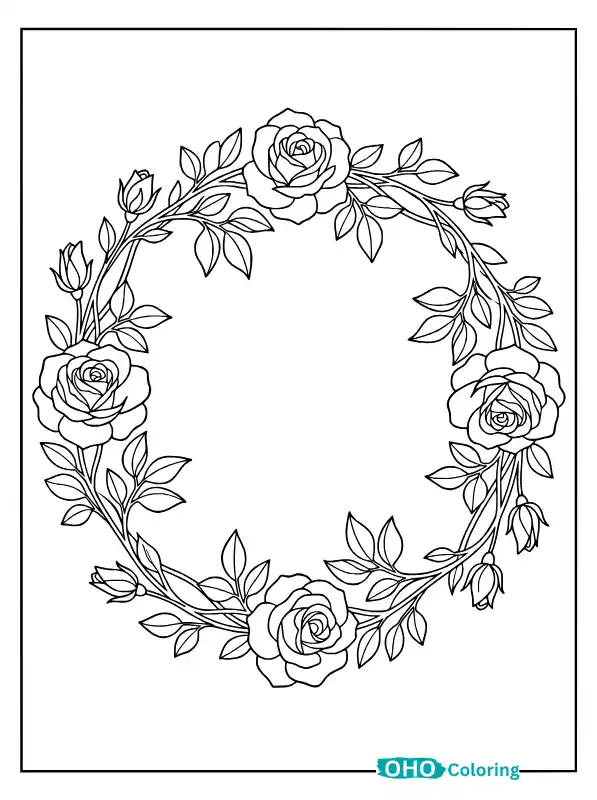
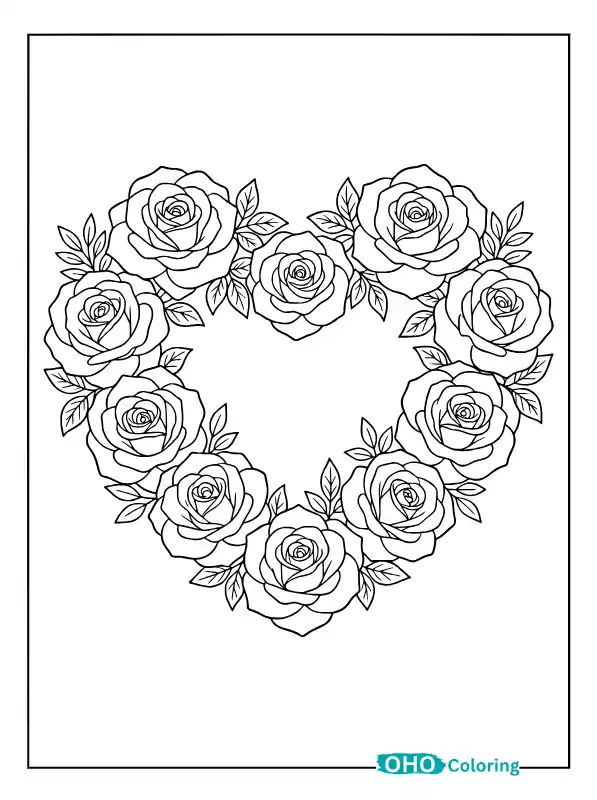
Browse the roses below and click any picture to open the full-size sheet. From there you can download the PDF and print it at home.
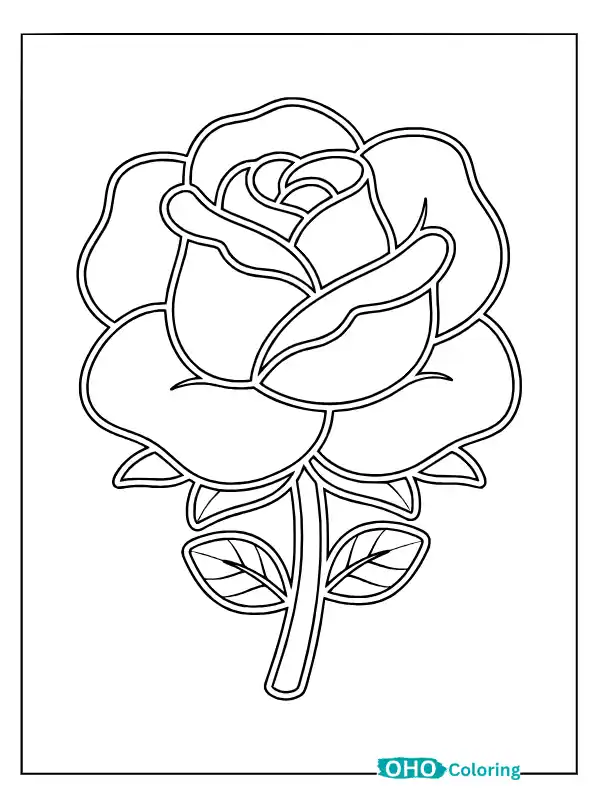
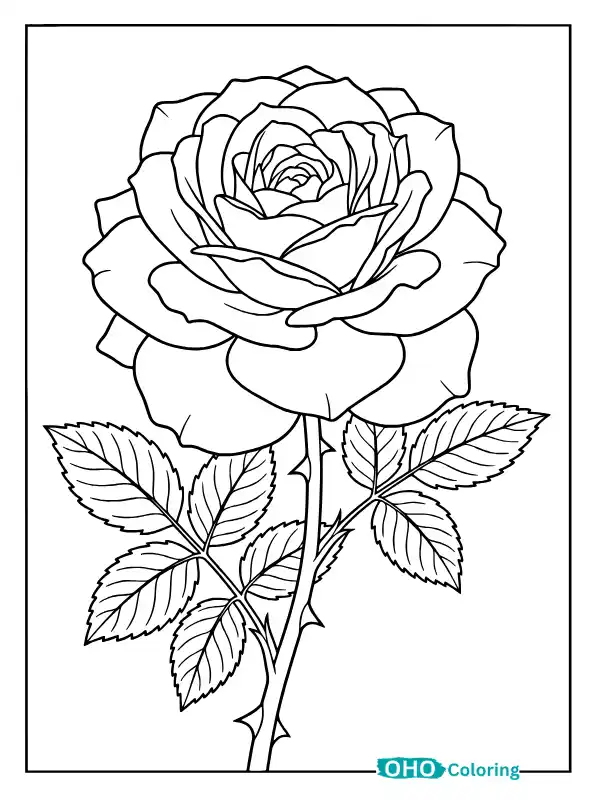
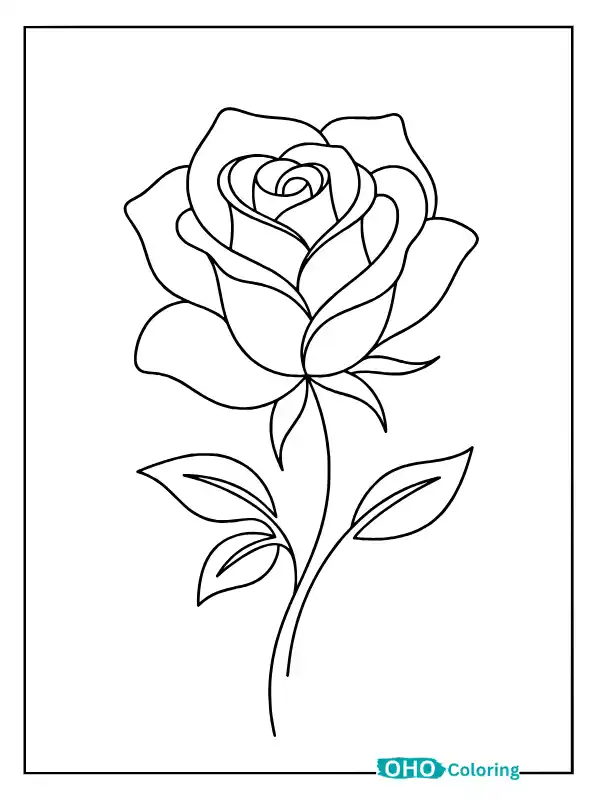
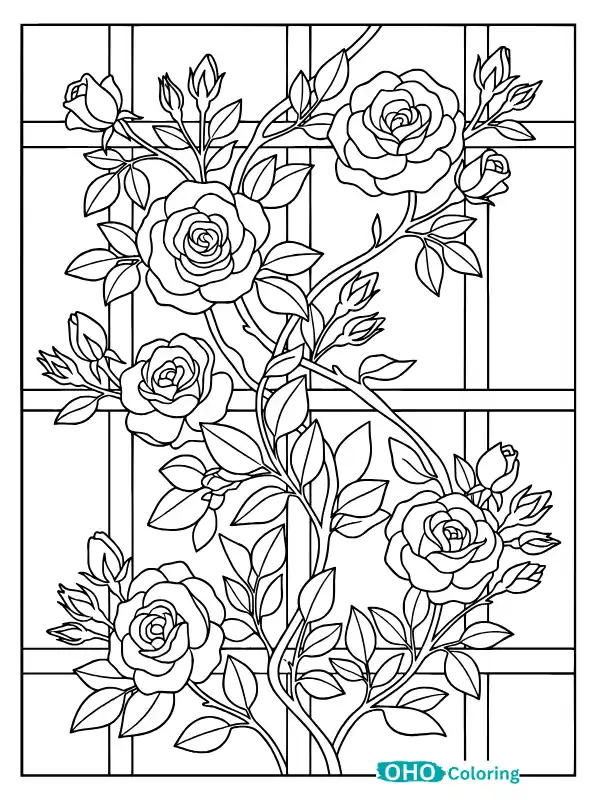
Five Lovely Roses and the Things They Can Teach Us
Out of the pages above, there are five that made Emma ask the most questions while she colored. Behind each page there is a short story and a true fact about roses, which you can share with your child as you color together.
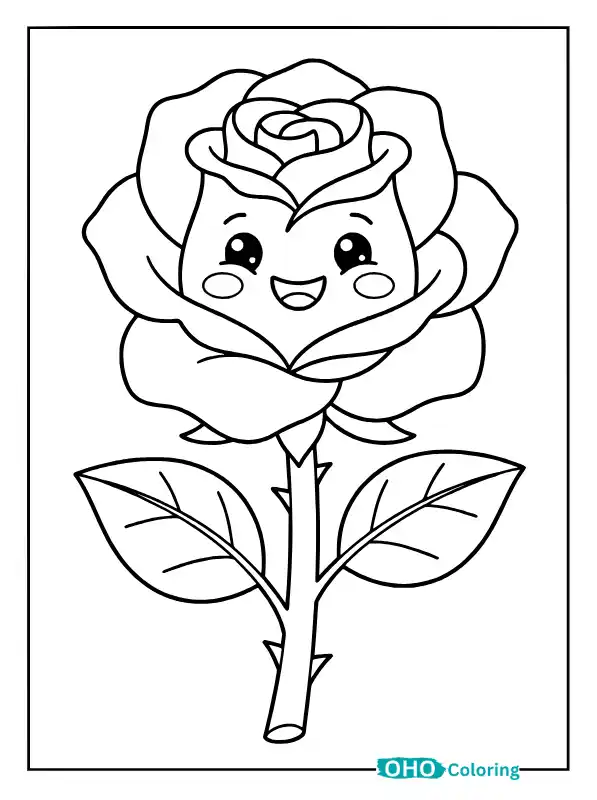
The Smiling Kawaii Rose and Its Pink Cheeks
Emma’s first favorite was the page where the rose has big eyes and soft blush on its cheeks. This rose smiles at the bees every morning, and when the other flowers see it laughing, they bloom too. Grandma explained that the rose is not alone, and that some of its relatives are sitting right in the kitchen fruit basket. Apples, strawberries, and cherries all belong to the same Rosaceae family.
The family is not new either, since fossils of roses about thirty-five million years old have been found. So for this page, pick a light pink for the cheeks and pastel shades for the face. If you feel like it, make a blue rose just once, because the rose in this story has no problem with any color.
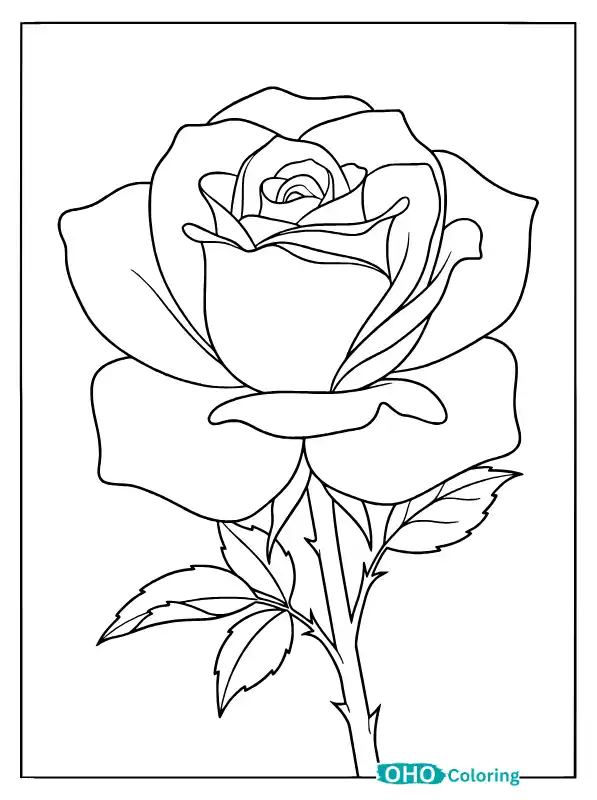
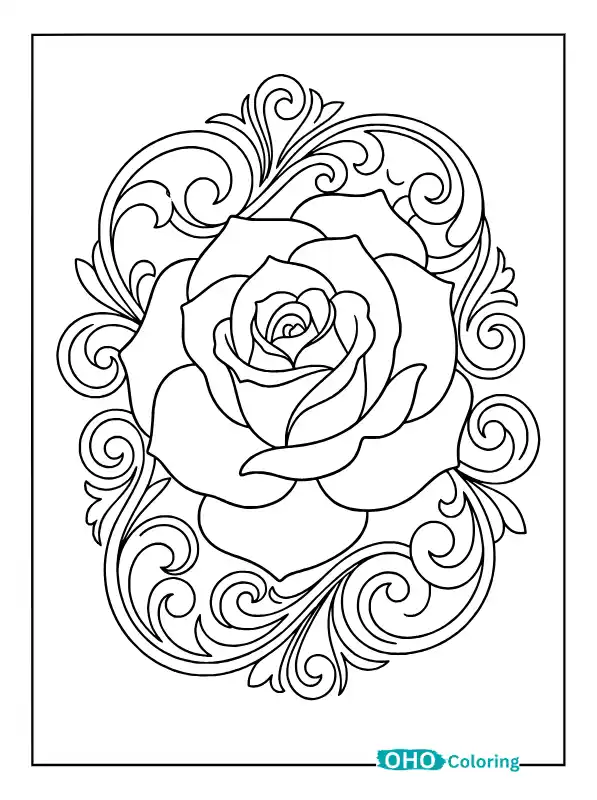
The Real Garden Rose and Its Thorns
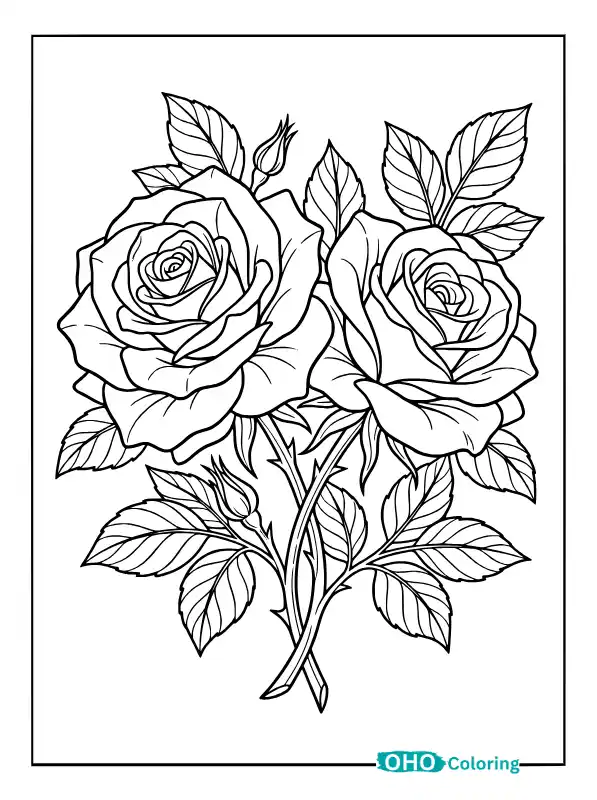
After the laughing rose, Emma thought of the real garden rose, the one Grandma always told her not to touch. This page has that very rose, with petals opening layer after layer and leaf edges cut like a saw. There are sharp thorns on the stem too, and this is where a fun fact comes in. Scientists do not call them thorns at all, they call them prickles, because they grow from the outer layer of the stem, not from the wood. They protect the plant from animals, and for climbing varieties they also work as a handhold.
If you look closely at the leaves, you will often find them growing in groups of five or seven. When you color them, take two shades of green, a light one for the outer part and a darker one near the veins. That small step gives the picture depth, and it starts to look like a real bush.
The Climbing Rose on the Fence Lattice
Talking about thorns reminded Emma of the vine on the white fence at the neighbor’s house. It was a rose too, climbing the lattice one step at a time because it wanted to see the whole neighborhood from the top. Climbing roses actually have no tendrils like a grapevine does. They hook their curved prickles into the lattice and pull themselves up, and some varieties grow several feet in a single season.
On this page, many flowers bloom on one vine, so it is fun to give each flower a different color. Red, yellow, and white blooming side by side make the vine look even fuller. Use a light brown for the lattice, so the flowers stand out clearly against it.
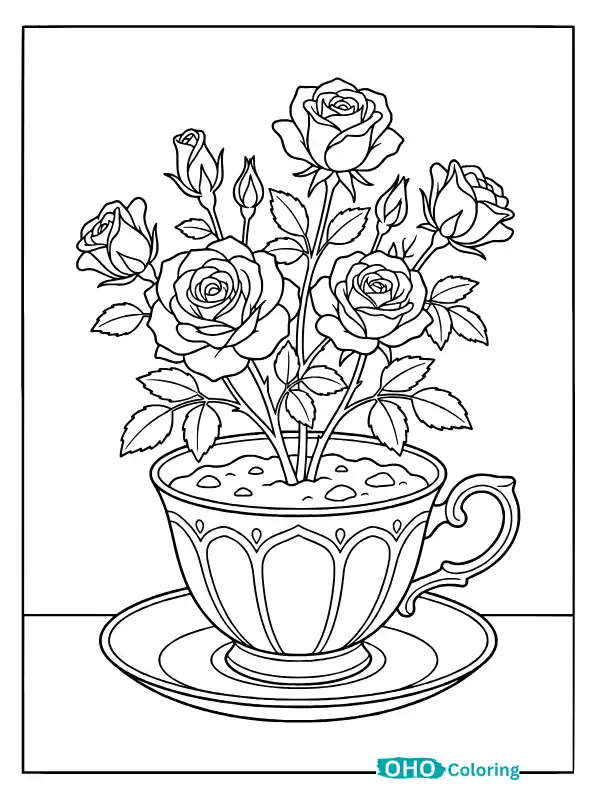
The Little Rose Growing Out of a Teacup
When the vine story ended, Grandma brought out her old teacup from the kitchen cabinet. She said a rose had once grown in it, and Emma found that very scene on the page. The tiny plant coming out of the soil in the cup is so delicate that your hand slows down on its own while coloring it. Thinking of tea, one kind of rose is called a Tea Rose, because its scent is said to be like fresh tea leaves. Rose petals can be eaten too, and they are used in rose water, rose tea, and jam.
The fruit that forms after the flower, called a rose hip, is full of vitamin C. A thin pen works well for the pattern on the rim of the cup, and a dark brown works for the soil.
Roses Arranged in a Heart
Emma had saved the sweetest page for last, because it was for Mom’s birthday. Many roses are arranged in a heart shape, just like the backyard flowers she picked and arranged that day. Mom looked at them for a long time, and then asked where Emma had found so many roses. Grandma smiled and said that the price of a rose is not for nothing.
In the fields of Bulgaria and Turkey, petals are picked every morning, and it takes thousands of pounds of petals to make a single pound of rose oil. That is why this oil is considered so precious. On this page, give every flower a different color, but keep the leaves the same green for all of them. Then all the flowers will connect through the green leaves and look like one bouquet.
Easy Tips for Coloring Roses
Emma’s most useful lesson was to start with color in the middle of the petal and go lighter toward the edge. That gives the flower depth, and putting light pink on a red rose first makes the effect even better. Layering colors takes a light hand, so for younger kids, pages with thick outlines and waxy crayons work best. Older kids can build thin layers with colored pencils, and add dark green near the center vein of each leaf.
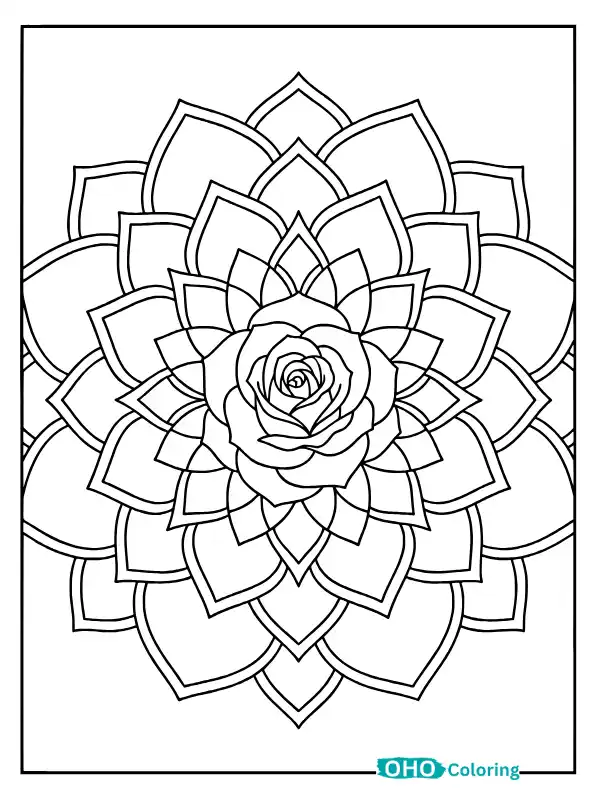
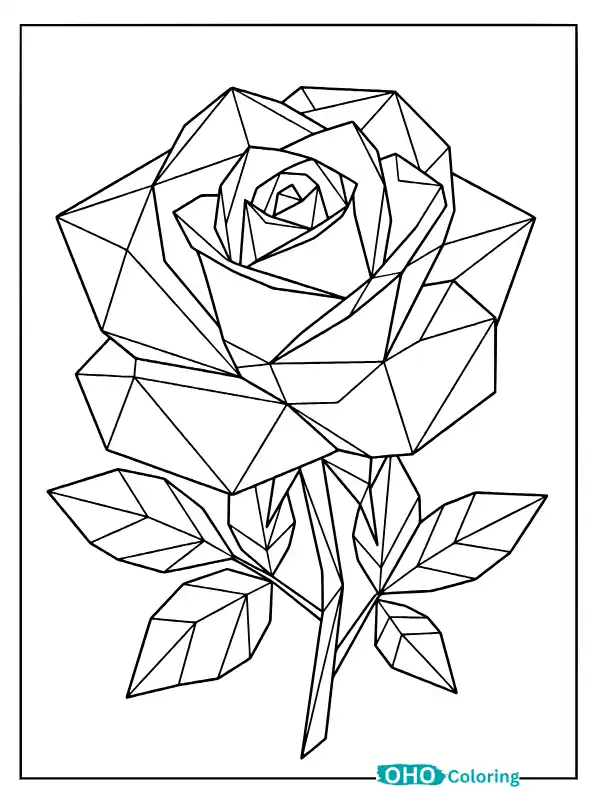
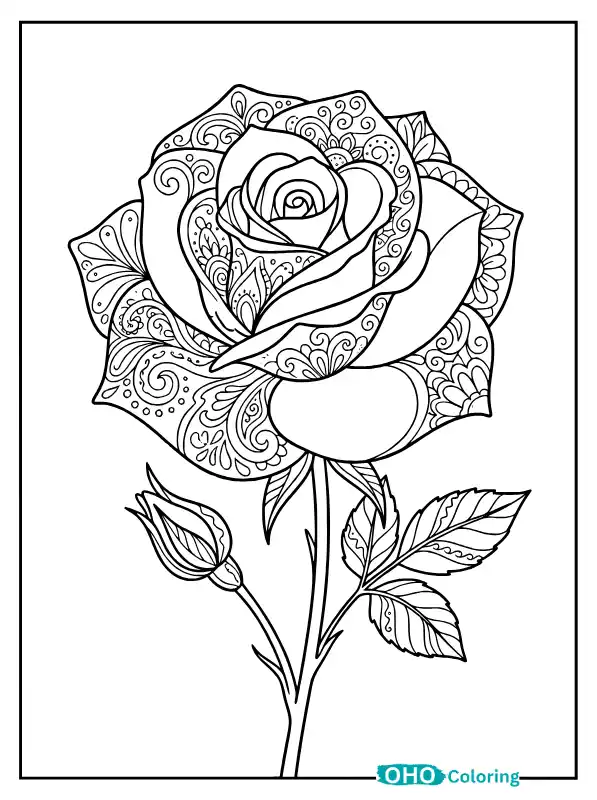
It also helps to think about the child’s age when choosing a page. For a three- or four-year-old, a simple single stem rose or a Chibi rose with thick lines is a good fit, because the open spaces are big and the color is less likely to go outside the lines. For teens and adult readers, there are mandala, Zentangle, and stained glass roses, where it is fun to give every tiny section its own color.
If you have a real rose at home, keep it next to the page. Your child will see how the edges of the petals curl and where the color gets darker. If there is no flower, a photo on your phone does the job too. For pages with fine details, choose a sharp pencil or a thin pen, because thick markers slip out of small spaces. If you use markers or watercolors, print on thick cardstock, otherwise the color will soak through to the back. In your print settings, choose the 8.5 x 11 inch Letter size so the page fits completely.
When the coloring is done, put the page up on the refrigerator door. Emma’s rose still hangs on the fridge with a magnet, and she tells everyone who walks by that it has two shades of green.
Now it is your turn. Pick your favorite rose, print the page, and start coloring. More flower pages are ready in the same way, so try them whenever you feel like it.