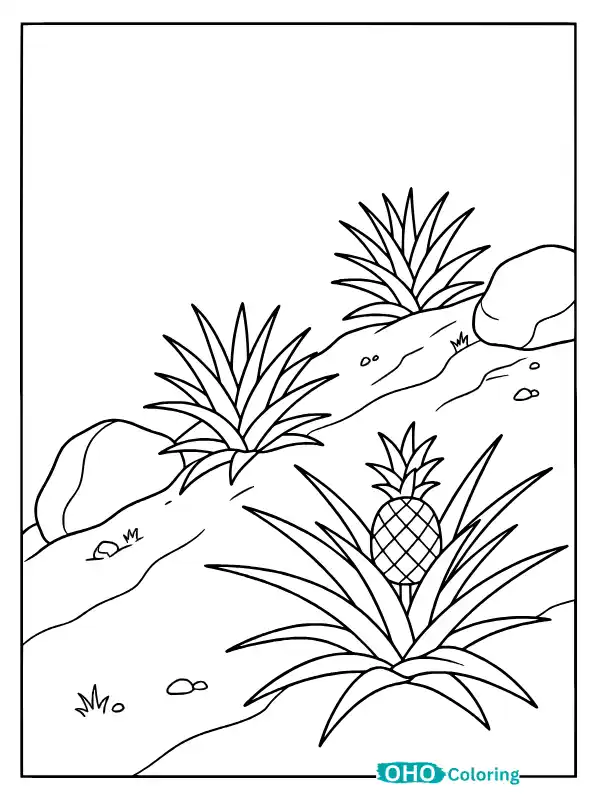
One evening Emma watched me slice a pineapple and asked, “Why does it have hair on its head?” I laughed, then realized she had never seen where a pineapple actually comes from. These pineapple coloring pages grew out of that question. Most kids (and plenty of adults) picture pineapples hanging from trees, but the plant grows low to the ground, with stiff, sword-shaped leaves edged in tiny spines.
Every page in this set uses a few big shapes and plenty of open space, so even beginners can fill them in without frustration. Download your favorites below and grab your crayons.
Pick Your Pineapple Page and Start Coloring
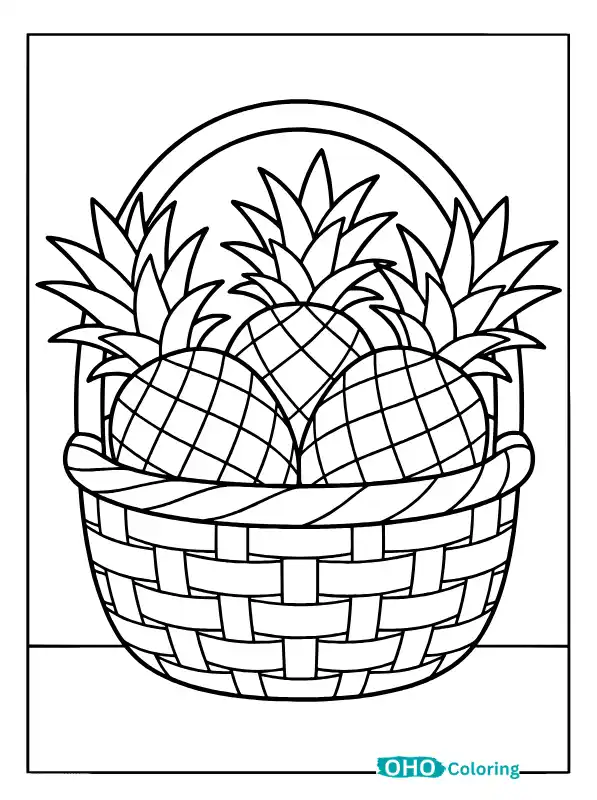
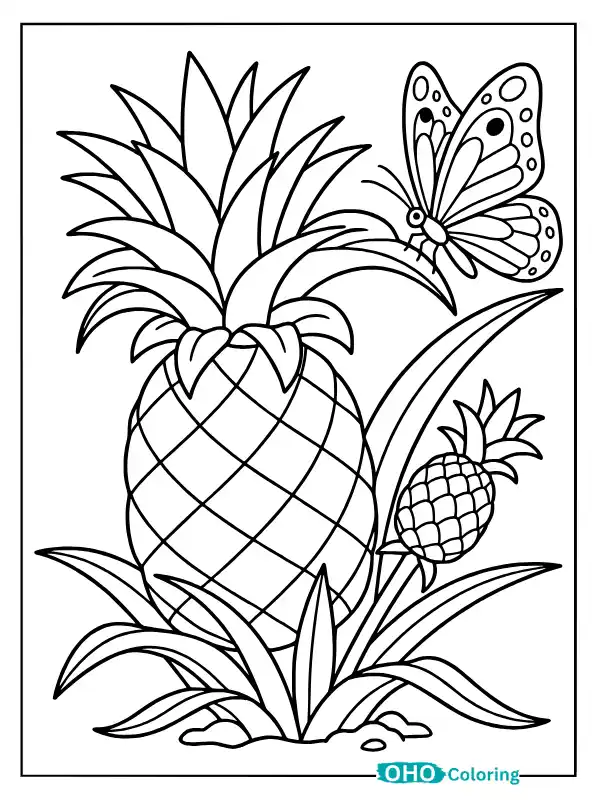
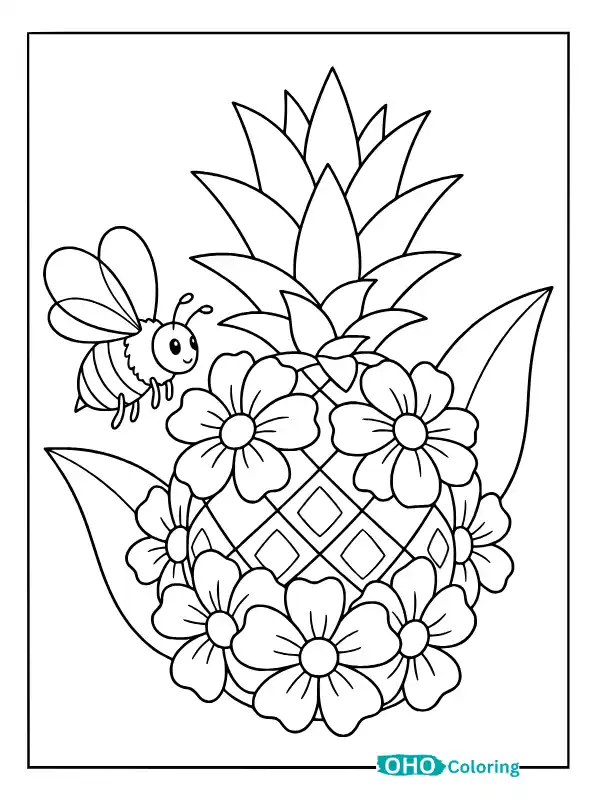
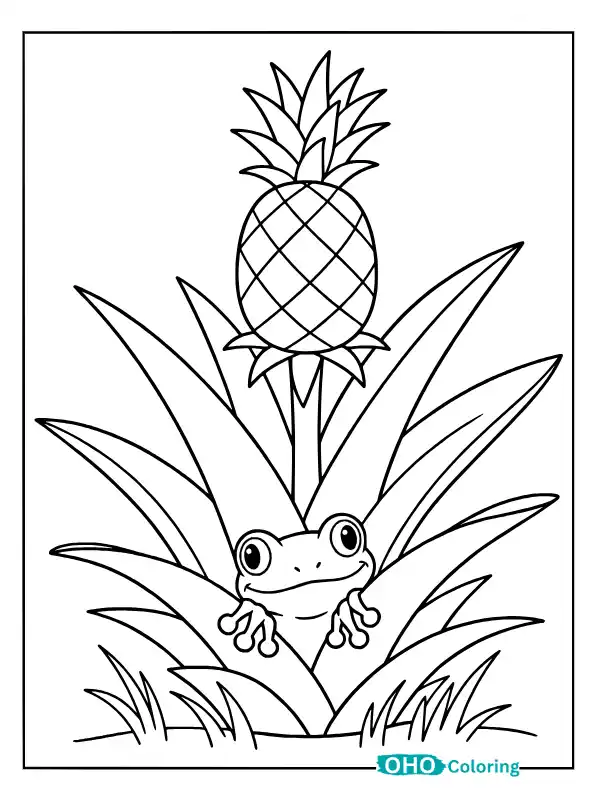
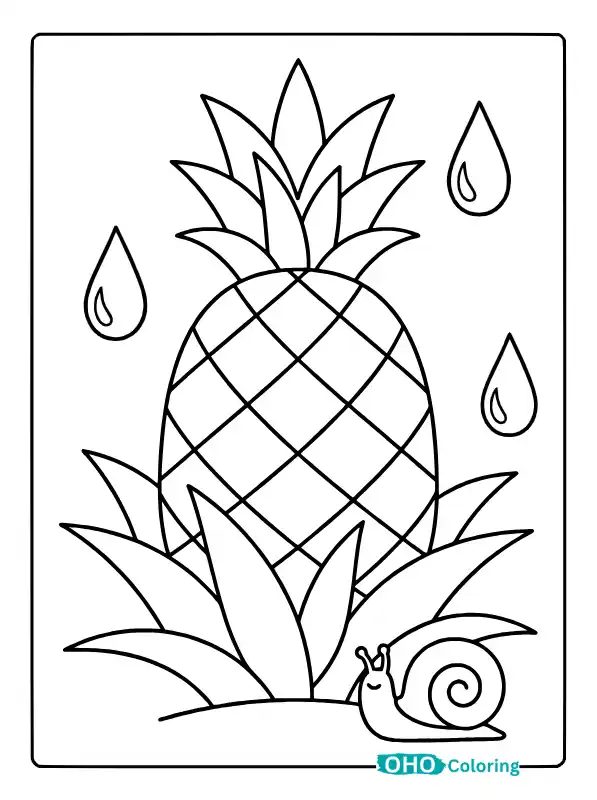
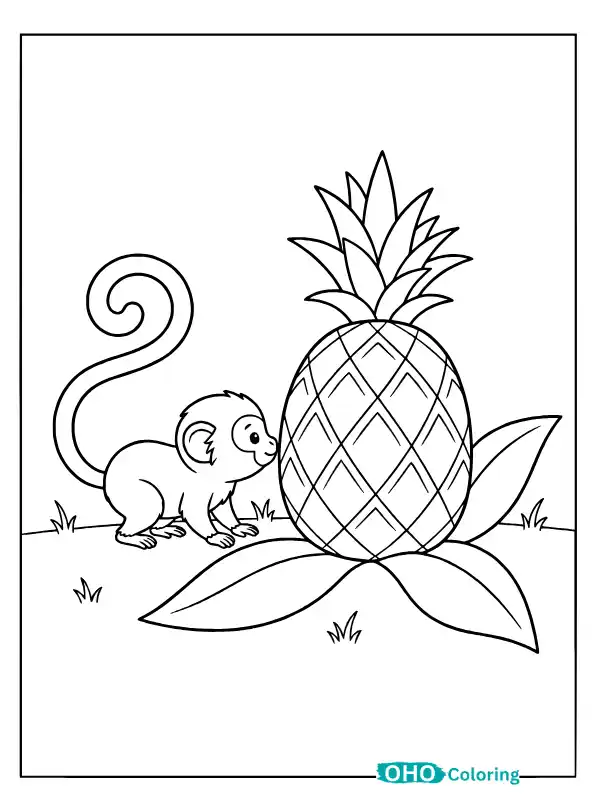
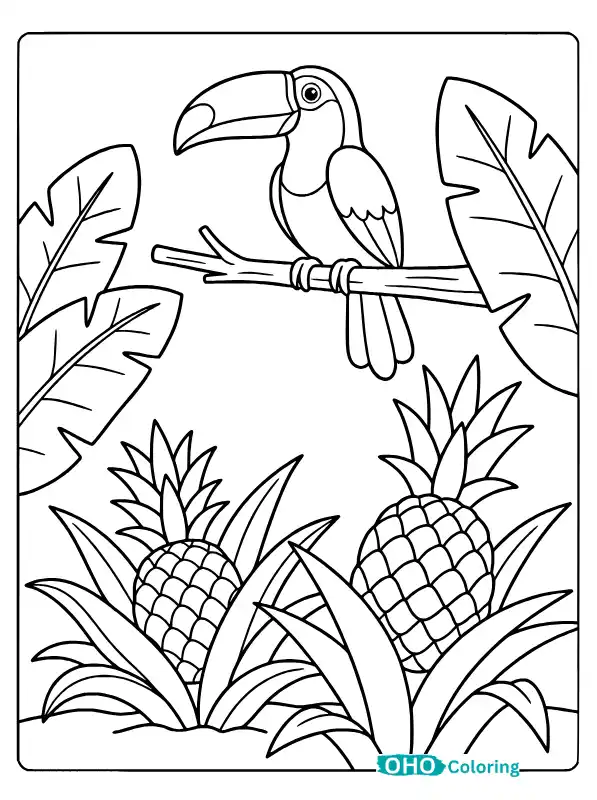
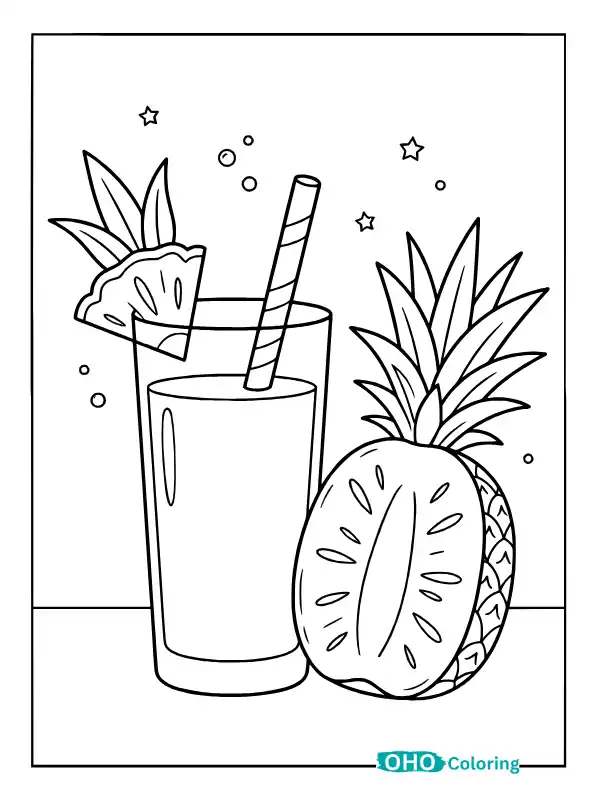
Here is the full set of 40 pages. Click the one you like, save the high-resolution PDF, and print it whenever you are ready.




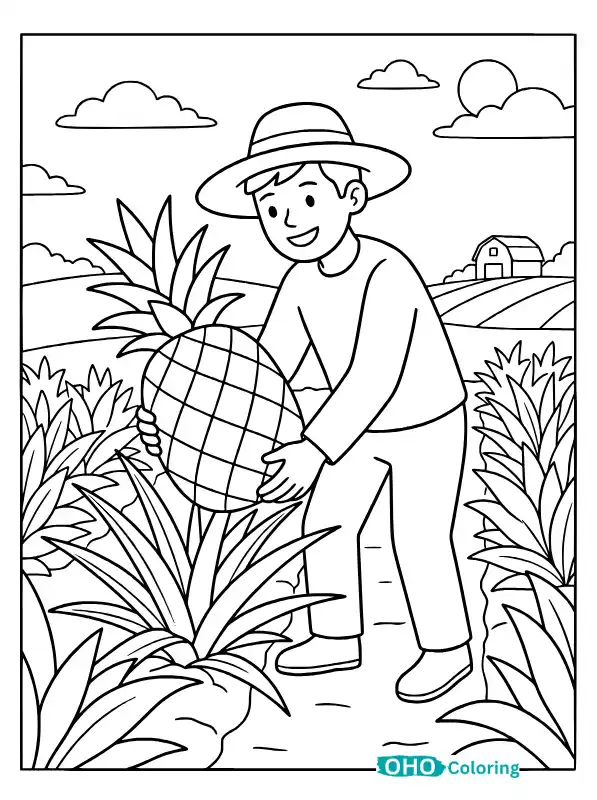

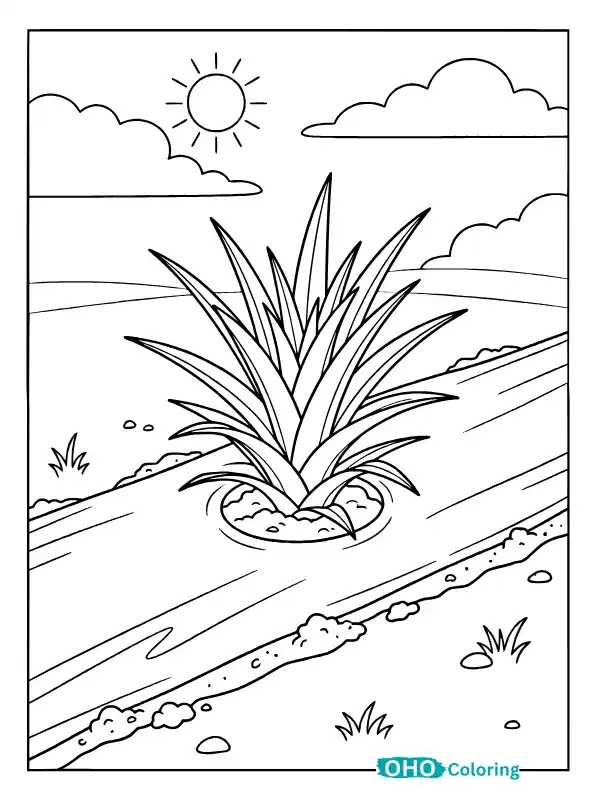
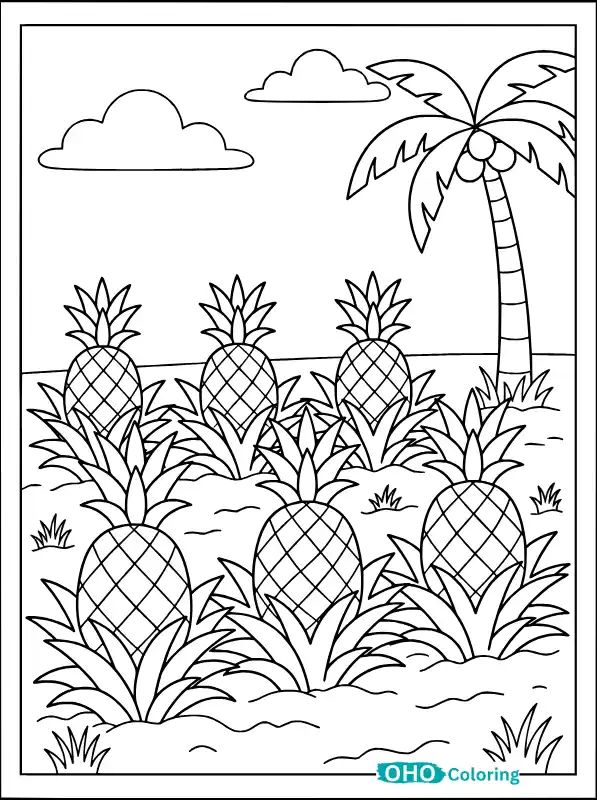
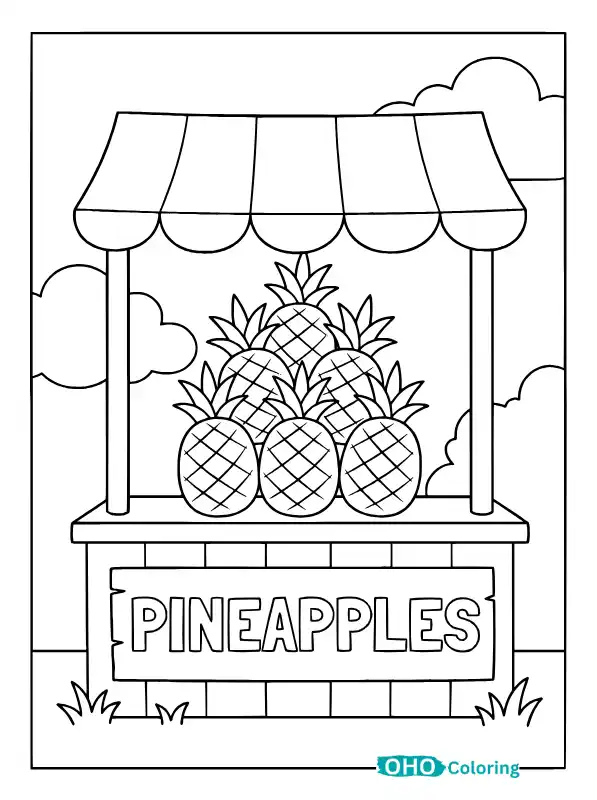


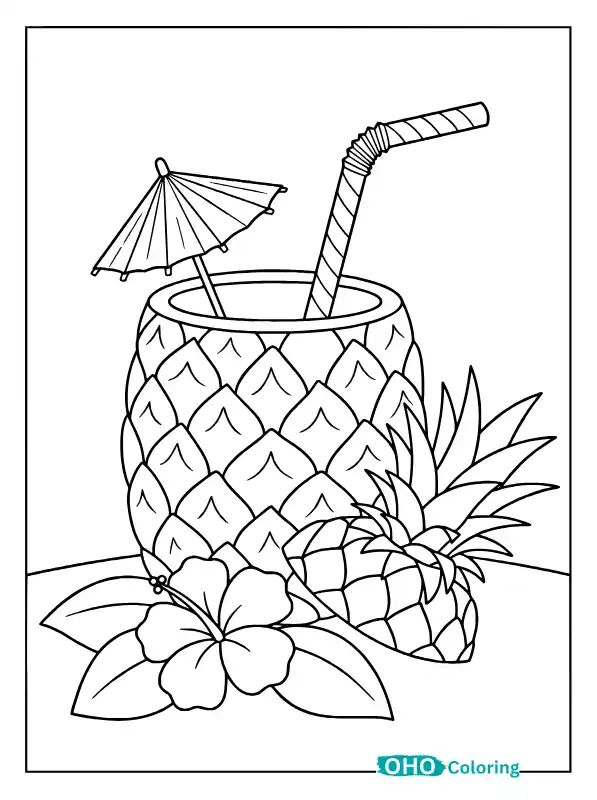
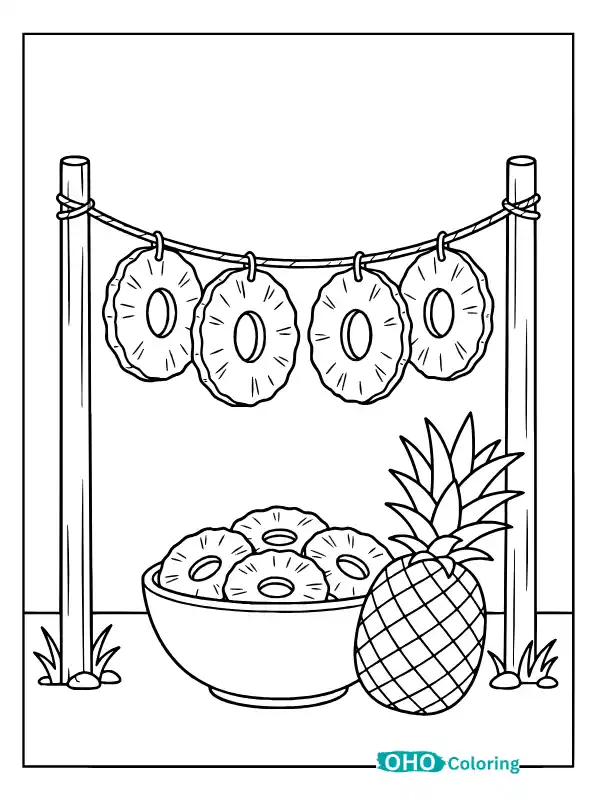
The Pineapple Story, From Flower to Fruit Bowl
A pineapple starts as a flower, spends nearly two years growing on a farm or in the wild, and ends up on a kitchen counter. Each of the seven pages below follows one stage of that trip, with a fact to share while the crayons are out.
Every “Eye” Used to Be a Flower
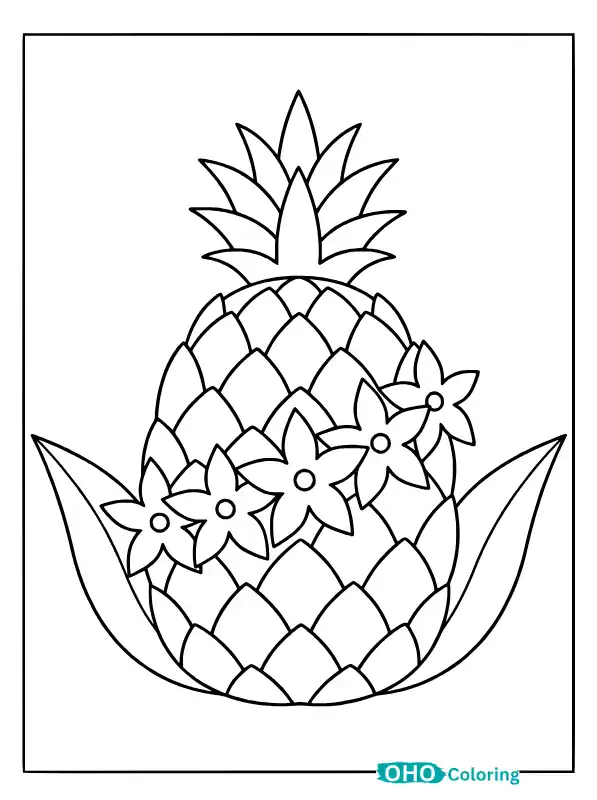
Emma’s next question was about the diamond pattern on the skin, and the “Spiral blooms” page answers it. A young green fruit wears a band of star-shaped flowers that open in a spiral. Each flower later turns into one small fruitlet, and all those fruitlets fuse into a single big fruit, which is why scientists call a pineapple a multiple fruit. The flowers are purple, so try purple for the petals and a yellow-green blend for the fruit.
A Hummingbird at the Blossoms
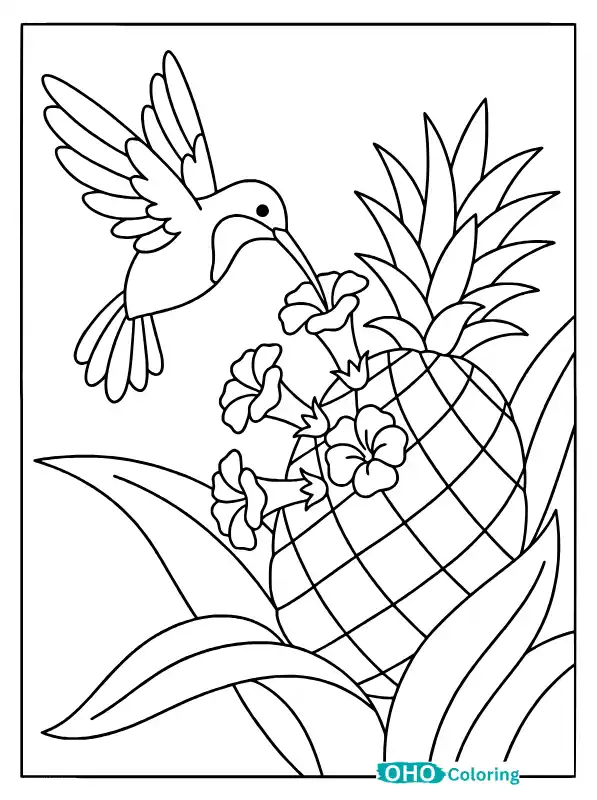
Flowers attract visitors, and on the “Hummingbird visitor” page a tiny bird hovers mid-air to sip nectar. Wild pineapples come from South America, where hummingbirds and bees stop by their blooms. A hummingbird stays in place by beating its wings dozens of times every second, so leave the wings light and soft to suggest that blur. A bright green or blue body will pop against the dark leaves behind it.
Twist the Crown and Plant It
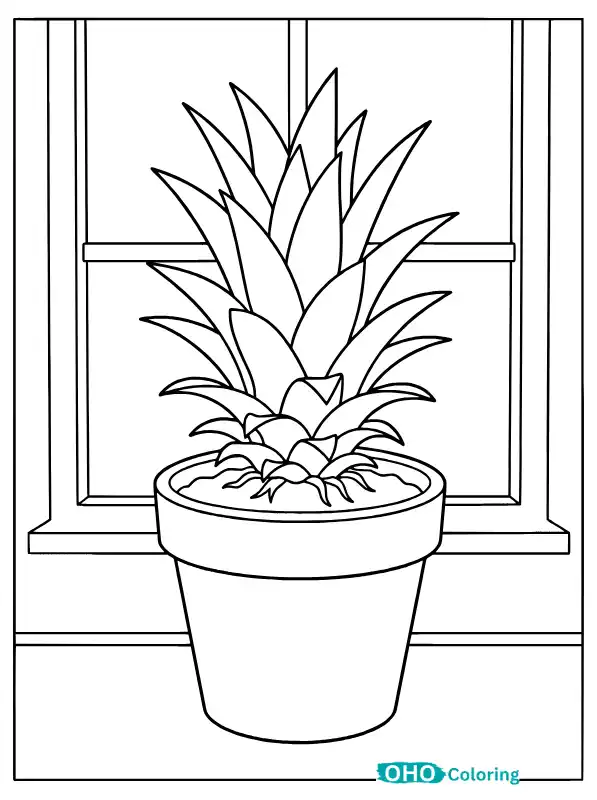
Emma’s favorite is “Twist and plant,” where a hand twists the leafy top off a ripe pineapple. That crown can root in soil and grow into a brand-new plant, which is exactly what is happening in the “Windowsill crown” page, where it sits in a clay pot by a sunny window. Baby plants also sprout from slips and suckers at the base of a mature pineapple. Color the pot a warm terracotta, then paint the leaves from base to tip so they look like real ones.
The Frog Under the Leaves
Pineapple leaves have a surprise at the bottom. Their cupped bases catch rainwater, and that damp spot makes a cozy home for frogs and snails. On “Frog in the leaves,” a green tree frog hides in exactly that shelter. Use a light green for the frog and a deeper green for the leaves, or it will vanish into the plant. A touch of yellow in the eyes makes it look wide awake.
A Baby Plant Peeking Through the Mulch
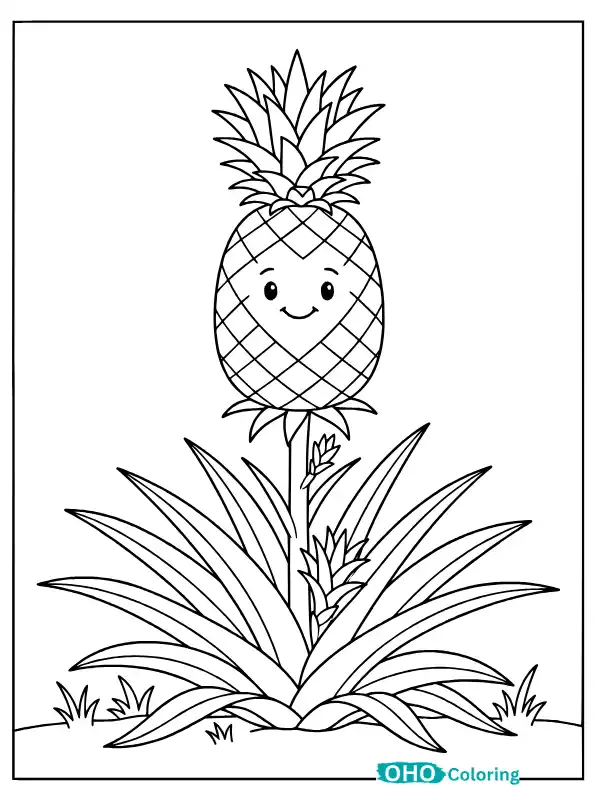
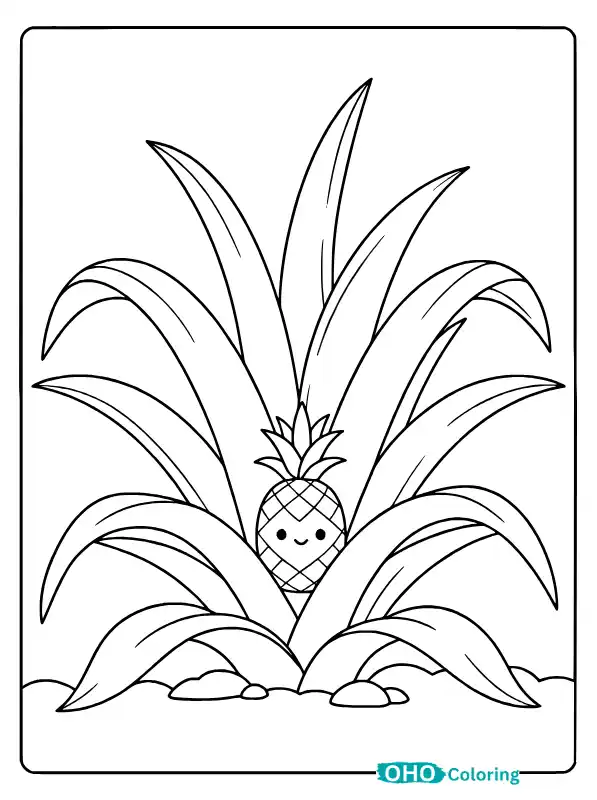
On many farms, long rows of pineapples grow through black plastic sheets that keep moisture in the soil and weeds out. The “Through the mulch” page shows one small plant poking up through a hole in that sheet. Each plant produces a single fruit per cycle, roughly 18 to 24 months after planting, and workers pick it by hand, which is why the harvest pages show people carrying heavy fruit. Make the sheet dark gray or black and the plant bright green, so the little sprout stands out.
The Ring Tower and the Counting Game
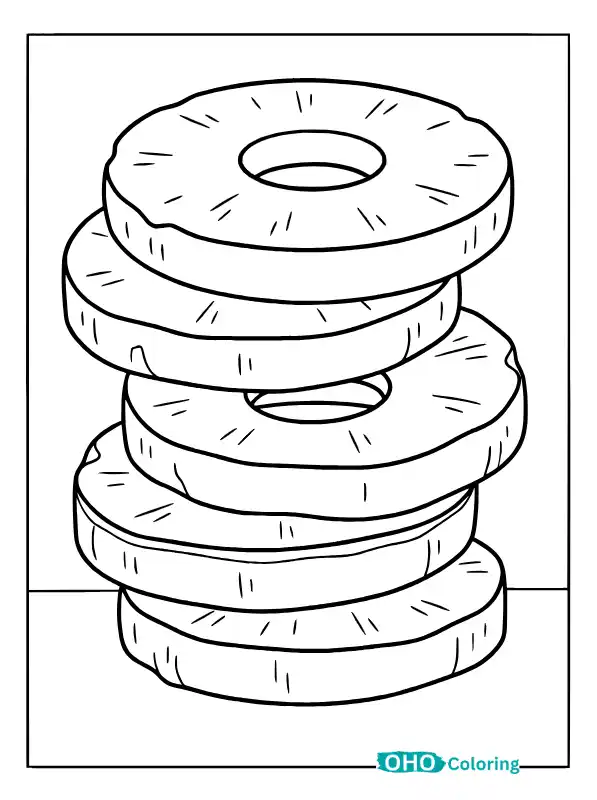
Once picked, the fruit heads to the kitchen, where it gets sliced into rings like the stack on “Ring tower.” The round hole in the middle marks where the tough core ran through the fruit. Ask your child to count the rings, then look at the diagonal lines on the skin in “Eyes in spirals” and count those too. Layer different yellows on each ring and leave the center hole pale.
Upside-Down Cake and a Tingly Tongue
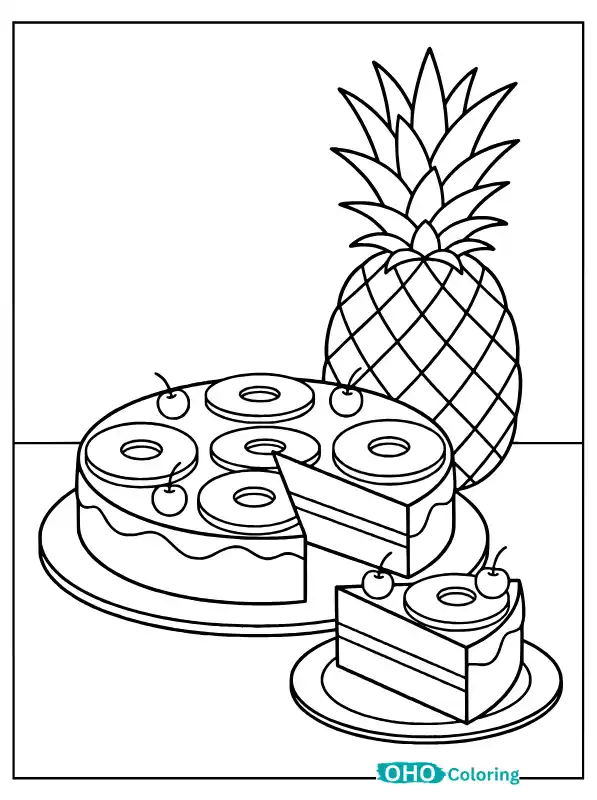
Those same rings end up on top of the cake in “Upside-down cake.” The name comes from the baking method: the fruit goes in the bottom of the pan, and the cake is flipped over after it bakes. Fresh pineapple also contains an enzyme that breaks down protein, which is why raw pineapple can make your tongue tingle and why it keeps gelatin from setting. Cooking tones that enzyme down, so the fruit holds up well in baked treats. Make the rings golden yellow, brush a little light brown along the edges, and give the cherries a deep red.
Print Tips for Cleaner Pages
These pages are drawn in a 3:4 portrait shape, so choose “Fit to page” in your print settings and they will fit US Letter or A4 without cropping the border. Standard copy paper works fine for crayons and colored pencils. Markers and watercolor paints soak through thin sheets, so switch to heavier paper, around 24 lb or cardstock, if your child likes those. Print in black and white at standard quality; the lines are already clean, and draft mode can make them look faded. Print one or two extra copies of favorites, because kids often want to color the same page a second time with a different set of colors.
Coloring Tips for Pineapple Pages
Start with the skin, since it is made of diamond shapes. Fill each diamond with light yellow first, then add a little orange along the edges, and the fruit will look round instead of flat. The same idea works on the crown: pick two or three greens instead of one, and color each leaf from the base up to the tip.
Younger kids can find all that overwhelming, so let them fill each area with a single color first. Once they are comfortable, ask them to add a second color on top. Food pages like “Juice glass” and “Upside-down cake” are good for this because kids already know what the colors should be, like golden juice and red cherries.
Crayons cover big areas fast, while colored pencils handle the thin lines on leaves better. Resist coloring the whole page in one color, because there is no room left for contrast afterward.
To teach shading, color one side of an object with a slightly darker version of its color and leave the other side lighter. Kids pick this up quickly and start trying it on their own pages.
Keep the background simple. A pale blue sky or a light brown for soil is enough, because it lets the pineapple catch the eye first.
When the page is finished, stick it on the fridge. Seeing their work on display makes kids take more care with the next one.
Finally, set a real pineapple on the table while they color. Touching the bumpy skin and spiky crown gives them details no printed page can, and their colors usually get more accurate.
There are 40 pineapple pages in the grid above, and the seven I wrote about are the ones Emma has colored so far. The rest are waiting, from a butterfly on a leaf to a tall smoothie with a striped straw, so pick one with your child and see what colors they choose.