The idea for these gorilla coloring pages came to us last week, when my daughter saw a photo from the zoo and asked, “Mom, why is that big monkey sitting so quietly?” I told her it wasn’t a monkey but a gorilla, and that gorillas are actually very calm animals. As soon as she heard that, she asked for paper and crayons. She was ready to color, but we didn’t have a page ready, so we made a whole collection.
It has 23 pages, including a baby riding on its mom’s back, a gorilla hugging a banana, a wise silverback sitting in the sunlight, and plenty more. Every child has different favorites, so we included all kinds of moods and scenes. My daughter colored just five of them, and the answers to her questions are written below.
Collection of Gorilla-Themed Coloring Pages!
Check out our printable sheets featuring cute gorillas below. Click on any image to open it and download the high-resolution PDF to print.


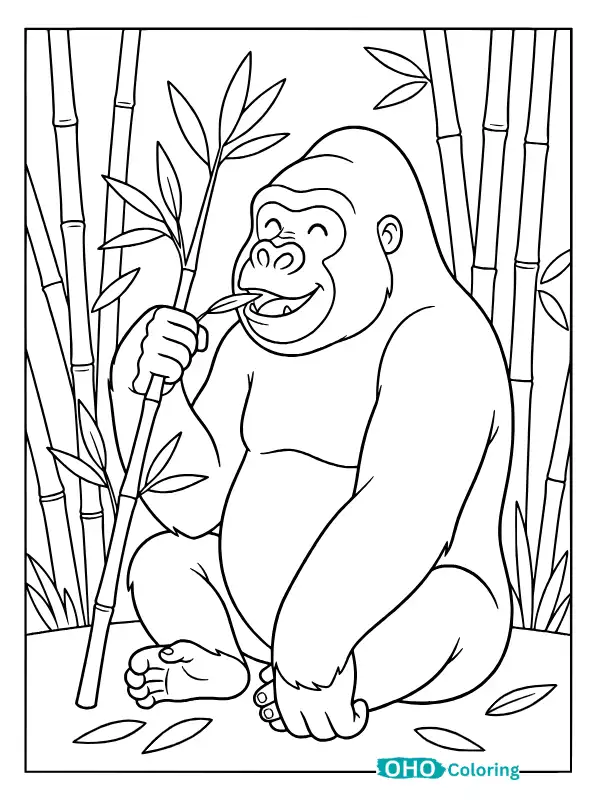

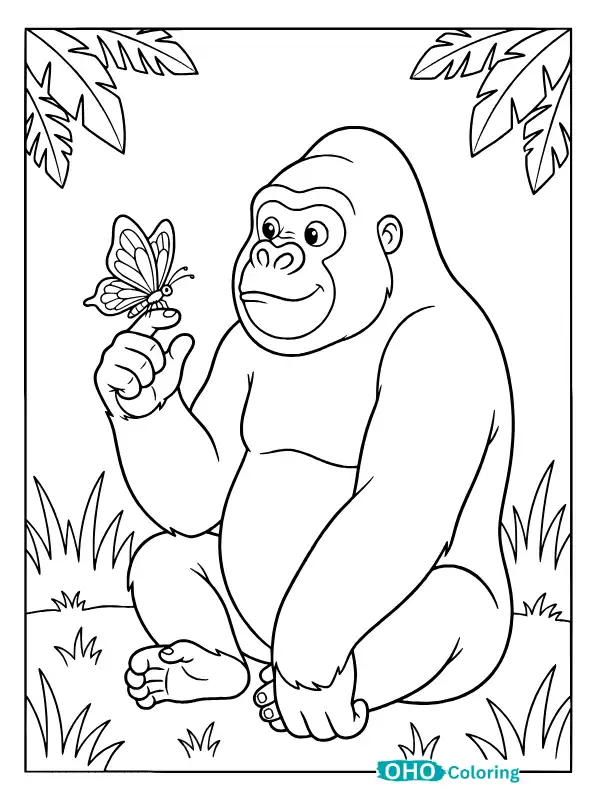
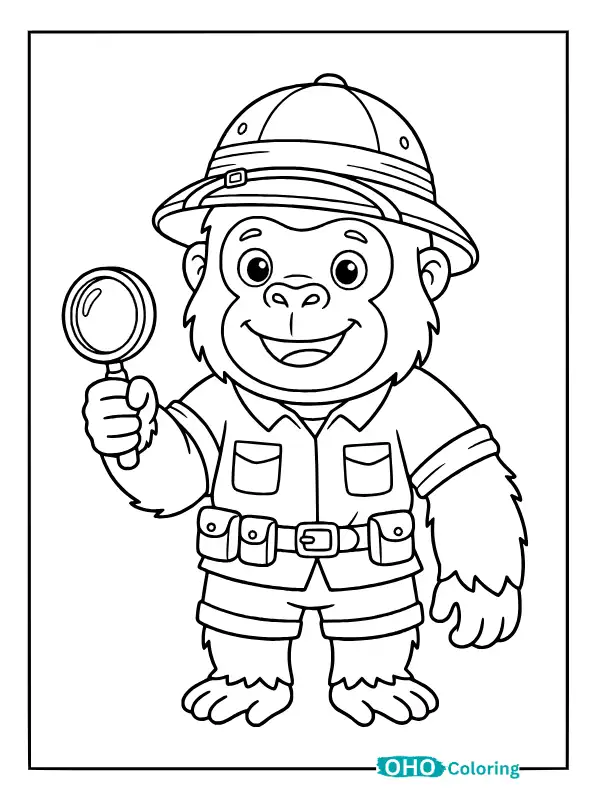

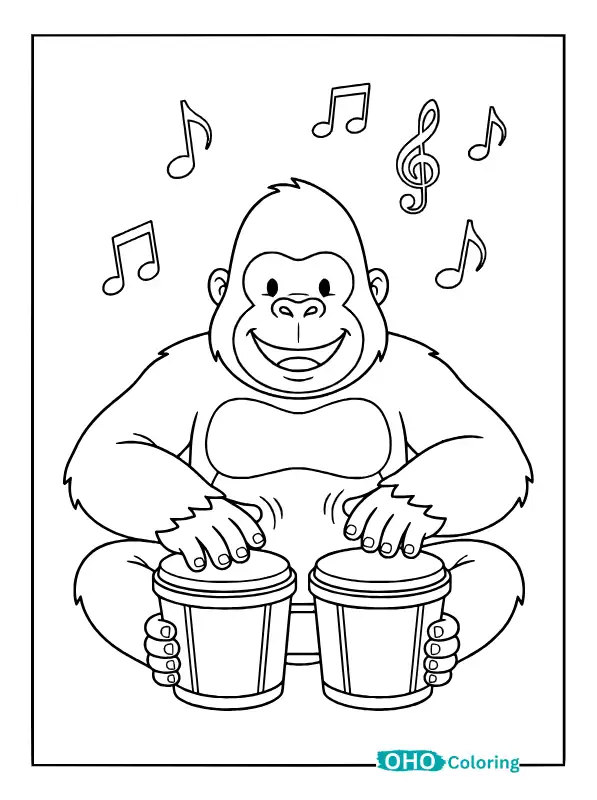


Gorilla Highlight Coloring Pages
A Baby Gorilla Riding on Mom’s Back
After flipping through the whole collection, the first page my daughter picked shows a baby clinging to its mom’s thick, furry back. The mom is walking calmly across an open clearing, and the baby’s eyes are round and curious. Big smooth leaves and round pebbles dot the ground below.
She asked right away why the baby doesn’t fall off. The answer is that a gorilla baby starts learning to ride on its mom’s back at around four or five months old, holding on tightly to her fur. This continues until the baby is two or three years old, which is about when it learns to walk fast on its own.
For this picture, try a deep brown or a charcoal black for the mom. If you pick a slightly lighter brown for the baby, the two shapes will stand apart and the back will stand out clearly.
A Little Gorilla Hugging a Banana
After the baby, my daughter’s eyes landed on the second page, where a little gorilla sits cross-legged with both arms wrapped around a big banana. She burst out laughing at the happy look on its face, and then she asked whether gorillas eat bananas every day.
This was where I had to share an interesting fact. Gorillas living in the wild hardly ever eat bananas. Most of their food is leaves, tender stems, roots, and seasonal fruit, and the banana habit shows up mostly at the zoo. Hearing that, she decided her gorilla should have plenty of grass and green leaves around it, so she used three different shades of green on the hills in the background.
A Mischievous Baby Peeking from Behind a Leaf
Once we started talking about green leaves, the next page came up on its own. A tiny gorilla peeks out from behind a big monstera leaf, and its small fingers hold the edge of the leaf. There’s a mischievous smile on its face, as if it’s playing hide and seek.
Real gorilla babies play in much the same way. They chase each other, roll around, and climb up and down the low branches of trees. Leaves matter in their lives even more than in their games, because every night gorillas bend leaves and twigs together to build a fresh bed.
That’s why a deep green works well for the leaf on this page. Fill the veins in the middle with a light yellow-green, and the gorilla’s face will pop against the leaf.
A Thoughtful Toddler on a Fallen Log
Playing hard, kids sometimes get tired and drift into thought, and my daughter’s fourth pick shows exactly that moment. A little gorilla sits on a thick fallen log with both hands resting on its cheeks, watching a small butterfly flutter by.
This was the picture she liked best, because it made her feel that the gorilla was thinking too. And she isn’t wrong. Gorillas are counted among the most intelligent animals. They recognize the feelings of their companions, and sometimes they even use simple tools. When you color the log, mix a little gray into the brown so the wood looks real.
The Silverback with the Silver Back
Among all these playful little ones, there was also one big, calm leader: the silverback on my daughter’s fifth page. He sits in the sunlight with a broad chest, a serious face, and a tall bump on top of his head. Wide fern leaves and smooth tree trunks fill the background.
When she heard his name, she asked why his back is silver. When a male gorilla reaches twelve or thirteen years old, the hair on his back starts turning white, and that’s how he got the name silverback. He guards the whole group and settles arguments. Another fact amazed my daughter: every gorilla has a different pattern of wrinkles on its nose, just like our fingerprints. Scientists use those wrinkles to tell individual gorillas apart.
On this page, leave the back a light gray or white and fill the rest of the body with deep black or brown. That small difference is enough to make him a true silverback.
Easy Gorilla Coloring Tips for Kids
My daughter colored five pages, but your child may like a different page in the collection even more. So look through the whole collection together first, and let your child choose the one that grabs them. A page they picked themselves holds their attention longer while they color. Along the way, we picked up a few tips that will work on any page.
A gorilla has a big body, so fill in the wide areas first and save the small parts for later. Kids enjoy watching the big areas fill up quickly, and it helps them stay patient too.
Instead of using plain black for the fur, try mixing dark blue and dark brown, because it makes the hair look shiny. With colored pencils, lay down a light layer first, then go over the same spot with a slightly darker shade.
The skin on a gorilla’s face and palms is a different color from its hair, so choose a light gray or light brown there. Color the eyes last and leave one tiny white dot uncolored, and the face comes alive.
Before you print, check that the printer has US Letter size (8.5 x 11 inches) paper loaded correctly. Thicker paper works well with markers too, and the page won’t get soggy and tear.