The idea for these Gingerbread House Coloring Pages came straight from our kitchen. Every December, the moment the smell of dough starts drifting through the house, the kids begin circling the table, and my youngest is the first to sit down and count gumdrops. My oldest sneaks off with an entire wall in the meantime, so by the time the real roof goes on, half the supplies have vanished.
One year the roof caved in halfway through, and that’s when the kids asked why we couldn’t build the same house on paper. That’s exactly how these pages began. A paper house never leaves icing on your hands, never draws ants, and never collapses. Print a page, open the crayon box, and see which house calls to your child first, whether it’s the Alpine chalet, the lighthouse, or the clock tower.
Featured Gingerbread House Coloring Pages
Check out our printable sheets below. Click on any image to open it and download the high-resolution PDF for printing:




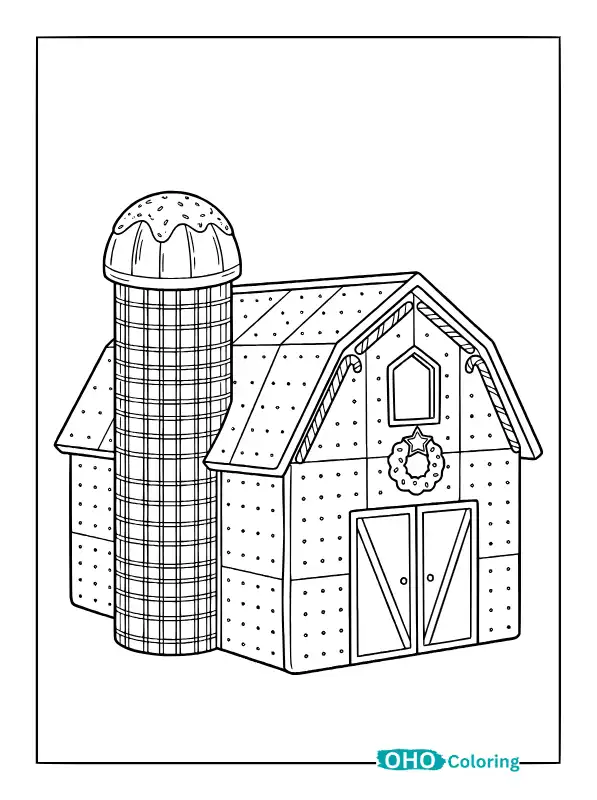
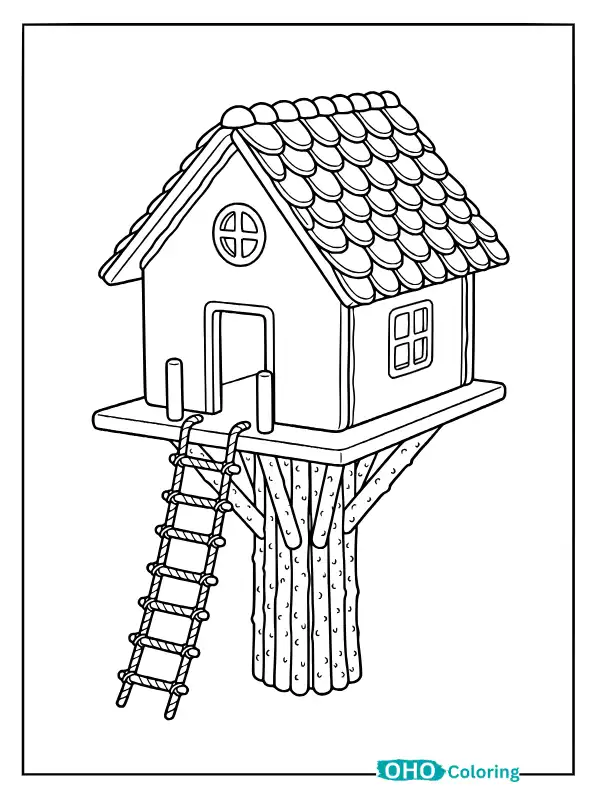

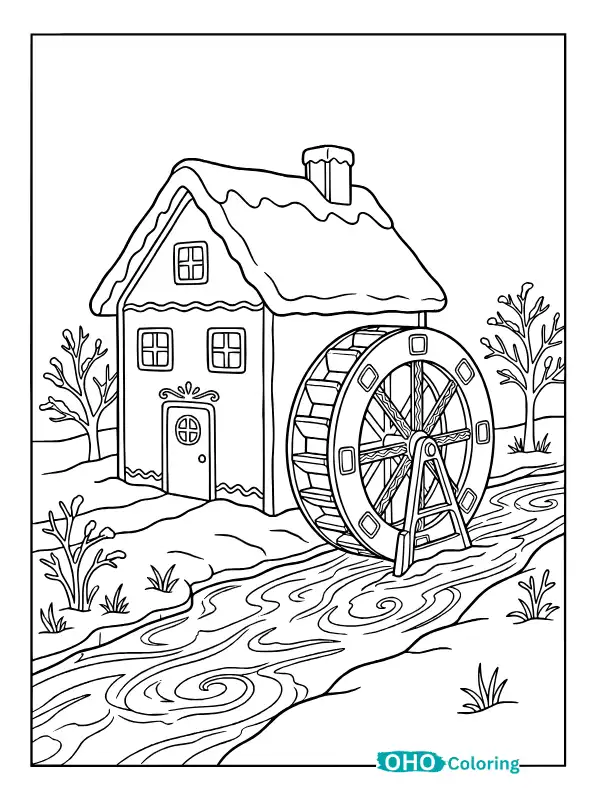
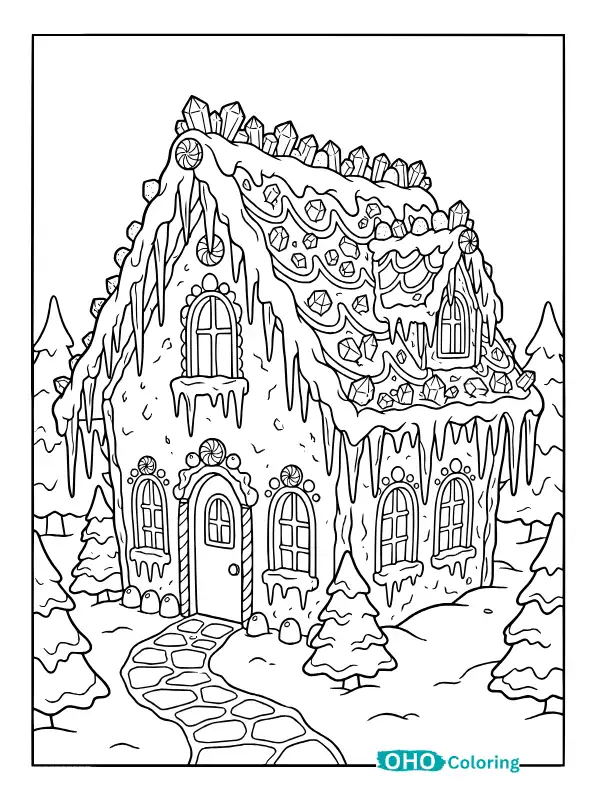

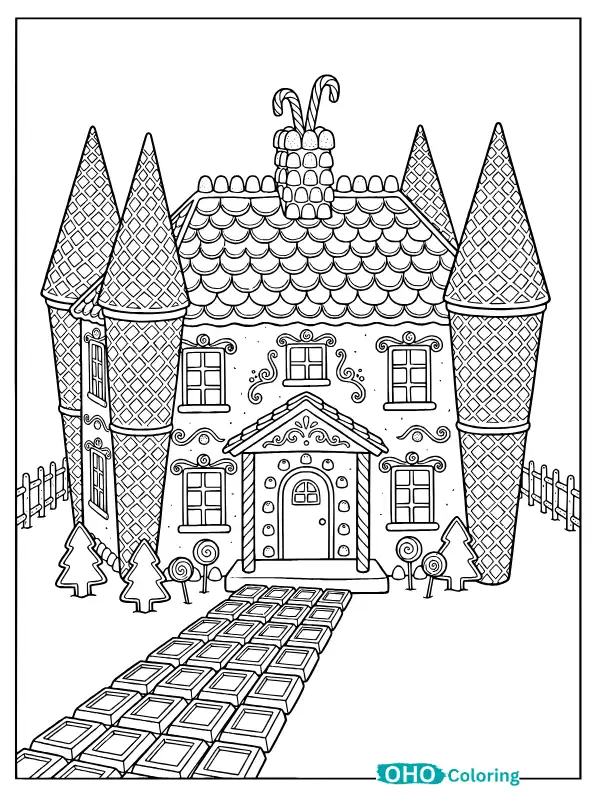


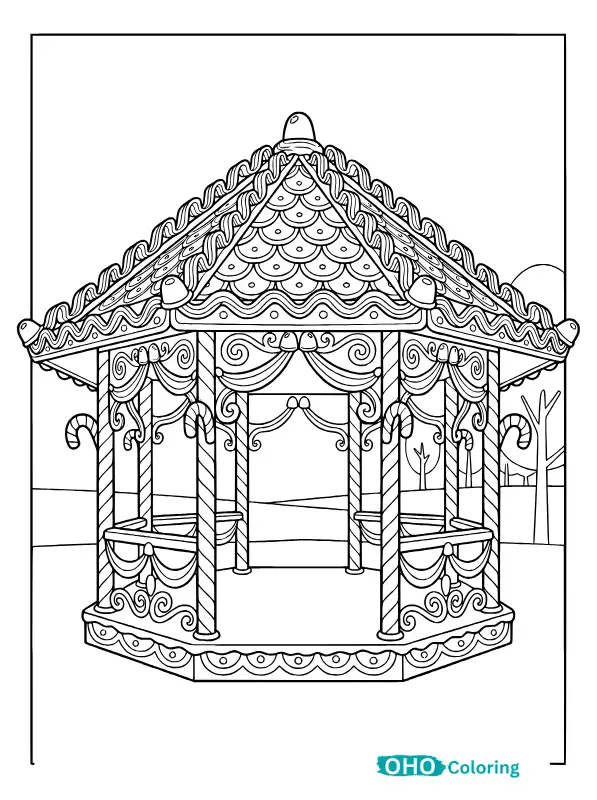
The Alpine Chalet with a Shredded Wheat Roof
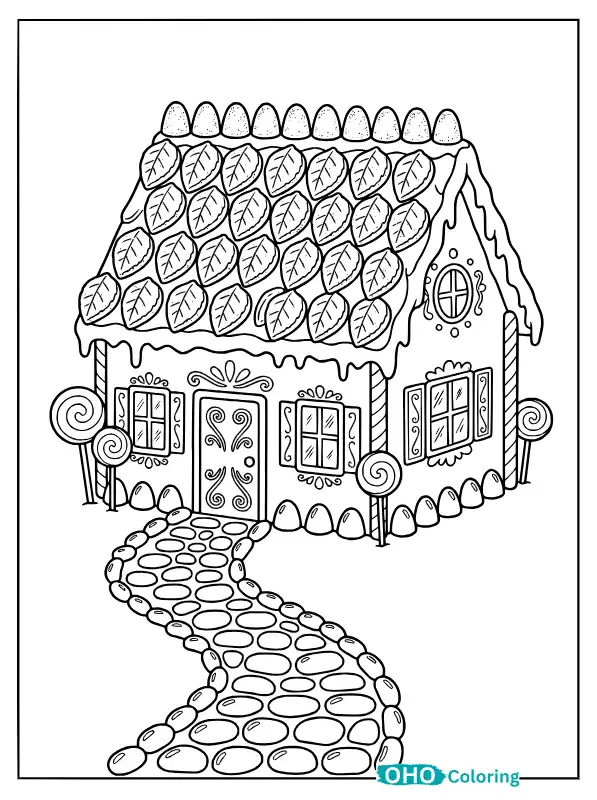
The first page is a repaired version of that fallen roof. This mountain cabin has a steeply sloped roof made of layered shredded wheat, so from a distance it looks like real thatch. Thick icing snow hangs from the eaves, and cookie beams stand underneath, holding up the walls. That same icing does the job of mortar in real gingerbread houses. It’s called royal icing, made from powdered sugar and egg whites, and it dries as hard as stone, which is why bakers use it to glue walls together.
As you color, split the roof between golden and light brown shades and leave the snow white, because against a blue sky that white makes the whole house pop.
The Pretzel Rod Log Cabin
Once the roof was done, the kids’ next question was about the walls, and the second page was the answer. This is a cabin in the woods, with walls built from thick pretzel rods stacked one on top of another. Piles of icing snow sit on the roof peak and along the window frames, as if someone is about to open the door and ask for hot chocolate.
The pretzel has a story of its own, too. It’s said that centuries ago, European monks gave pretzels to children as a reward for learning their prayers, and the twisted shape is thought to look like arms folded across the chest in prayer. For that reason, it works well to color each rod light brown on this cabin, then go over the edges with a slightly darker brown, and the whole wall starts to look like a stack of logs.
The Victorian Villa with Icing Lace
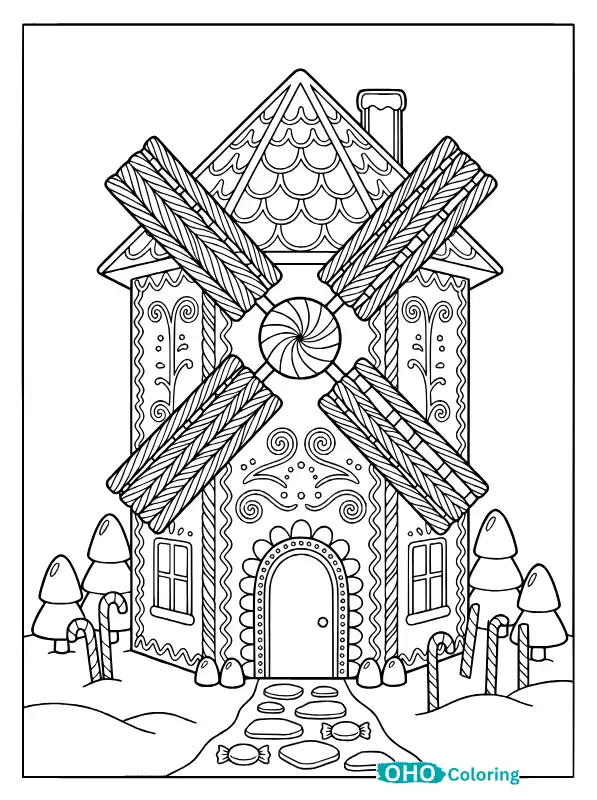
After the simple look of the logs, the older kids asked for something finer, and the third page came out of that request. It’s an elegant Victorian villa, with delicate icing lace and pointed finials along the roof edges and a scalloped cookie trim across the porch. This page asks for a little patience, but kids who love detail will spend the longest time on it.
The tradition of building houses out of sweets spread through Germany, and it’s believed that the Brothers Grimm tale “Hansel and Gretel,” in which two children find a house made of sweets in the middle of the forest, played a big part in making it popular. A sharp, fine-tipped pencil is best for the lace sections, and if you use pastel shades on the walls, that same lace stands out on its own.
The Lighthouse and the Clock Tower
After all that fine detail, the kids wanted height, so the next two pages reach toward the sky. The first is a gingerbread lighthouse, built from stacked cookie rings wrapped in striped icing and topped with a lantern room of melted hard candy that looks like glass. The second is a cookie clock tower, with a clock face that looks like a swirled peppermint disc.
The stripes on a real lighthouse aren’t just decoration. They help a ship approaching in daylight recognize which lighthouse it’s looking at, and at night a special lens gathers the light into a single straight beam that carries for miles. So choose red and white or black and white for the lighthouse, and fill the lantern room with yellow. On the clock tower, pick out the hands and numbers in a dark color so the face can be read from far away.
Coloring Tips: Gingerbread House Coloring Pages
A few habits grew out of coloring at our kitchen table, and they work especially well on these pages. The first has to do with how you divide up the colors. Give the candy parts bright colors, like red, green, and yellow gumdrops and red-and-white peppermints. For the cookie parts, stick with warm shades like brown, caramel, and honey. Once that difference is in place, the house looks like it just came out of the oven, and your child figures out for themselves which part is dough and which part is candy.
To give the cookie walls some depth, try layering the same brown twice. First run a light brown over the whole wall, then take the same pencil or crayon, press a little harder, and go over the edges and joints again. The middle of the wall stays lighter and the edges get darker, the way the corners of a cookie bake a little more than the center. This works especially well on the pretzel cabin and on the beams of the Alpine chalet.
Instead of leaving the snow and icing white, try adding a light blue or light gray over it. White icing on white paper often disappears, but a touch of blue makes it stand out. Use a very light hand for this, barely grazing the paper. You can also tell younger kids that leaving something white is a choice too, and sometimes it looks the best.
On the gumdrops, round wafers, and small candies, give each piece its own color. If everything is one color, the pattern gets lost, but with a different color on each piece, that same section becomes the most fun corner of the whole page. A little game works well here. Tell your child that no two neighboring pieces can match, then watch how seriously they shuffle the colors around.
On detailed pages like the Victorian villa, pay attention to the order. Color the big areas first, like the walls, roof, and door, and save the fine details like the lace and finials for last. If you do it the other way around, your hand keeps rolling over the thin lines with the bigger color. Use a fine-tipped pencil for the lace and pastels for the walls, and each stands apart from the other.
On tall buildings like the lighthouse and clock tower, take a moment with the lit parts. Fill the lantern room with light yellow first, then leave a spot of white in the middle. It makes it look like the light is coming from inside.
Once all the colors are in, go back over the outlines with a black gel pen, using a light hand. The decorations pop, and the page looks good enough to hang on the wall or the fridge. Then ask your child who lives in this house, and be ready to hear the answer, because the next page often starts with exactly that.