The sweetest thing about these Capybara Coloring Pages is that their hero never looks like he’s in a hurry. The capybara sits in the water, keeps chewing his grass, and stays calm and smiling even when a duck lands on his back. We loved that easygoing calm, so we drew it in thin, clean black lines and built a full 28-page collection.
In one he’s soaking in a hot spring tub, in another he’s sitting on a stack of pancakes, and in another he’s wearing a frog hoodie. With this many pages, every kid and every grown-up ends up with a different favorite. Our daughter didn’t color all of them either. She came home from school, sat down at the kitchen table, and picked just five that she liked. This story comes from those five.
Featured Capybara Coloring Pages
Check out our printable sheets below. Click on any image to open it and download the high-resolution PDF for printing:
The collection is big, so there’s no need to print every page at once. Start with whichever scene makes your child laugh first, and print the rest later. All the pages are in 3:4 portrait format and fit comfortably on standard Letter size (8.5 x 11 inch) paper.


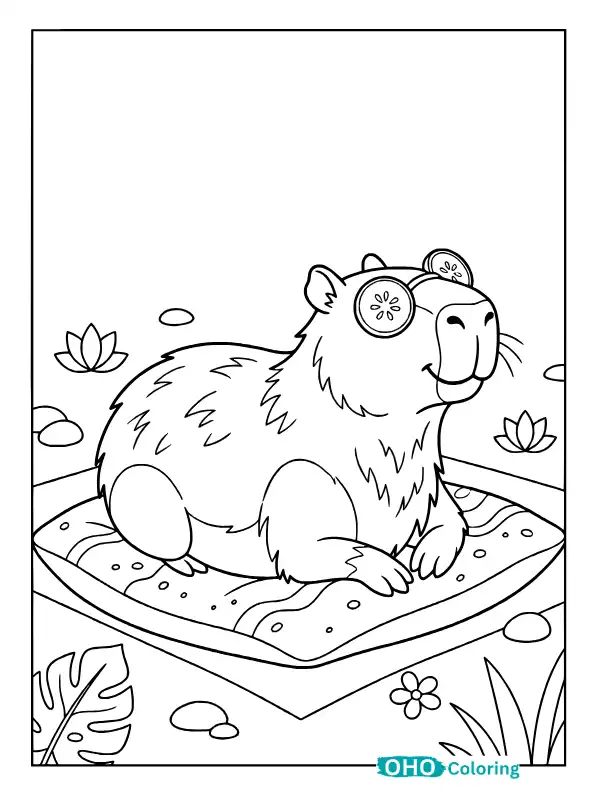


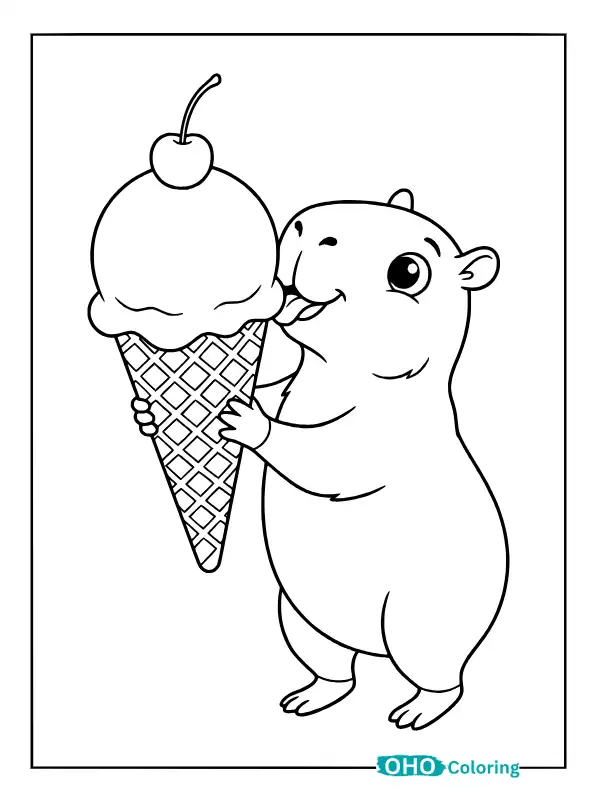


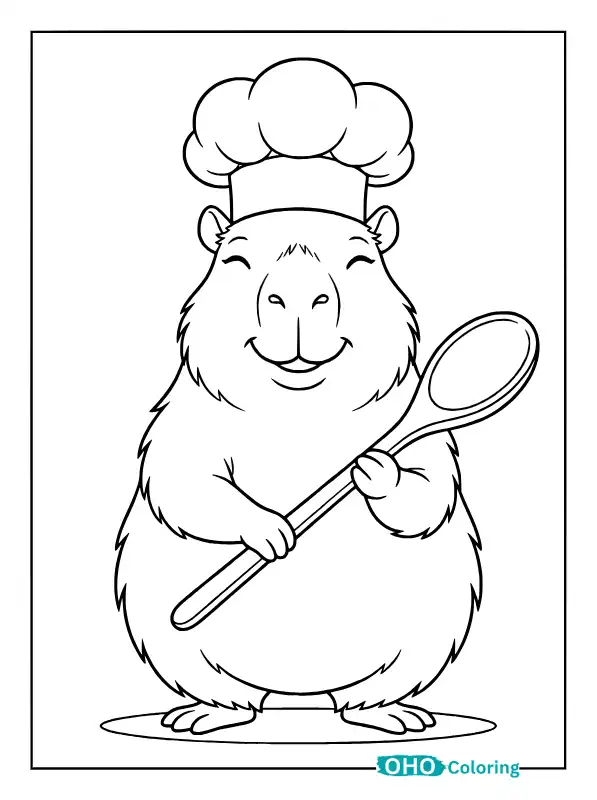


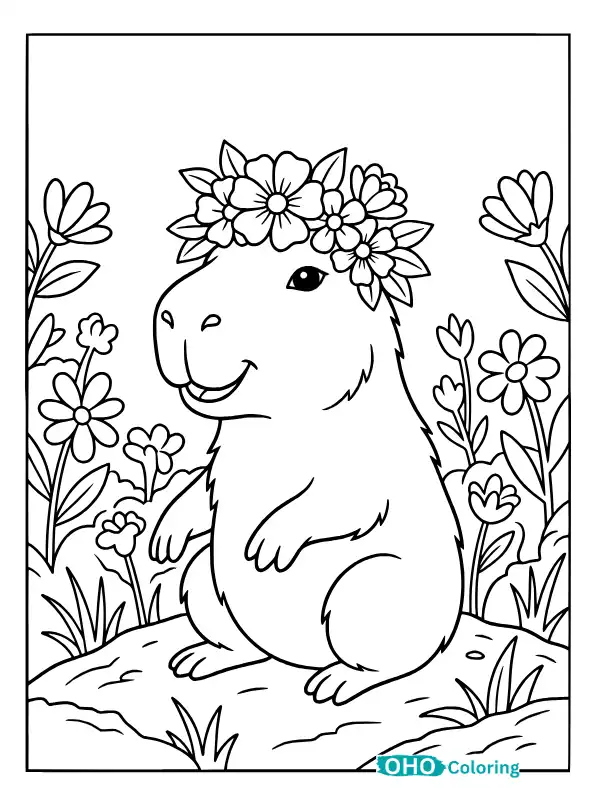


Some highlights of the Capybara coloring page
Hot Spring Capybara with a Yuzu Fruit
Our daughter’s first pick was the page where the capybara sits in a warm wooden tub with his eyes closed and a round yuzu fruit balanced on his head, as if he has nowhere to be. This scene isn’t made up. At some zoos in Japan, capybaras really do soak in hot water during winter, and yuzu fruits are floated in the tub. They love water so much that nature built their bodies for it.
They have light webbing between their toes, and their eyes, ears, and nose sit on top of the head, so a capybara can breathe and look around while almost completely underwater. That detail helps when you start coloring. Fill the water with light blue, use a very pale gray for the steam, and then color the fruit a bright yellow. The yuzu will be the first thing your eyes land on.
Capybara Eating Watermelon Coloring Page
For her second page she grabbed the watermelon one, because after a bath a capybara is bound to get hungry. In it he holds a big slice in both front paws, and the little marks along the top show that the first bite is already gone. His cheeks are puffed out, which is exactly why our daughter laughed the hardest at this page.
In real life, a capybara mostly eats grass and water plants, and fruit is just an occasional sweet treat. Chewing grass matters for another reason too: a capybara’s front teeth never stop growing, and chewing is what wears them down to the right length. When you color the watermelon, leave a white stripe between the red and the green. That one line makes the slice look real.
Full Belly, and Friends Drop By
For her third page, our daughter chose the duckling scene, where a tiny duckling sleeps comfortably on the capybara’s flat head. The collection also has a capybara ferrying baby turtles across a pond on his back, and one surrounded by butterflies, but her heart was set on this duckling. A capybara doesn’t shoo anyone away, which is why birds really do perch on capybaras along the rivers of South America.
This friendly nature comes from his life in a group, because capybaras live with ten or twenty companions rather than alone. Here’s another fun one: the capybara is the largest member of the rodent family, which includes mice and squirrels. After you share that, ask your child what color the duckling should be. Once they answer, the page belongs to them.
Capybara Under a Mushroom Umbrella
The fourth page was the rainy one. As the day winds down, drops start falling from the sky, and the capybara settles under a giant mushroom. That mushroom is now his umbrella. He isn’t too worried about getting wet, since water is his home, and if he senses danger he can dive in and hold his breath for several minutes. Fill the raindrops with different shades of blue, and the rain will look like it’s really dripping.
The fifth page was the one she colored last: a baby capybara in rain boots, splashing through puddles. Baby capybaras learn to swim within a few days of being born, and the whole group looks after them. Thanks to its big, round shapes, this is the easiest page for little ones. Leave a few spots white inside the puddles so the water looks like it’s sparkling.
Capybara Coloring Tips for Kids
A capybara’s coat is a golden brown, but if you run one single brown over the whole body, he’ll look flat. Go a little darker on the back and lighter on the belly. Layer your crayon in two passes with a light hand, light first and then darker, and the color will pick up a roundness that makes the capybara look truly chubby.
The same method works on the water pages. First spread a very light blue over the whole area, then deepen that same blue a little along the edges. It gives the water depth, and kids pick up this trick quickly by doing it themselves.
With the youngest kids, let them fill in the capybara’s face and nose first, because that’s where you recognize the animal. The background can come later, and it’s perfectly fine if some parts stay uncolored. After all, a capybara never rushes through anything either.
When the coloring is done, ask your child what season their capybara is in and who his first friend is. Their answers will show you that, from whichever of the 28 pages they chose, they’ve made up a story of their own.