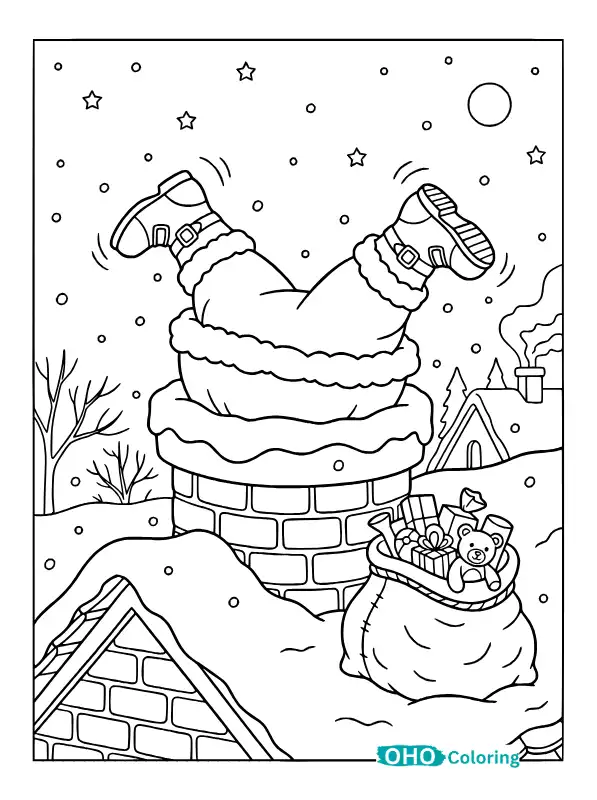
The moment a child opens these Santa Claus Coloring Pages, the finger lands first on that round, plump fellow hanging upside down in the chimney with both black boots waving in the air. That is the very first sheet where a child laughs out loud, and laughing, settles down to color, because behind every picture here sits a small incident that pulls the story toward the next one. The lines are clean and bold, the spaces are wide open, so even a three year old can pick up a crayon without hesitating.
Now the truth is that there are a lot of pages here. More than thirty images land in front of you at once; the child gets puzzled about where to begin, and so does the parent. So to save time and keep things simple, we will talk about only four chosen sheets below. The rest are just as lovely in their own way.
Featured Santa Claus Coloring Pages
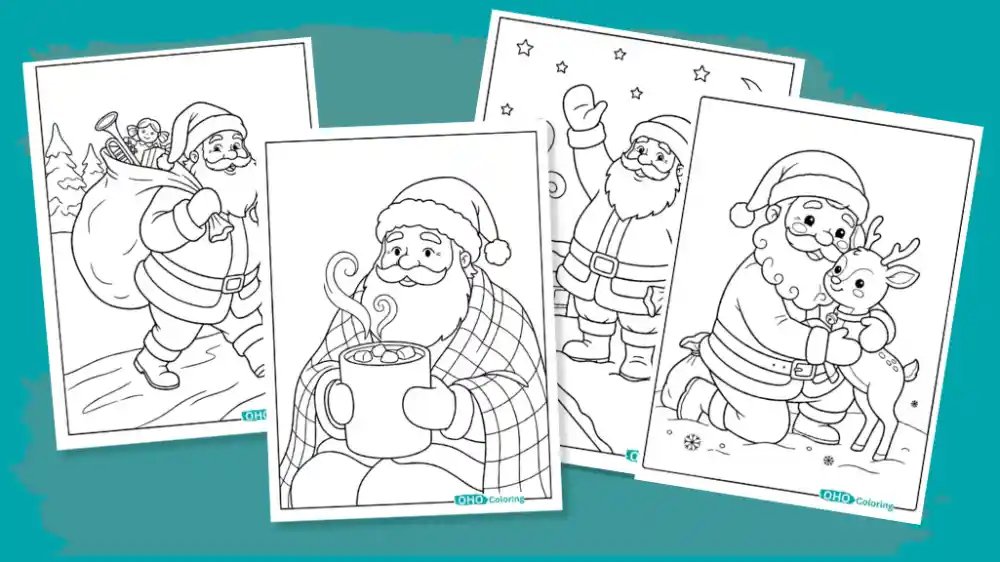
Below you will find the printable sheets. Clicking any image opens it full size, so you can download the high-resolution PDF for printing. Since the collection runs into the thirties, there is no need to print everything at once. Two or three sheets in a sitting keep a young child engaged without the activity feeling like a long job.
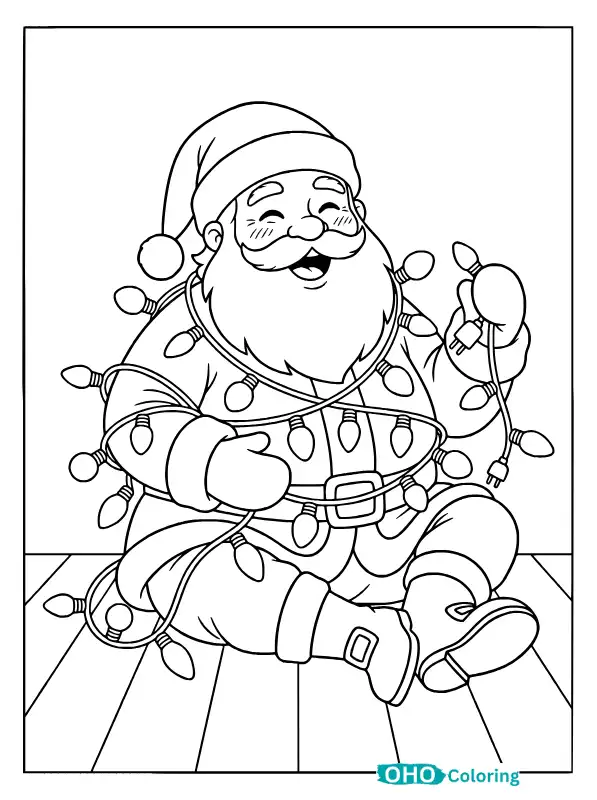
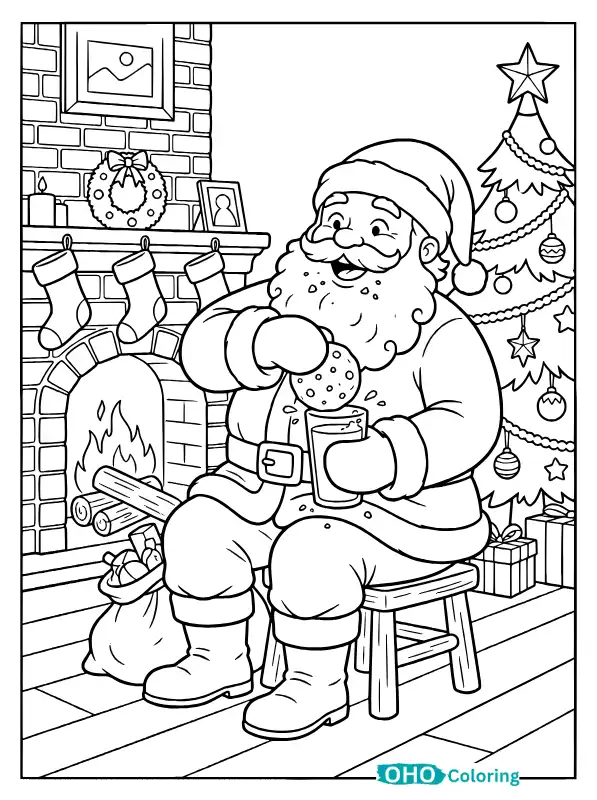

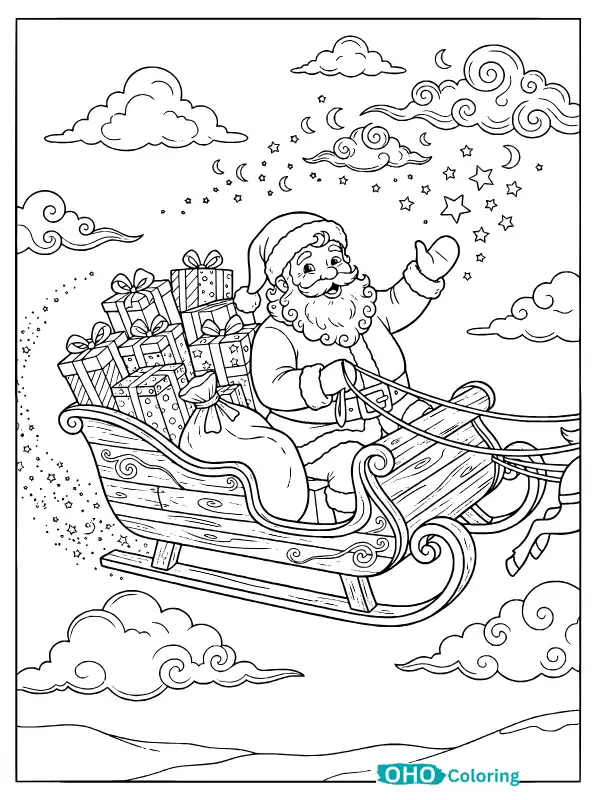
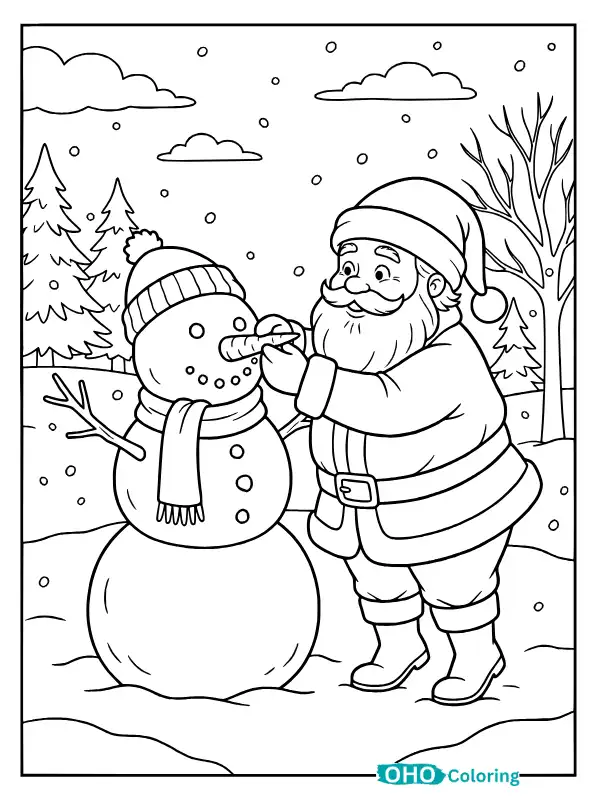
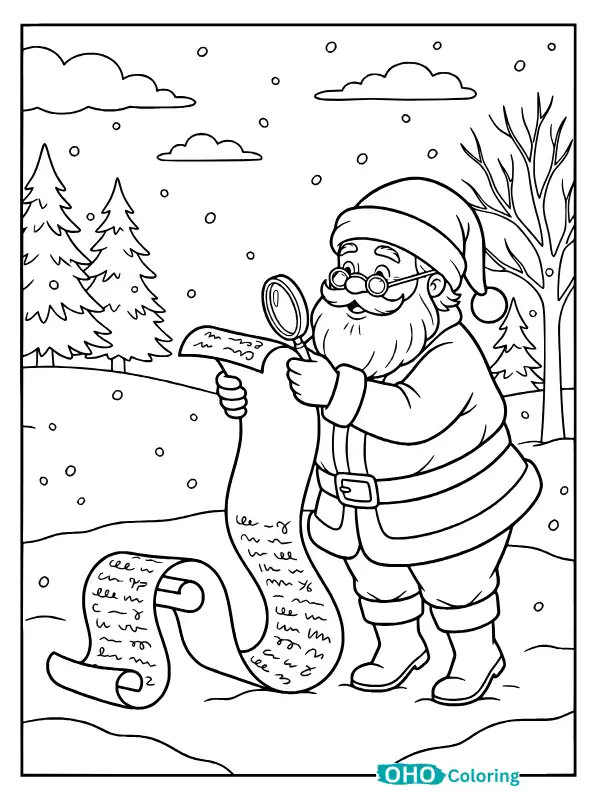
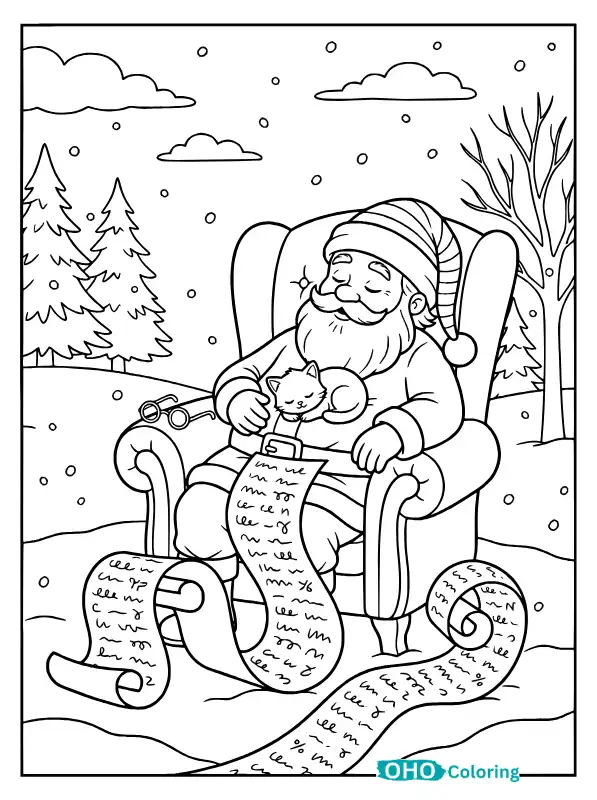


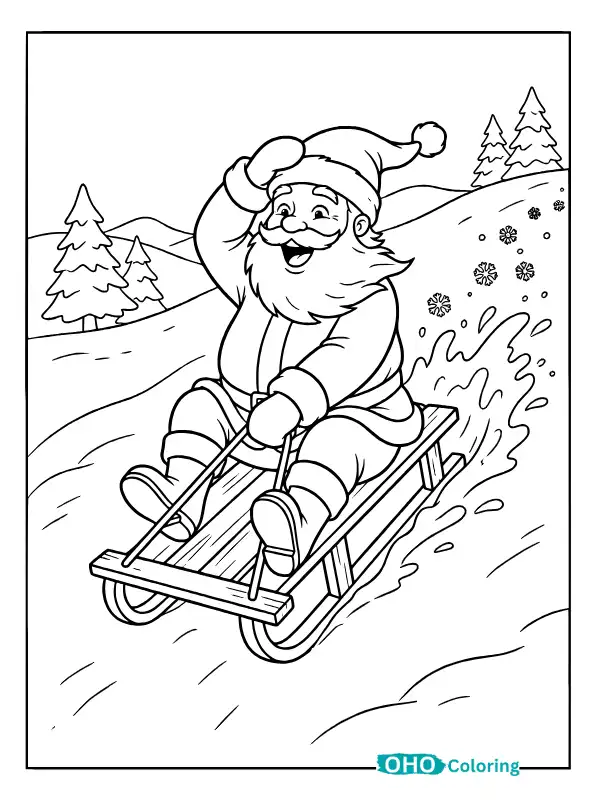


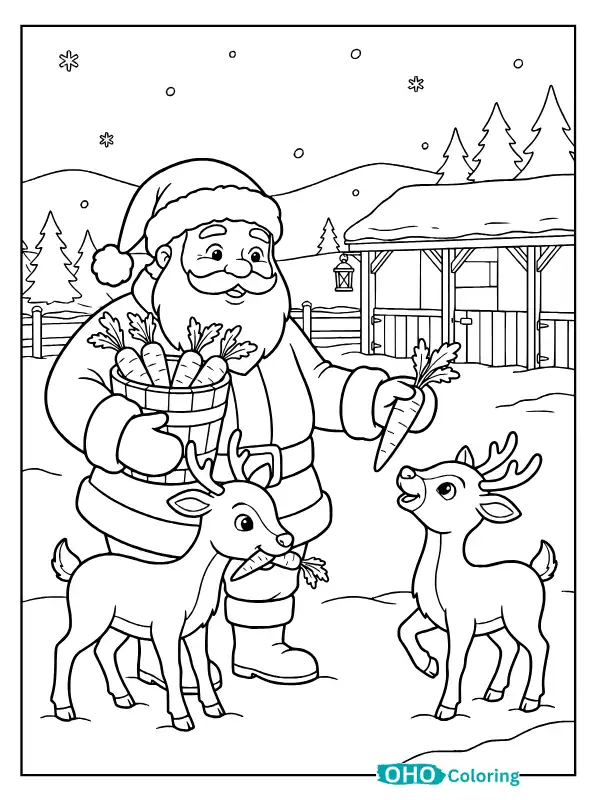
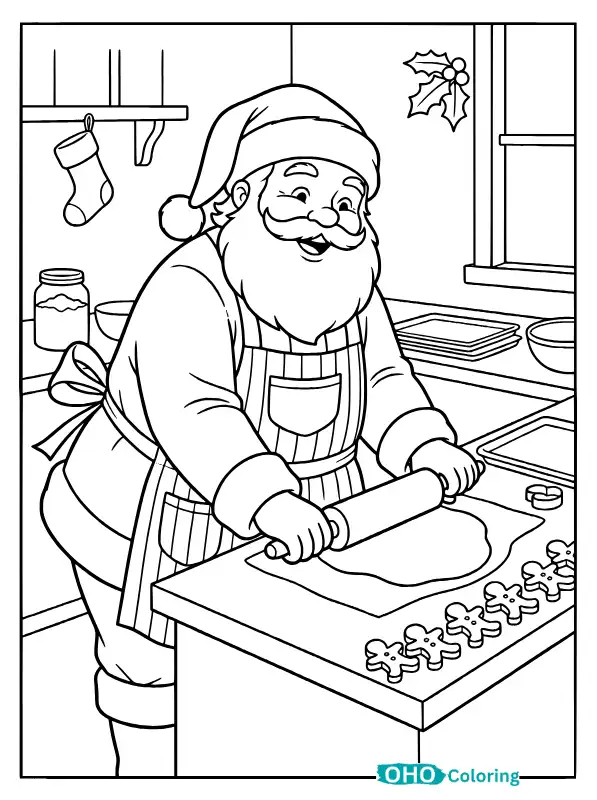
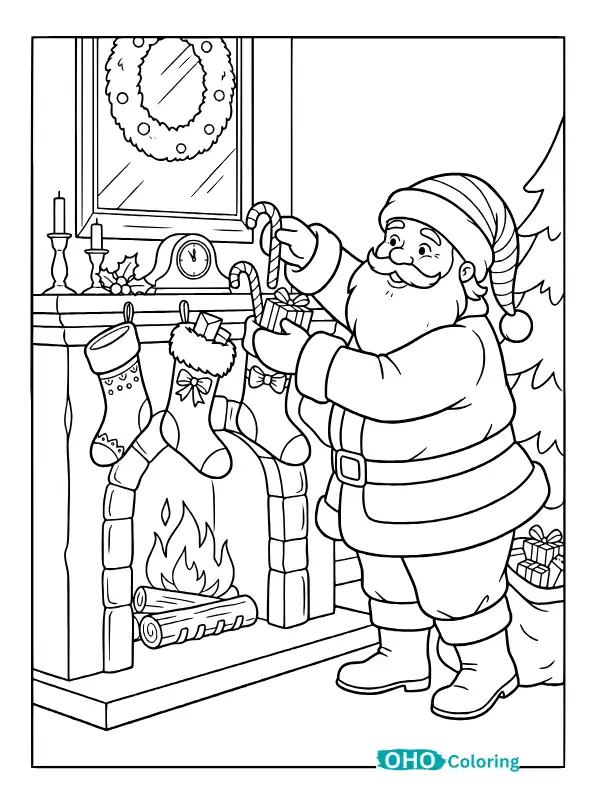
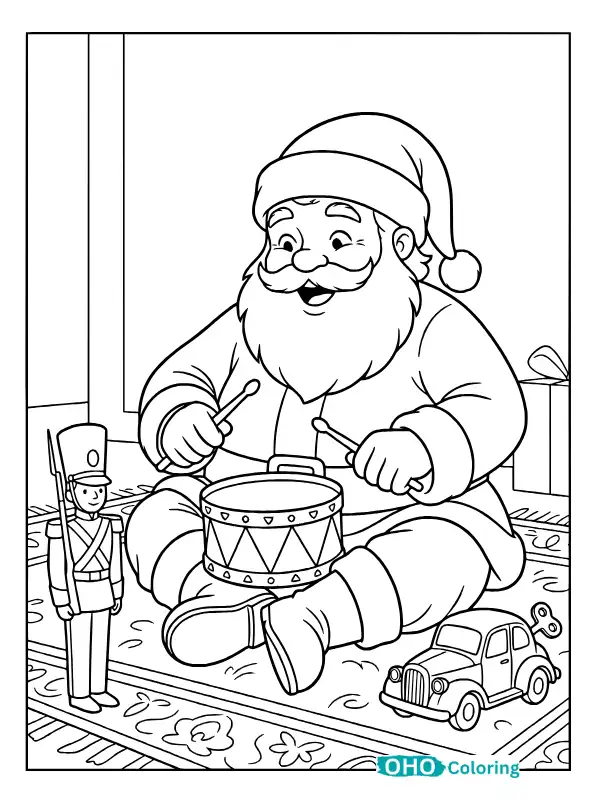
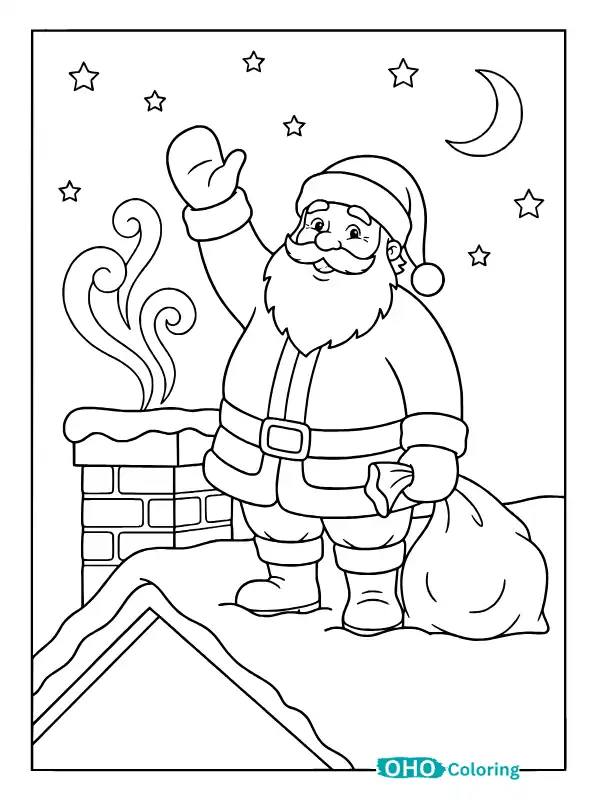

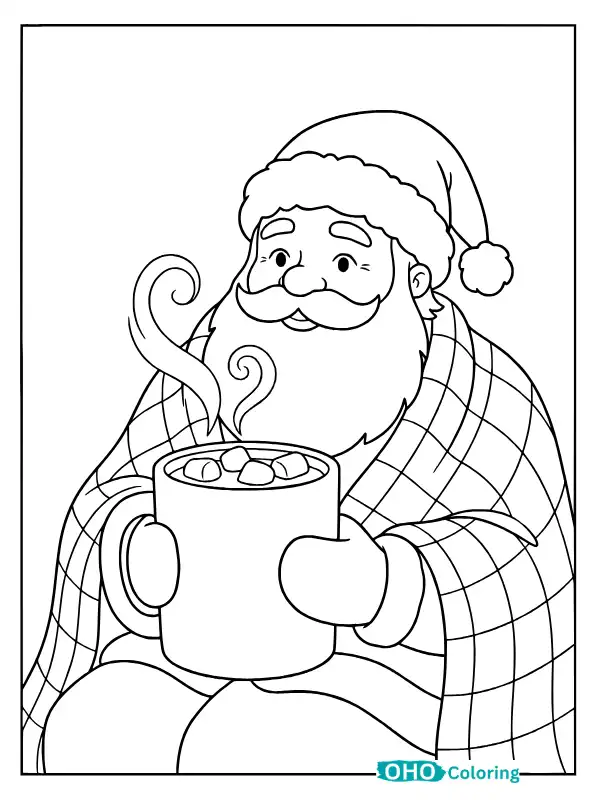
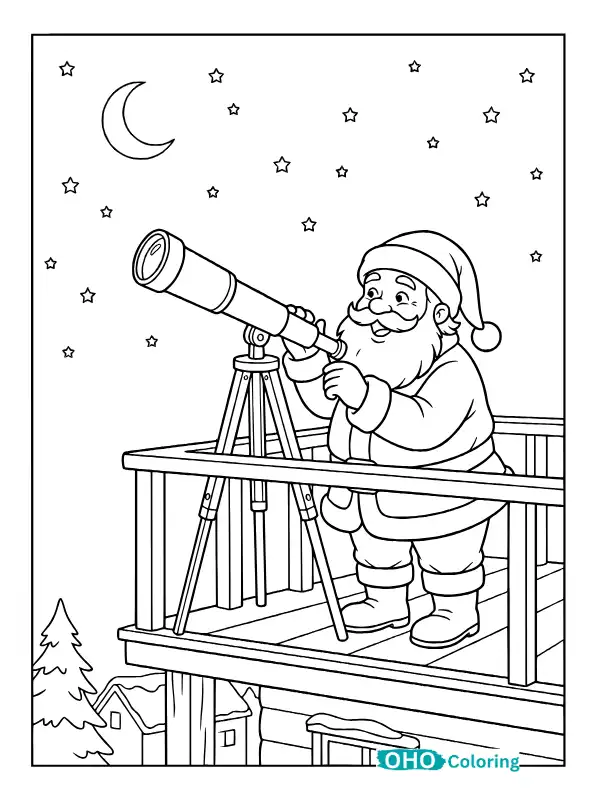

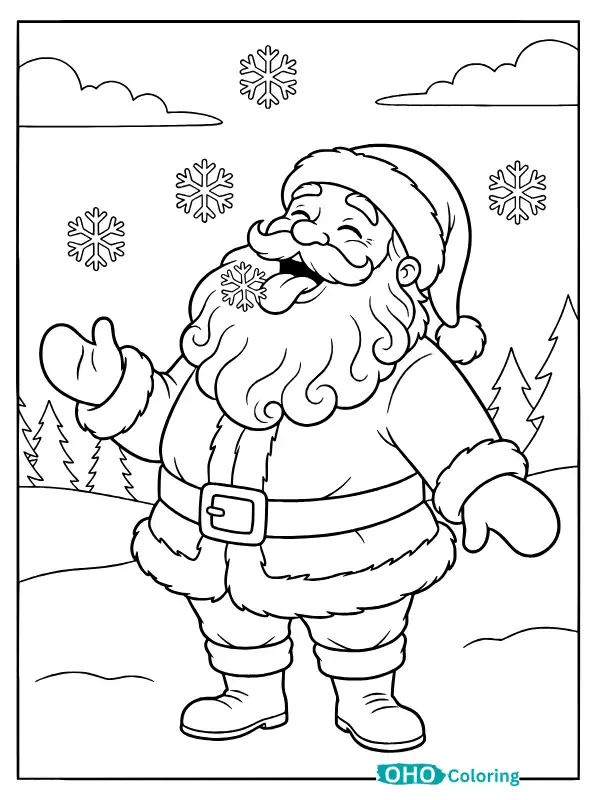
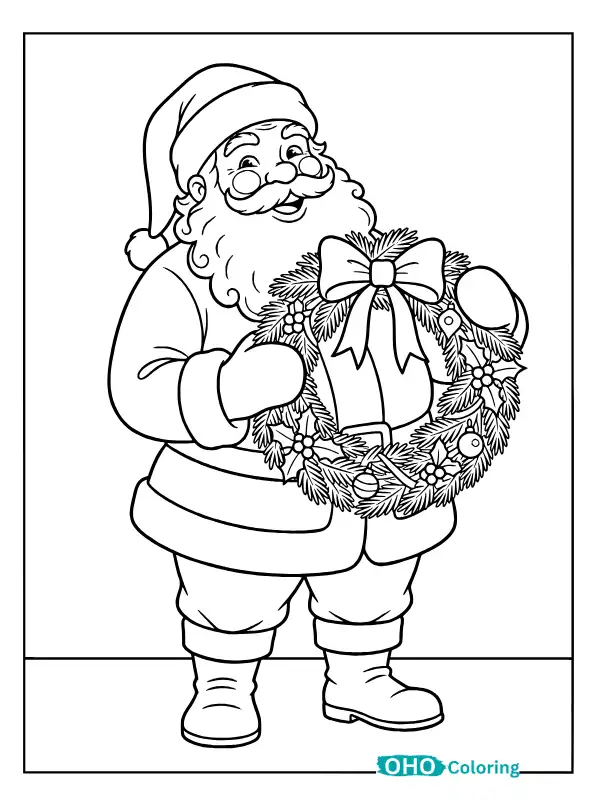

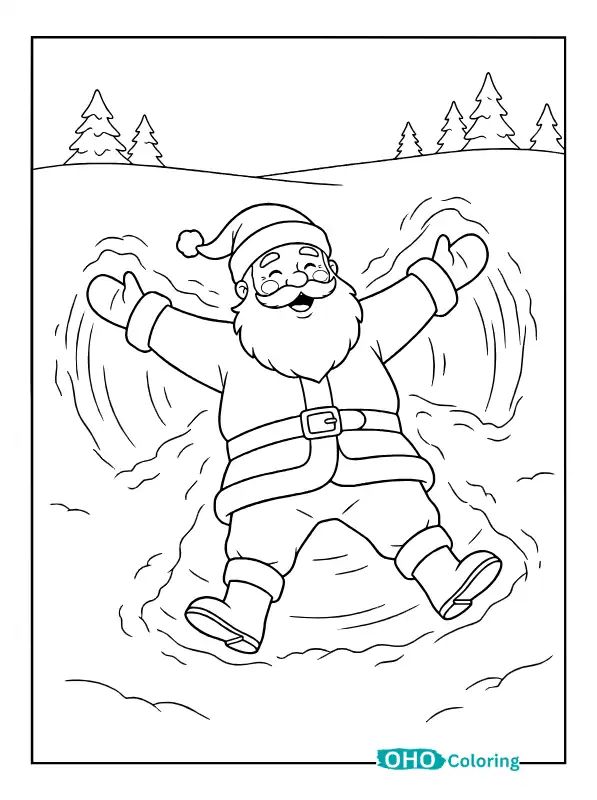
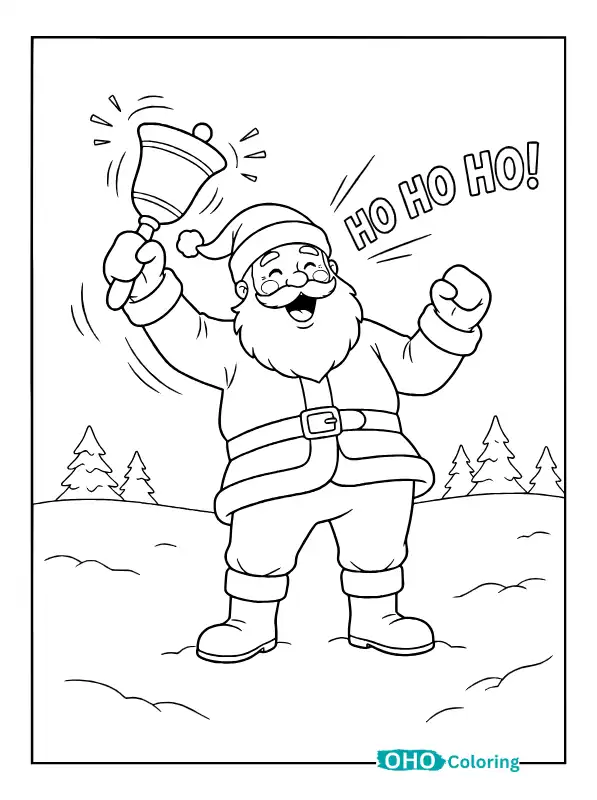
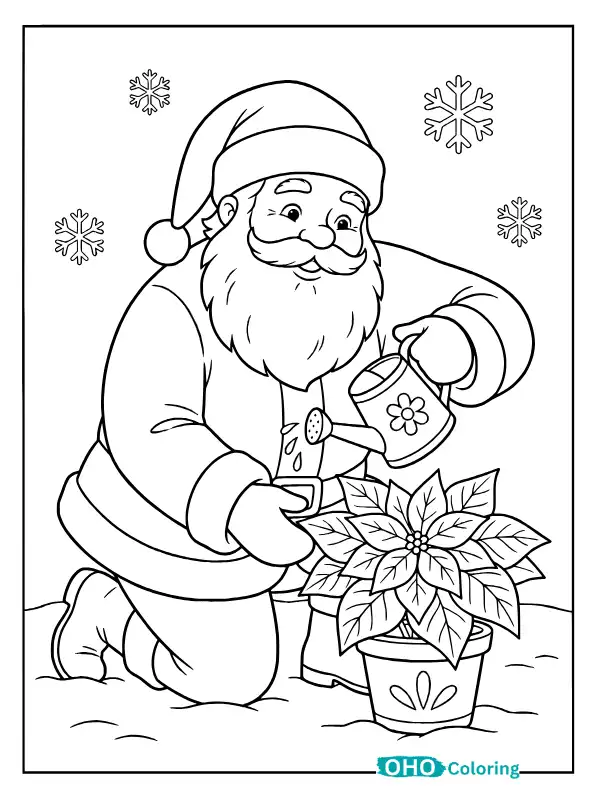

Santa Claus Coloring Pages Highlights
Santa Stuck Upside Down in the Chimney
The first picture you see shows Santa head first inside a round brick chimney, his legs up in the air, and a sack of toys resting on the snowy roof with a doll’s head peeking out of it. A child looks at it and blurts out, “He’s stuck!” and right there the story starts, asking how he got in there at all.
Going down the chimney is not as old a habit as people assume. The 1823 poem “A Visit from St. Nicholas” was the first to show him sliding down it, and before that, in Europe, he simply came in through the window.
Santa himself is not a made up character either. He comes from Saint Nicholas, a real man who lived in the city of Myra in Turkey in the fourth century and quietly left gifts for poor children. While coloring, tell the child that the bricks are reddish brown, the suit is red, the boots are black, and whatever is inside the sack can take any color the child likes, yellow, blue, green, because that part of the story belongs to them.
Santa Hugging the Baby Reindeer
And when Santa finally wriggles out of the chimney, he goes straight to kneeling in the snow and holding a small baby reindeer close, one with a jingle bell tied around its neck. A child runs a finger over the bell and asks why it is there. You can explain that bells are an old working tradition, so Santa never loses his team in a snowstorm.
Here a true fact joins the thread. Reindeer are among the very few deer kinds where both the males and the females grow antlers. Their noses carry special blood vessels that warm the freezing air before it reaches the lungs, which is why they can sniff out grass buried under a foot and a half of snow.
While coloring, keep the body light brown, the belly area white, and the bell golden or yellow. And yes, Rudolph’s red nose belongs to the storybook only. Real reindeer noses are not red, and a child’s eyes light up when you tell them that.
Santa Reading a Story in the Woods
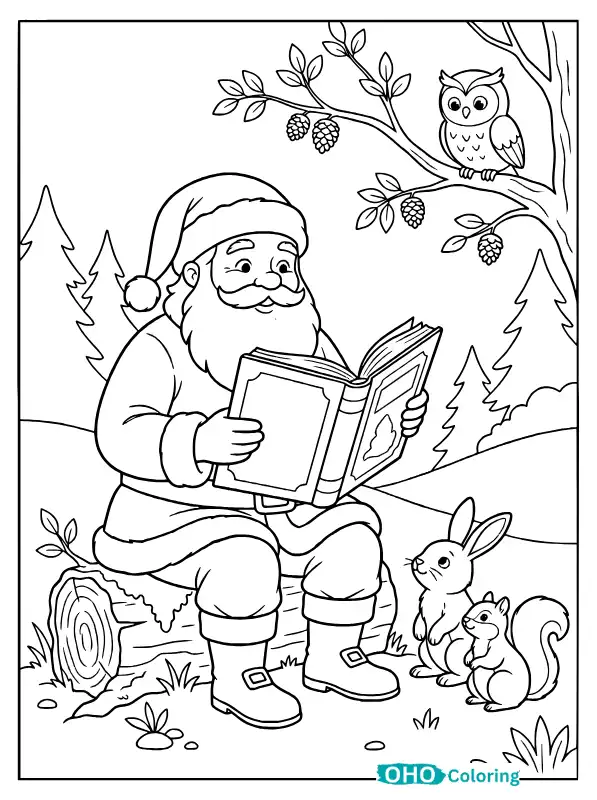
After all that hugging, Santa deserves a rest, so in the next picture he sits on a mossy log with an open book, and a rabbit, a squirrel, and an owl perched above listen quietly. A child asks, “Owls look upside down, don’t they?” and it is true. An owl can turn its head almost 270 degrees because of the flexible build of its spine bones. There is more.
Squirrels bury nuts in the ground and forget half of them, and those forgotten nuts grow into new trees years later. So the animals listening to Santa are themselves small gardeners of the forest. While coloring, put green on the moss, dark brown on the trunk, slate gray on the owl, orange on the squirrel, and a soft pink inside the rabbit’s ears. That last tiny detail is the one children enjoy most, because it feels like they discovered a secret nobody else noticed.
Santa’s Vacation by the Sea
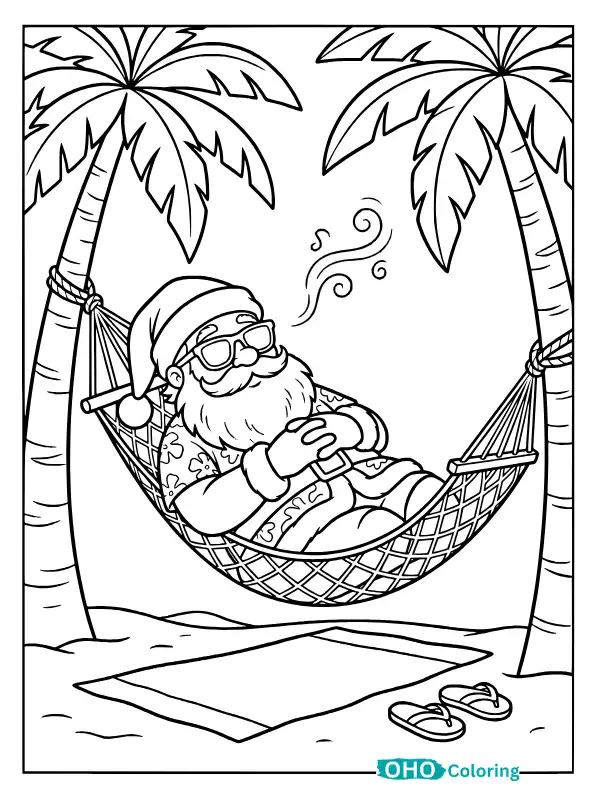
Now the story takes a turn. After a whole year in snow, Santa needs sunshine too, so in the last picture he sleeps in a rope hammock tied between two palm trees, black sunglasses on his eyes, that same red cap on his head, and his boots hanging outside the hammock.
A child giggles and says, “Even Santa gets tired!” and here another true fact fits right in. His home is placed at the North Pole, where winter temperatures fall to around minus sixty degrees, yet the polar bears living there have black skin underneath, and their fur is actually clear, bending light in a way that makes it look white. While coloring, use blue for the sky, deep green for the palm leaves, wheat for the sand, and black for the lenses. That alone is enough to make the picture feel alive.
Things to Keep in Mind While Coloring
Now comes the practical part. Since there are so many sheets, writing separate instructions for each one is impossible, so a few simple habits apply the same way on every page and keep the child from getting tangled again and again. Begin with a light hand. Thick crayons cover a lot of ground, and a child crosses the line without even noticing. If color does slip outside, do not scold. A quick rub with an eraser or a dry cotton ball cleans it up, and the picture looks fine again.
The next thing to watch is the order of colors. Decide first that the suit will be red, then the boots black, then a blush of pink on the cheeks, and move forward in that same sequence. When a child grabs five crayons at once, the hand stalls and the mind follows. And when a large empty area appears, like Santa’s sack or the snow on the roof, mix two shades instead of laying one flat color. A little orange stirred into red makes the cheeks look warm, and the same trick with a touch of blue in the snow brings the cold right onto the page.
Third, and this one is often missed, filling every corner is not required. Be it stars in the sky or flakes on the rooftop, leave them in the paper’s own white, because that white is cleaner than any crayon can be. Explain to the child that empty space is part of the picture too. And if a child paints the suit green or blue, let it be. They are building their own version, and that is the best part of the whole activity.
Finally, do not rush to finish everything in one sitting. Pause halfway, hold the page at arm’s length and look at it, and when it is done, put it in a frame and hang it in the child’s room. Next time, while reaching for a new sheet, they will glance at the old one, fix something on their own, and slowly the hand grows steadier. That is the real reward here. A plain piece of paper passes through a child’s hands and comes back as a picture they can call their own.