Millions of years ago when humans did not exist, a rhythmic thud of massive footsteps echoed across our green planet, vibrating for miles around. Dinosaur coloring pages bring an instant, unmistakable brightness to children’s faces the very moment they hold them.
As kids look at the outlines of these ancient giants, it sparks an immediate curiosity about how creatures with such heavy bodies spent their days. The simple lines drawn on the page are not just empty spaces; they hold the sunshine, the murmuring rivers, and the scent of dense prehistoric forests from a time long gone, waiting for children to gently bring them to life with their favorite colors.







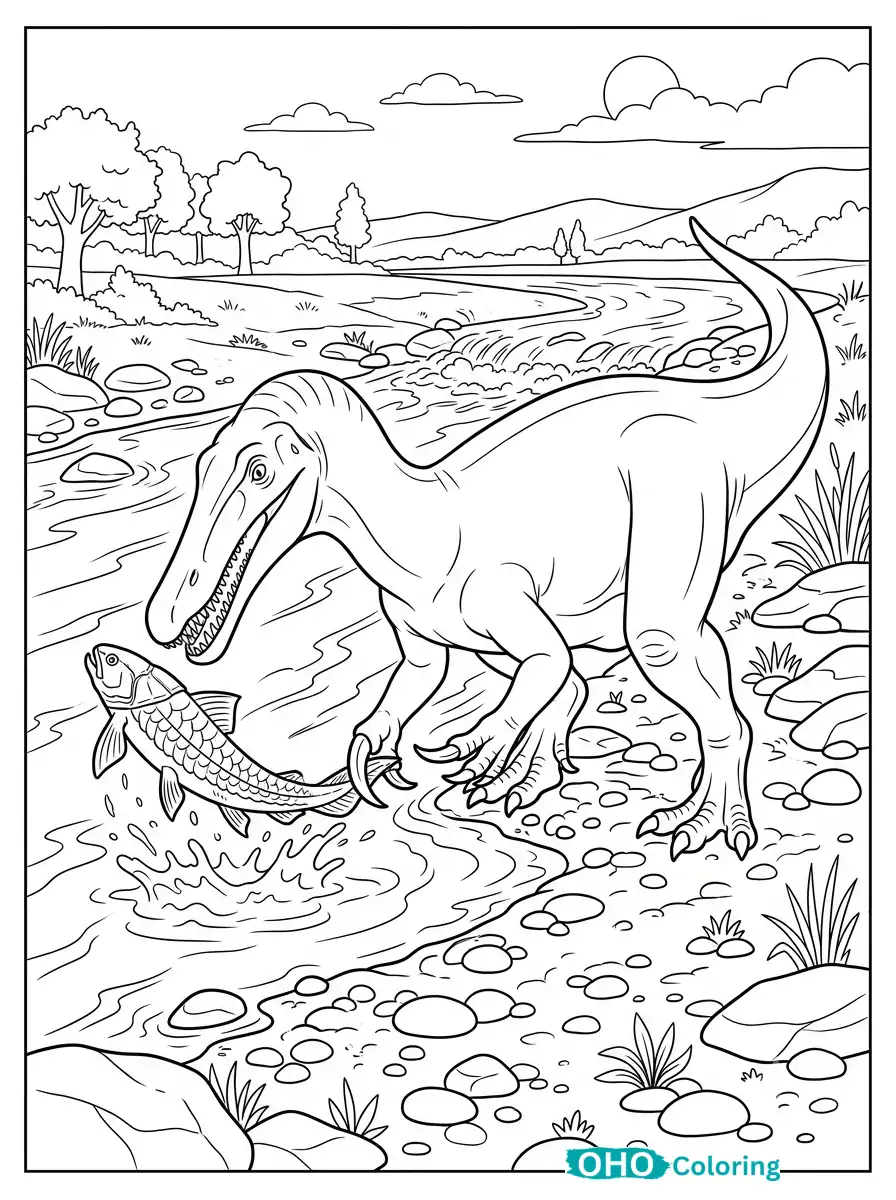


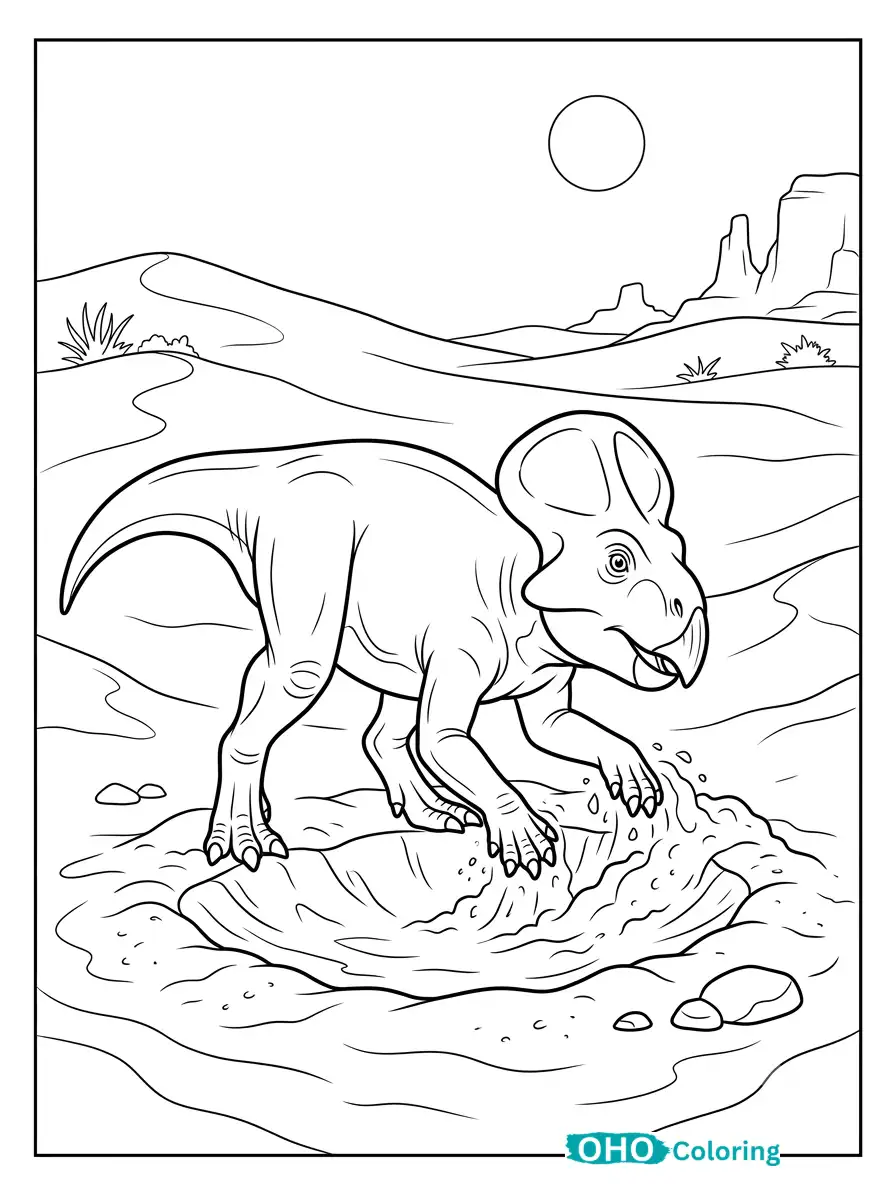


Dinosaur Coloring Pages Highlights
Canopy Shadows and Nature’s Unique Shield
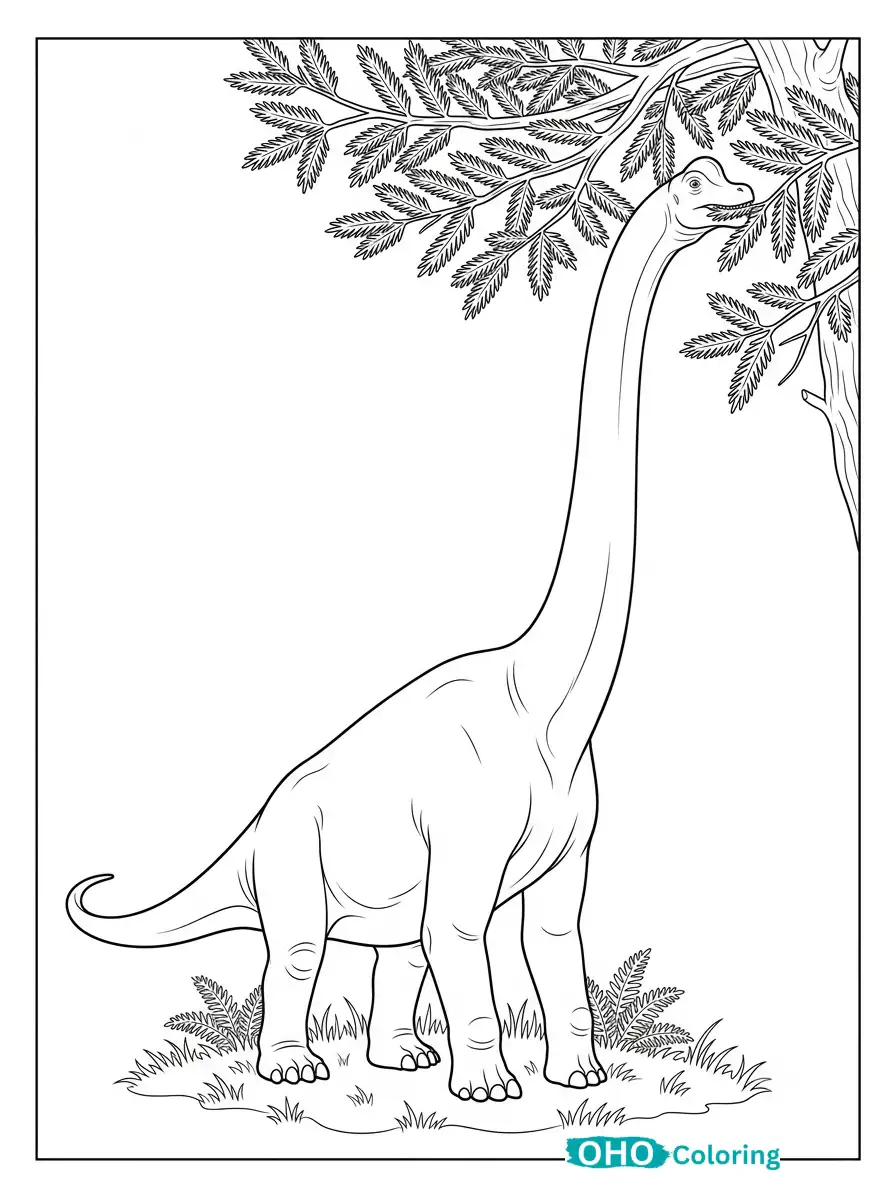
The very first form that catches the eye on the paper is the long neck of a Brachiosaurus stretching toward a towering conifer tree. Its front legs appear significantly longer than its hind legs, a skeletal structure nature designed for a very specific purpose.
With this exact anatomy, this massive herbivore could effortlessly reach the highest branches touching the sky without ever having to stretch, devouring baskets of tender leaves throughout the day. When children fill its heavy body with light gray or earthy brown tones and coat the branches in deep green, the scene transforms into a peaceful afternoon where a creature rests contentedly after a heavy meal.
As a Stegosaurus emerges from beneath the shade of these same trees, its temperament appears completely different from that of the Brachiosaurus. Despite its calm appearance, it remained alert every single second, largely due to the four sharp spikes mounted on its tail. In the world of science, these lethal spikes are called a ‘thagomizer,’ possessing enough power to drive away any predator with a single swing.
When children paint vibrant orange or earthy red stripes on the triangular plates adorning its back, it becomes easy to understand how these plates served both to intimidate enemies and to absorb the warmth of the morning sun.
Marshland Moisture and Echoes from Afar
Moving past the dry leaves of the forest floor, the eyes rest on the marshy edges where a Parasaurolophus stands amid water hyacinths and ferns. The long, backward-curving structure on its head might look like an exotic crown at first glance, but a fascinating mechanism lay hidden inside it. This curved bone was completely hollow, turning into a natural trumpet under wind pressure.
The moment it sensed danger, it would blast such a heavy sound from this tube that ripples would form on the water’s surface, instantly alerting its companions grazing far away.
To bring this silence-shattering echo alive on paper, a mix of light purple and bright yellow tones works beautifully on the head structure. Near its feet, layers of light blue and mossy green blend in the stagnant water to recreate the entire environment, making it feel as if that booming voice has just faded into the stillness of the swamp.
Tyrannosaurus Rex Predator’s Roar and Tiny Claws
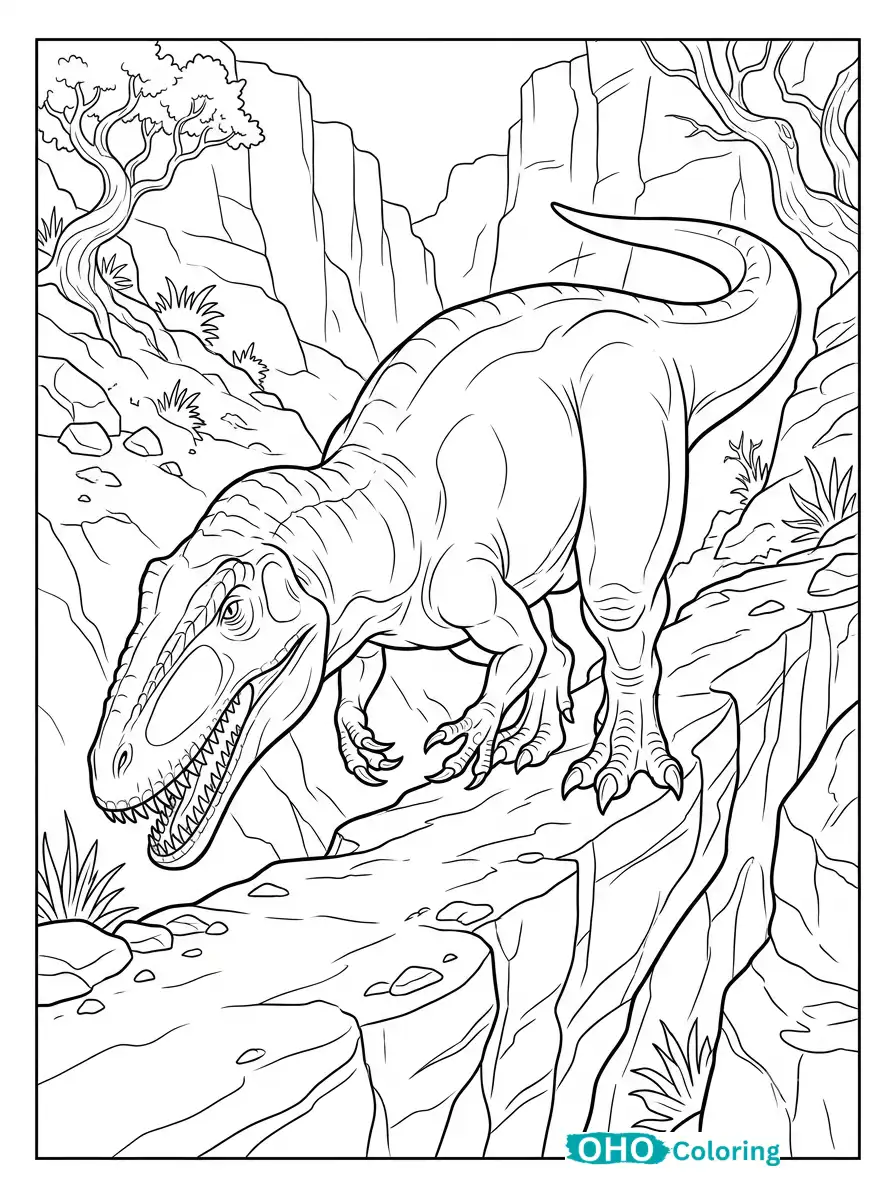
In that ancient era, the one approach that made every herbivore freeze in fear belonged to the Tyrannosaurus Rex, or T-Rex. Standing on a high rocky ledge, the moment it opened its massive jaw, rows of strong, sharp teeth came into view—teeth capable of snapping the toughest bones with absolute ease.
Despite such a heavy build and an intimidating face, its tiny two-clawed arms look somewhat peculiar, yet its true power lay hidden in its heavy tail and muscular legs. As children apply deep brown or olive green to its rough skin, the sheer intensity that emerges on its face commands immediate attention.
Yet, this fearsome predator had another side entirely, beautifully captured in the illustration of a baby T-Rex. Just hatched from its egg, this tiny creature tries out its very first little growl at a fat bug crawling on the ground, bringing an instant smile to your face. Decorating its small, round body with light lemon yellow or pistachio green deepens the realization that even the greatest predators were once just as fragile and clumsy.
Mud Nests and baby dinosaurs
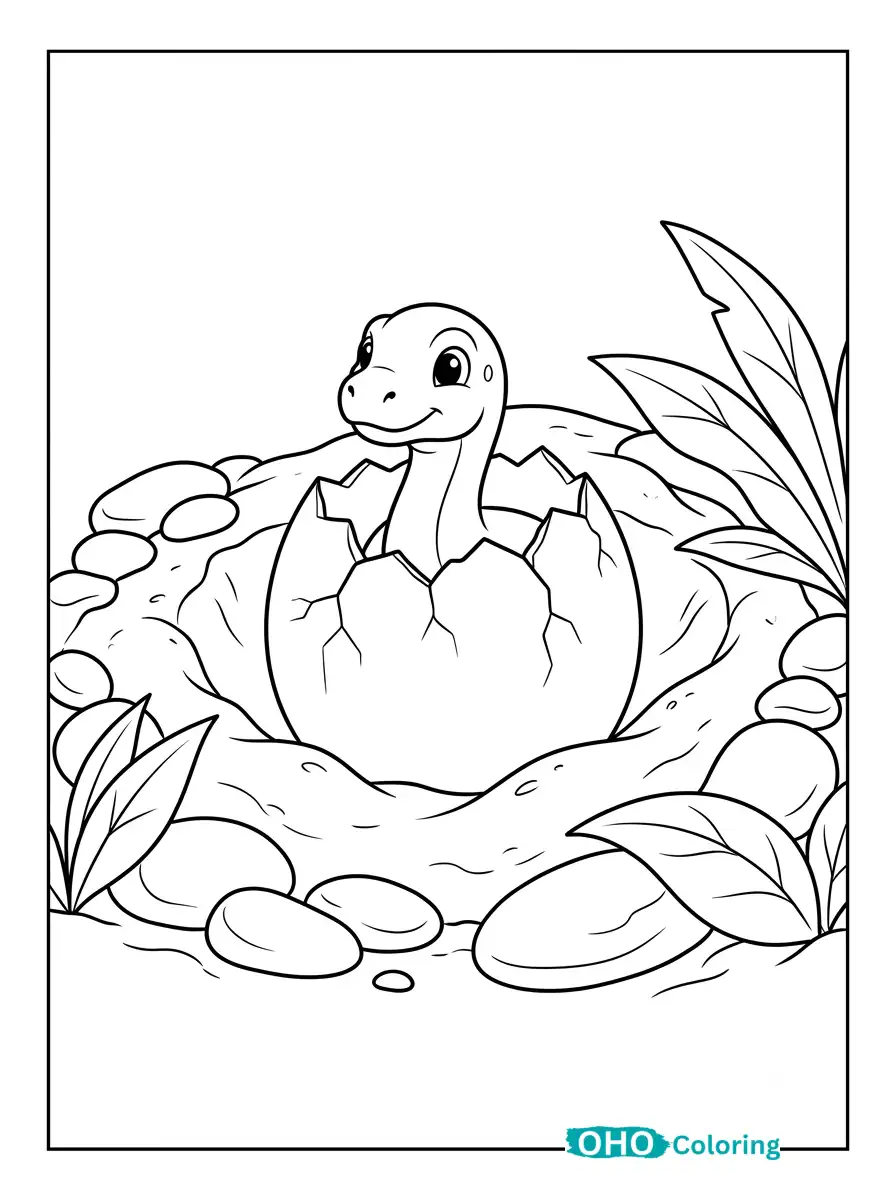
This playful world of baby dinosaurs completely shifts the perception that these ancient creatures spent their time doing nothing but fighting and hunting. Fossils preserved in stone have proven that a dinosaur named Maiasaura raised its young with immense love and care. In fact, its name translates directly to ‘good mother lizard,’ because it built high, bowl-like mud nests in open plains to prevent flowing rainwater from reaching the eggs.
Inside that mud enclosure, as three hungry babies lift their beak-like noses upward and the mother bends down to feed them fresh leaves, the hand naturally slows down, guiding the crayons with gentle precision.
Filling the dry twigs of the nest with soft almond shades and scattering a tender yellow glow over the babies turns the entire scene into a quiet story of family life.
A Simple Approach to Choosing Colors dinosaur
The most comforting thing about completing these ancient scenes is that absolutely no one knows the exact colors of dinosaur skin for certain. This simply means children can decorate these shapes with whatever colors feel most beautiful to their eyes. If the main creature is painted in dark shades, keeping the background ground and sky completely light will make the heavy body of the dinosaur stand out naturally.
When coloring, starting right next to the black outer lines and moving inward remains the easiest technique. To create the effect of rough, scaly skin on a creature’s back, first lay down a uniform layer of a light color, then use a darker shade to add tiny dots or light, diagonal lines. This instantly makes those massive bodies look vividly alive on a flat piece of paper.